Global Car Exporter SBT: What It Is and What US Buyers Should Know
People who search for "global car exporter SBT" are usually trying to find the company and understand what it does before they consider buying a vehicle through it. SBT is generally known as a Japan-based exporter of used vehicles. It sells cars, trucks and other vehicles to overseas buyers rather than to local retail customers. For a reader in the United States, the most important point is this: an exporter can sell and ship a vehicle, but it does not decide whether that vehicle may legally enter or be registered in the US. US law decides that, and the rules depend on the specific vehicle.
The Short Answer
SBT works as an international used car exporter. It sources vehicles, mostly from the Japanese domestic market, and arranges their sale and shipment to buyers abroad. Exporters of this kind mainly serve countries that accept used imports, and many of those countries drive on the left and use right-hand-drive vehicles, as Japan does. A US buyer can technically purchase from an exporter like this. Whether the purchase makes sense depends almost entirely on whether the chosen vehicle qualifies for US import. For most recent Japanese-market vehicles, it does not, unless the vehicle meets an exemption or is brought into compliance.
This overview does not cover current inventory, prices, fees, shipping times or contact details. Those change over time and should be checked directly with the company. The guide also does not include customer reviews or firsthand testing.
How a Global Car Exporter Differs From a Dealer
A local dealer sells vehicles built and certified for the market where it operates. A global exporter works across borders, and its role is usually limited to a few tasks:
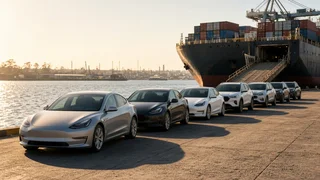
Sourcing vehicles, often through domestic auctions or trade suppliers in the country of origin. Listing vehicles for international buyers, typically with photos, condition notes and auction or inspection grades where available. Preparing export paperwork in the country of origin, such as deregistration and export certificates. Arranging shipping to a destination port, either by roll-on/roll-off vessel or in a container. Providing documents the buyer needs to start customs clearance at the destination.
After the vehicle arrives, the buyer, or a customs broker or importer acting for the buyer, is usually responsible for clearing it, paying duties and fees, meeting local regulations and registering it. Before paying, it is worth confirming exactly where the exporter's responsibility ends. Terms such as FOB (free on board) and CIF (cost, insurance and freight) define which costs and risks the exporter covers and which the buyer takes on.
Vehicle Eligibility for US Import
Vehicle eligibility is the deciding factor for US buyers. Vehicles built for the Japanese domestic market were generally not certified to US Federal Motor Vehicle Safety Standards (FMVSS) or US Environmental Protection Agency (EPA) emissions requirements. A vehicle that was not certified for the US market is treated as nonconforming, and it can only be imported under specific conditions.
Age-based safety exemption: under the federal rule commonly called the 25-year rule, a motor vehicle at least 25 years old can be imported without meeting FMVSS. Age is counted from the date of manufacture, not the model year. Emissions treatment of older vehicles: the EPA has its own criteria for exempting older vehicles. These are not identical to the safety rules, so a vehicle that qualifies under one may still need review under the other. Registered Importer route: some newer nonconforming vehicles can be modified and certified by a Registered Importer, but only if the vehicle has been found eligible for that process. Many Japan-only models have not, and conversion can be costly. Other exemptions: narrower provisions exist for purposes such as temporary use, display or racing, and they come with strict conditions on use.
Market specification matters here. A model sold in both Japan and the US under the same name can still differ in its lighting, emissions equipment, labeling and safety components. A Japanese-market version should not be assumed to be equivalent to the US-market version.
Emissions Compliance and Safety Standards
Emissions compliance and safety standards are handled by different agencies:
Safety: the National Highway Traffic Safety Administration (NHTSA) oversees FMVSS conformity. Emissions: the EPA oversees federal emissions conformity. State rules: some states, especially those that follow California emissions rules, add their own requirements at registration. A vehicle can be federally admissible and still be difficult to register in certain states.
Right-hand drive is not, on its own, a federal bar to importing an eligible vehicle. Buyers should still consider practical issues such as headlight aim, insurance, and how easy the vehicle is to use on US roads.
Import Documentation and Customs Clearance
For a vehicle shipped from an overseas exporter, US customs clearance usually involves the paperwork below. Exact requirements depend on the vehicle and the entry method, so a licensed customs broker can confirm what applies to a specific shipment.
Item | Purpose; Bill of lading | Proves shipment and is needed to claim the vehicle at the port; Commercial invoice or bill of sale | Establishes the purchase price used to assess duty; Export certificate or foreign title | Shows ownership and deregistration in the origin country; NHTSA declaration (HS-7) | States the basis on which the vehicle meets or is exempt from safety rules; EPA declaration (form 3520-1) | States the basis on which the vehicle meets or is exempt from emissions rules; CBP entry documents | Filed with US Customs and Border Protection to formally enter the vehicle
Duties, port fees, broker charges and inland transport add to the purchase price. Tariff rates can change and vary by vehicle type, so a current estimate from a broker is more reliable than an older figure. A vehicle that arrives without valid eligibility may be refused entry, held, exported again or ordered destroyed, all at the importer's expense.
Practical Steps Before Buying From an Exporter
Check eligibility first. Confirm the vehicle's exact manufacture date and which exemption or compliance route applies before paying a deposit. Ask for the chassis or VIN number, auction sheet or inspection report, and clear photos. Use them to check condition and mileage history. Confirm the sales terms in writing: what is included in the price, who arranges insurance, and which port the vehicle will ship to. Use a licensed US customs broker to handle entry filings and estimate total landed cost. Check your state's registration and emissions requirements before the vehicle ships. Be cautious about payment instructions that change unexpectedly. Verify any banking details through a channel you already trust.
Who Uses SBT and Similar Exporters
Exporters of Japanese used vehicles mostly serve buyers in countries with relatively open used-import rules. For US buyers, these companies are most relevant to enthusiasts looking for older Japanese-market models that have passed the 25-year threshold, and to buyers of certain specialty vehicles. For a typical late-model daily driver, buying a US-market vehicle domestically is usually far simpler, because importing a recent nonconforming car is often not legally possible or not worth the cost.
Bottom Line
SBT is best understood as a global exporter of used vehicles from Japan: a company that sources and ships cars, not one that guarantees they can be imported into any particular country. For US readers, the next step is to settle vehicle eligibility, emissions compliance and safety standards for the specific model before buying, and then handle import documentation and customs clearance with a qualified broker.