Car Exporters in Australia: What US Buyers Should Check Before Importing
If you are in the US and looking at car exporters in Australia, vehicle age matters more than price or condition. Most Australian-market cars can be imported into the US without major hurdles only if they are at least 25 years old, counted from the month and year of manufacture. Newer vehicles generally must have been built to US standards, or be on the federal list of vehicles eligible for import and modified by a Registered Importer. That route is rarely practical for Australian-specification cars. Confirm eligibility first, then judge the exporter, the vehicle and the shipping arrangement.
Why Vehicle Age Comes First
Two US agencies control whether a car can enter the country. The National Highway Traffic Safety Administration (NHTSA) enforces the Federal Motor Vehicle Safety Standards. The Environmental Protection Agency (EPA) enforces emissions rules. A car built for the Australian market was certified to Australian rules, not US ones, so it does not automatically meet either set of requirements.
NHTSA safety standards: vehicles at least 25 years old are exempt from the federal safety standards, which is why the 25-year mark is the usual threshold for Australian imports. EPA emissions compliance: older vehicles in original configuration may qualify for an emissions exemption, but the conditions differ from the safety rule. Check them separately rather than assuming one exemption covers both. Vehicles under 25 years old: unless the car was originally built to US specifications, importing it usually means finding it on NHTSA's eligibility list and using a Registered Importer to bring it into conformity. Few Australian-market models are listed, and conversion can be costly. State rules: after federal clearance, the car still has to be titled and registered in your state. Some states, California in particular, have stricter emissions requirements that can affect registration even for exempt vehicles.
Calculate the 25-year date from the manufacture date on the vehicle's build or compliance plate, not from the model year or the first registration date. A car advertised as a given model year may have been built months earlier or later, which can move the eligibility date.
Understanding Australian Market Specification
Market specification is the set of equipment and engineering a manufacturer chose for a particular country. Australian-market cars are right-hand drive, and they may differ from similarly named US models in engines, transmissions, emissions hardware, lighting, trim levels and even body styles. Some models sold in Australia were never offered in the US at all. That is a large part of their appeal, but it also makes parts harder to source.
Confirm the exact model, model year, trim and powertrain rather than relying on a nameplate shared with a US model. Check whether mechanical and service parts are interchangeable with any US-market version, or whether you will need to source them from overseas. Right-hand drive cars are generally legal to register in US states, but expect some practical inconvenience at toll booths, drive-throughs and when overtaking. Ask whether the car has been modified from original specification, because modifications can affect emissions exemptions and state inspections.
How to Evaluate an Australian Car Exporter
Australian car exporters range from established dealers who regularly ship overseas to private sellers and brokers who handle the occasional export. Because you are buying sight unseen from another hemisphere, the exporter's process and transparency matter as much as the car.
Business identity: an Australian business should have an Australian Business Number (ABN), which you can look up on the public register to confirm the trading name and how long it has been active. Export experience: ask how many vehicles the business has shipped to the US and whether they understand US eligibility rules and import documentation. Independent inspection: a reputable exporter should allow a third-party pre-purchase inspection and provide detailed photos or video, including the underbody, chassis numbers and build plates. Clear scope of service: confirm in writing whether the price covers only the car, or also delivery to the port, export paperwork, shipping, marine insurance and US-side handling. Payment protection: be cautious with requests for full payment by untraceable methods before documents exist. Escrow, staged payment tied to documents, or a well-known payment channel reduces risk. Communication: slow, vague or inconsistent answers about the VIN, title status or paperwork are warning signs.
Checking the Vehicle's History in Australia
Australia keeps national records you can use before paying. The Personal Property Securities Register (PPSR) shows whether money is owed on the vehicle and whether it has been recorded as stolen or written off. A car with outstanding finance can be repossessed even after sale, so a clear PPSR result is essential. Ask the exporter for the VIN or chassis number and run or request the check yourself.
Match the VIN or chassis number on the car, the registration papers and the PPSR record. Ask for service records and any history of accident repair. Check whether the car is a statutory or repairable write-off, which affects value and may complicate US titling. Confirm the seller is the registered owner, or has clear authority to sell on the owner's behalf.
Export From Australia: What the Exporter Should Handle
On the Australian side, the vehicle normally needs an export declaration lodged with Australian customs authorities, and its registration should be cancelled so it is no longer recorded as an active Australian vehicle. Exporters and freight forwarders usually manage this. Confirm who is responsible so nothing is missed. You should receive proof of ownership, a bill of sale and the bill of lading, which is the shipping document that proves the car was loaded and shows who can claim it.
Shipping Options
Method | How it works | Points to consider; Roll-on/roll-off (RoRo) | The car is driven onto a specialized vessel and secured on deck levels | Often less expensive; the car must usually be in running condition; no loose personal items allowed inside; Shared container | Several vehicles share one container | Can reduce cost compared with a dedicated container; depends on matching other shipments; Dedicated container | The car travels alone in a sealed container | More protection for valuable or non-running vehicles; usually the most expensive option
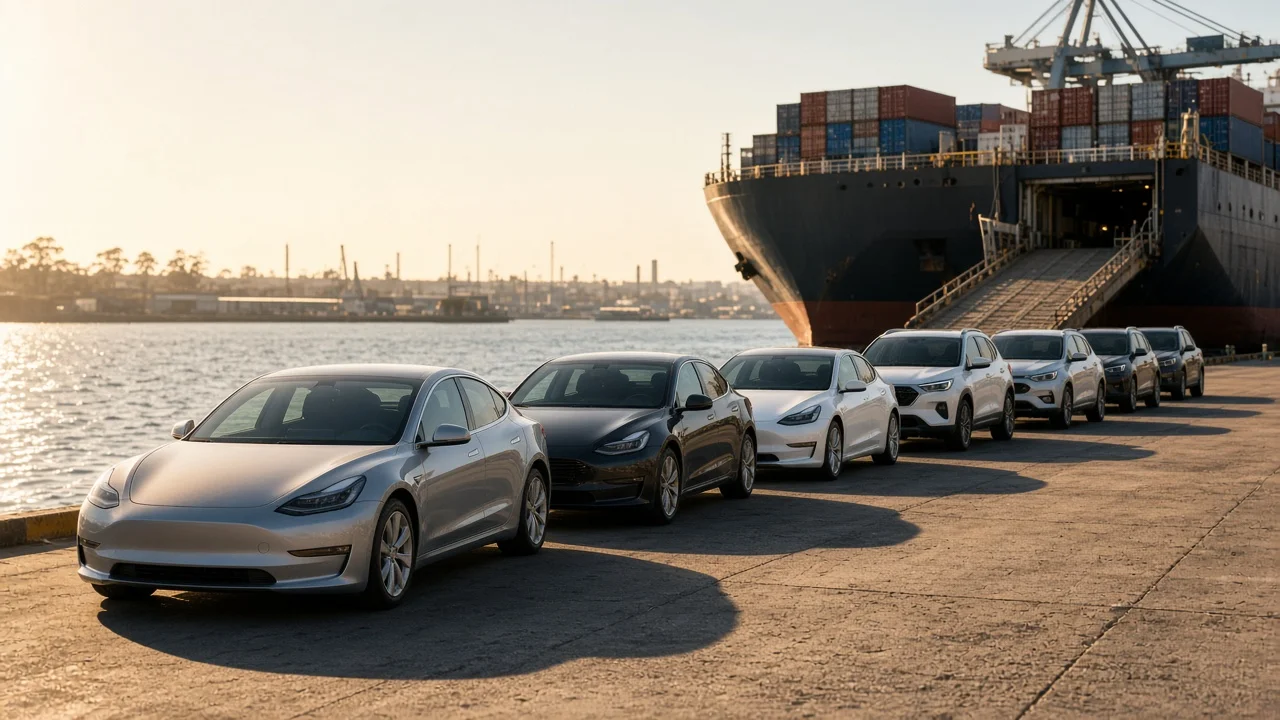
Whatever the method, arrange marine insurance and confirm what it covers. Australian biosecurity rules and US agricultural inspection both expect vehicles to be clean, so the exporter should arrange thorough cleaning, including the underbody, before shipping. A dirty car can be held for cleaning at extra cost.
US Customs Clearance and Import Documentation
When the car arrives, it must clear US Customs and Border Protection (CBP). Many importers use a licensed customs broker to file the entry and handle any duty payable. For ocean freight, an Importer Security Filing usually has to be submitted before the vessel is loaded, so coordinate this with your broker or forwarder early.
Bill of lading and proof of ownership, such as the Australian registration certificate and bill of sale. Commercial invoice showing the purchase price. NHTSA form HS-7, declaring the basis for safety eligibility, such as the 25-year exemption. EPA form 3520-1, declaring the basis for emissions eligibility. Identification for the importer of record, plus any customs bond your broker requires.
Import duty depends on how the vehicle is classified. Passenger cars and light trucks fall under different tariff rates, and light trucks are taxed at a substantially higher rate. A utility vehicle (ute) or pickup from Australia may be classified differently from a sedan, so ask your customs broker how a specific vehicle is likely to be treated before you buy.
Budgeting the Full Cost
The purchase price is only part of the cost. Build a budget that covers every stage, and get written quotes where possible, because costs vary with the vehicle, the route, the ports used and the timing.
Vehicle price and any exporter or broker fees. Pre-purchase inspection in Australia. Inland transport to the Australian port and export paperwork. Ocean freight and marine insurance. US port handling, storage, customs broker fees and import duty. Transport from the US port to your location. State titling, registration, inspection and any repairs needed to pass them. Currency conversion costs if you pay in Australian dollars.
Choosing Your Next Step
Start by confirming the exact manufacture date and whether the car meets both the federal safety and emissions exemptions. If it does, vet the exporter's identity and process, run a PPSR check, and arrange an independent inspection before paying anything substantial. Then line up a customs broker and shipping method, and confirm your state's registration requirements. If the car is under 25 years old and was not built to US specifications, treat the purchase as high risk and confirm a legal import path in writing before committing.