Ford TPMS Sensor Replacement and Relearn: F-150, Explorer, Fusion
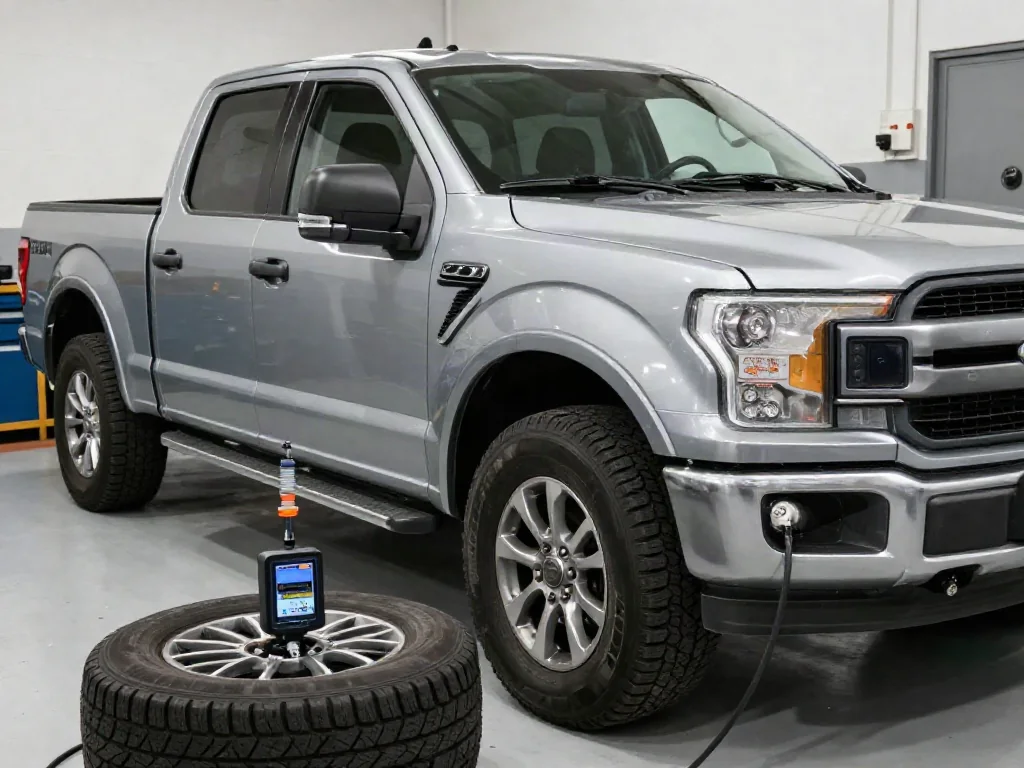
Ford F-150, Explorer, and Fusion owners often need a Ford TPMS reset tool after a dashboard warning, a wheel change, or Ford TPMS sensor replacement. The tire pressure monitoring system relies on communicating Ford TPMS sensors, correct cold tire pressure, and a completed vehicle relearn. A TPMS reset tool for Ford, including a Ford TPMS relearn tool, can support sensor activation and training, but only when the Ford TPMS tool matches the vehicle, year, and required task.
Check Tire Pressure and Confirm the Need for Sensor Replacement
Before ordering a Ford TPMS sensor, check cold tire pressure against the door-jamb tire placard and write down the exact dashboard wording. A light after overnight parking can reflect underinflation, a slow leak, or a communication issue rather than a failed sensor. Inflate each tire to the placard values, then recheck once the tires have cooled. Record whether the warning is a lamp, a message, or a pressure display, because that detail helps a shop decide what to test next.
A warning alone cannot identify a failed Ford TPMS sensor. Pressure loss, missing sensor communication, and incomplete training each need their own checks. A tire shop confirms sensor response, then verifies replacement fitment using year, configuration, and applicable parts information. Professional service includes tire removal, sensor installation, valve stem seal inspection, and the documented relearn. Those steps belong with trained technicians because improper sealing or skipped training can leave a warning in place even after parts are installed.
Select a Ford TPMS Tool for the Required Task
A listed Ford TPMS reset tool may not perform every job. Sensor activation, sensor programming, and vehicle relearn are separate tasks. Activation wakes a supported sensor so the vehicle can read it. Sensor programming writes application data or a sensor ID into a replacement unit. Relearn, sometimes called training, teaches the vehicle which IDs belong at which wheel. Owners should match a TPMS reset tool Ford listing to the actual work, not to a generic Ford TPMS sensors label.
Check the tool manufacturer's application coverage for the exact Ford model, model year, market, and installed sensor type before buying a Ford TPMS sensor reset tool or a TPMS reset tool for Ford. A basic trigger tool may activate supported sensors without programming replacements or diagnosing communication faults. Practical purchase checks include documented coverage, clear operating instructions, battery requirements, and any required updates. A Ford TPMS relearn tool that lacks those details can fail during training even when the hardware looks similar.
Follow the Verified Trigger-Tool Relearn Sequence
Locate the exact vehicle-specific training procedure before attempting any ignition, brake, or button sequence. Do not treat one pattern as valid for every Ford. Park the vehicle, apply the parking brake, confirm cold tire pressure, and prepare the tool according to its instructions. Enter training mode only as the vehicle documentation describes, then wait for the vehicle's acknowledgment. Activate each sensor at the instructed position in the documented wheel order, and do not skip a station because the order looks obvious.
Wait for each acknowledgment, observe documented time limits, and confirm final completion before checking dashboard status. Relearn confirmation is the vehicle's signal that it accepted a sensor ID at that corner. Training does not repair a leaking tire or a nonresponsive sensor, and it is not a substitute for sealing or replacement. If an acknowledgment is missed, restart only with the documented procedure. Do not release tire pressure to force a signal; that practice can create a new leak without completing the relearn.
Verify F-150 Sensor Fitment, Including the 2016 Model
Organize F-150 TPMS work around model year and vehicle identification, with a dedicated checkpoint for a 2016 F150 TPMS sensor. Ford F-150 TPMS sensors, including F-150 TPMS sensor and F150 TPMS sensors listings, are not interchangeable by truck name alone. Verify sensor application, communication specification, valve arrangement, and replacement sensor programming needs before ordering a TPMS sensor for Ford F150. A 2016 model-year label does not establish that an advertised 2016 F150 TPMS sensors kit or tool fits the specific truck.
Replacement wheels and seasonal wheel sets still require checking the installed sensors and the truck's documented relearn requirements. TPMS for Ford F150, including TPMS Ford F150 seasonal sets, can change valve style and sensor ID handling. Give a tire shop the model year, vehicle identification, wheel changes, warning wording, and any existing sensor test results. That package helps confirm a TPMS sensor 2016 F150 application or another year without guessing from a generic Ford F 150 TPMS sensors listing.
Plan Explorer Sensor Replacement and Relearn
Confirm the Explorer's model year and applicable TPMS configuration before selecting a Ford Explorer TPMS sensor or following TPMS Ford Explorer instructions. Ford Explorer TPMS hardware can vary by year and market, so a generic Ford TPMS sensors claim is not enough. Recent tire work, wheel changes, and the timing of a warning help a shop choose useful checks without establishing a diagnosis. A TPMS sensor Ford Explorer that fails to communicate may need activation, training, or further testing.
Verify replacement sensor fitment and complete any required sensor programming before following the documented vehicle training procedure. After service, confirm correct pressure, inspect the valve area for leakage around the valve stem seal, and check sensor recognition and warning status. Ford Explorer TPMS relearn success depends on both a communicating sensor and the vehicle accepting that sensor ID. If the lamp remains, return to the shop with the work performed, the tool used, and the exact remaining message so the next test is targeted.
Confirm Fusion Reset-Tool Coverage and Training Instructions
Match a TPMS reset tool for Ford Fusion to the Fusion's exact model year and application instead of relying on a general Ford compatibility claim. Confirm whether the documented procedure needs sensor activation and whether a replacement sensor also requires programming. Some Fusion applications use a trigger-based training mode; others need additional steps that a basic Ford TPMS tool cannot complete. Coverage notes should name the Fusion year and sensor family, not only the Ford brand.
Use the applicable training-mode entry steps, wheel order, and completion signals from the Fusion's own procedure. Do not invent a Fusion-wide sequence from F-150 or Explorer steps. When the vehicle will not enter training mode, verify the instructions and tool coverage first, including battery condition and whether the tool supports that year's Fusion sensors. If the procedure remains unsuccessful, seek assistance rather than repeating random ignition or button combinations.
Resolve Missing Acknowledgments and Persistent TPMS Warnings
After unsuccessful training, note which wheel failed to acknowledge, whether training mode expired, the tool battery condition, and the exact dashboard messages. Missing acknowledgment can have several causes and does not by itself prove the sensor battery is depleted. A weak tool battery, the wrong wheel order, an expired training window, or a sensor that never transmitted can look similar from the driver's seat. Capture those observations before repeating the procedure or taking the vehicle for a shop test.
When basic checks do not resolve Ford TPMS sensor replacement follow-up issues, professional testing can examine sensor transmission, programmed application, stored sensor IDs, and vehicle fault information. A retrieved diagnostic code is evidence to interpret, not proof a part has failed, and manufacturer-dependent codes require vehicle-specific confirmation. Stop driving if a tire is visibly damaged or rapidly deflating; clearing a warning cannot establish tire safety. A completed relearn only confirms that the vehicle recognized sensors, not that the tire, valve stem seal, or pressure remains sound.