Ford engine oil capacity
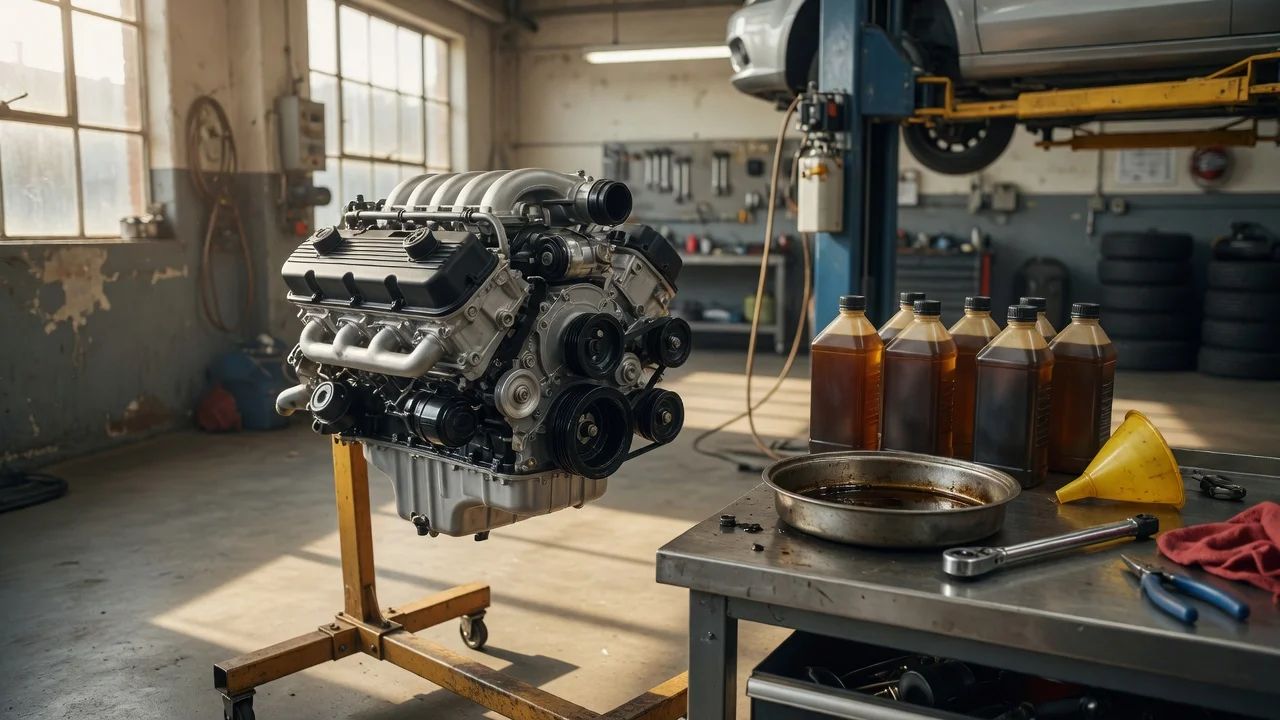
There is no single Ford oil capacity
Ford engine oil capacity is not one published number for the brand. The correct fill volume is the specification for a given engine in a given vehicle, and it changes with engine family, displacement, model year, generation, and market. A figure that is right for one Ford will be wrong for another, even when the badges look similar.
The essential answer is therefore a lookup, not a universal capacity. Use the oil quantity listed for your exact powertrain in the owner’s manual, the under-hood information label, or Ford workshop literature for that model year. If those sources disagree with a generic chart, the vehicle-specific document is the one that applies.
What changes the number
Capacity is a property of the lubrication circuit: sump volume, oil cooler, filter housing, and any auxiliary passages. Ford has used many four-cylinder, V6, V8, and diesel engines across cars, SUVs, and trucks, and those circuits are not interchangeable. Two engines with the same displacement can still differ if the oil pan, filter, or cooler layout changed between generations.
Engine code and displacement, not only the model name on the tailgate or decklid; Model year and generation, including mid-cycle pan, cooler, or filter changes; Service fill with a new filter versus refill without replacing the filter; Dry fill after an engine rebuild or pan-off service versus a routine drain-and-fill; Market specification, because the same nameplate can use different engines in different regions
Service fill is the quantity used after a normal oil change: drain the sump, replace the filter when specified, and refill to the dipstick or electronic oil-level mark. Dry fill is larger because the cooler, galleries, and filter are empty. Mixing those two figures is a common source of overfill. Published capacities also often assume the filter is changed; leaving the old filter in place reduces how much oil the system will accept.
How to read the specification for your Ford
Identify the engine first. On most recent Fords that means the engine RPO or calibration label, the description in the owner’s manual (for example a 2.0-litre turbo four, a 3.5-litre twin-turbo V6, or a 5.0-litre V8), and the model year of the vehicle, not the year you are changing the oil. Then read the capacity that is paired with that engine and with an oil-filter replacement if the manual states that condition.
Treat the listed volume as a starting quantity, then confirm on the dipstick or the instrument-cluster oil-level procedure after the engine has been run and allowed to settle as the manual describes. A cold, parked reading taken immediately after pouring can sit below the full mark even when the fill is correct, because oil is still draining back from the galleries. Overfilling to “make the stick look full” is not a substitute for the specified procedure.
This article does not list quart or litre figures by engine. No vehicle-specific Ford capacity table, owner’s-manual extract, or workshop specification was supplied as evidence here, so any single number presented as “the Ford capacity” would be unsupported. If you need a fill volume, take it from the documents that name your engine and model year, and match viscosity and specification (for example the Ford oil standard printed in the manual) separately from quantity.