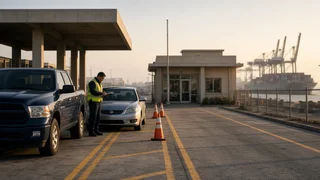
Find the DMC parking and badging office

When your destination is the DMC parking and badging office, the trip starts with an unfamiliar address and a specific errand. For many drivers, this office is tied to a medical or administrative campus, where parking demand is high and the rules are stricter than in a typical retail lot. The correct route matters, but so does understanding how an official badging facility influences traffic flow, enforcement, and where a vehicle should wait. Taking a moment to separate the office itself from nearby parking structures can prevent a looping drive and a stressful first visit.
Essential answer
The essential answer is that this is a service location where visitors obtain or renew identification badges, often connected to a hospital, university, or corporate security system called DMC. The parking and badging office combines two functions: a place to resolve a parking permit and a place to receive a credential. Without a confirmed street address, the practical meaning is that a driver should treat DMC as a campus identifier, not a stand-alone building that will be obvious from the roadway with large signage.
The navigational purpose also implies a difference from a general parking office. A badging office secures identity and access, so the immediate curbside may be controlled by a gate, a call box, or a short-term loading zone. A driver researching this query should expect to check posted signs, bring a government-issued ID, and avoid leaving a vehicle unattended where a security review or quick credential pickup is required. The phrase does not itself confirm a single city or building, so applying the name to the correct local facility matters.
Identification and location
Recognizing the office usually begins with wayfinding that says employee parking, security badging, or access control. Because the term DMC can describe a medical center or an industrial campus, the driver should look for a building entrance that combines a small lobby window with an adjacent paid or permit lot. It is rarely a large standalone office tower. Posted signs for visitor parking restrictions and directional arrows near a security kiosk are better indicators than searching for the full phrase on one sign.
Location cues also include nearby structures where available clearance and maneuvering space matter. A truck or tall van may not fit a compact ramp leading to a lower-level office, while a standard car may need to circle past a short-term drop-off lane. Local rules govern whether a driver can park briefly with hazard lights or must enter a gated visitor area. Checking the surrounding marked spaces, curb paint, and any enforcement zone helps distinguish the badging entrance from an employee garage or a restricted delivery bay.