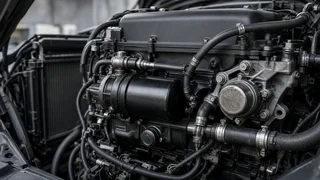
Find Cummins ISX oil capacity

Finding the correct Cummins ISX oil capacity matters because the big-bore diesel holds a substantial volume, and even a modest overfill or underfill changes how the lubricant protects bearings, injector actuation hardware, and turbocharger surfaces. The answer is not one universal number for every chassis or retrofit application. Pans, filters, oil coolers, and mounting angles can shift the service fill amount. Before buying oil or resetting a maintenance reminder, confirm which ISX configuration and dipstick calibration apply to the specific vehicle, then use the fill quantity strictly as a starting point for a dependable level check.
Essential answer
The ISX Cummins oil capacity is commonly described as a baseline service volume rather than a single exact amount. On many on-highway versions, a full-service fill including a standard filter is in the range of roughly 40 to 44 quarts, but this depends on pan design, oil cooler piping, and whether the engine sits in a vocational truck, motorhome, or other chassis. Treat published figures as a planning value: carry enough oil to complete the fill, then verify the level deliberately instead of assuming every gallon must go in.
Because the dry sump fill, filter prefill, and post-start settling amount can differ, the most reliable procedure is to add most of the expected oil, allow the lubricant to drain into the pan, start the engine briefly if service guidance allows, shut it down, and check the dipstick. The goal is correct operating level, not reaching an arbitrary capacity. Extra oil can be forced into the crankcase ventilation path or whipped by the rotating assembly, so a slow final top-up protects the engine better than matching a memorized number.
Identification and location
ISX identification begins at the engine dataplate, usually attached to the front gear housing or rocker cover area, where the engine serial number and control parts list help distinguish an ISX12, ISX15, or an older ISX variant. That is essential because oil pan depth, sump location, and dipstick calibration vary. Fleet maintenance systems sometimes record the serial number and the last measured fill, so comparing the installed pan shape with the documented configuration prevents confusion when service information lists several possible quantities.
The dipstick and fill neck are typically on the left side of the engine, but frame rails, aftertreatment plumbing, and accessory brackets can hide them. Look for a bright handle near the oil module or alongside the block. After wiping the stick, reinsert it fully and read both sides at the crosshatch. If the stick is bent, the tube is loose, or the truck has been repowered, the marking may no longer represent the current pan and pickup, so the identification step protects the oil capacity answer from becoming a costly assumption.