Find F20C Oil Capacity
The Short Answer
The F20C is Honda's 2.0-litre four-cylinder engine, best known from the early S2000 roadster. No verified service documentation was supplied for this guide, so it does not state a specific oil capacity figure. Quoting an unconfirmed number risks underfilling or overfilling the engine, and either can cause problems.
The authoritative figure is in the owner's manual or the factory service manual for your exact vehicle. Look for the entry labelled as the oil change capacity including the filter. That is the amount you need for a routine oil and filter change, and it is less than the total dry-engine capacity.
Why the Figure Can Vary
Several factors can change the correct amount or the way it is listed. Check each one against your vehicle before relying on a number from forums, parts listings or general specification tables.
Market and model year: S2000 production spanned different engines in different regions, so make sure the document you consult matches your car's market and year. Engine variant: the F20C is easily confused with the later F22C1, a 2.2-litre engine used in some S2000 models. Specifications for one should not be assumed to apply to the other. Refill versus total capacity: manuals often list an oil-and-filter change amount, an oil-only change amount and a total capacity after a rebuild. These are different figures. Units: capacities may be given in litres, US quarts or imperial quarts, which are not interchangeable. Modifications: aftermarket oil pans, larger filters, oil coolers or remote filter setups can increase the amount the system holds.
How to Identify Your Engine Before Choosing a Specification
Because the F20C and F22C1 look similar and powered the same model line, confirm which engine you have before looking up a capacity. Start with the vehicle documentation. The registration and the original sales paperwork show the model year and market, and the owner's manual for that year and market lists the engine and its fluid capacities.
The engine also carries an engine number stamped on the block. Its exact location can vary, so use the service manual for your configuration to find it rather than guessing. If the engine has been swapped or replaced, the stamped engine code is more reliable than the vehicle's model year. In that case, follow the specification for the engine actually fitted.
Confirming the Correct Fill Level
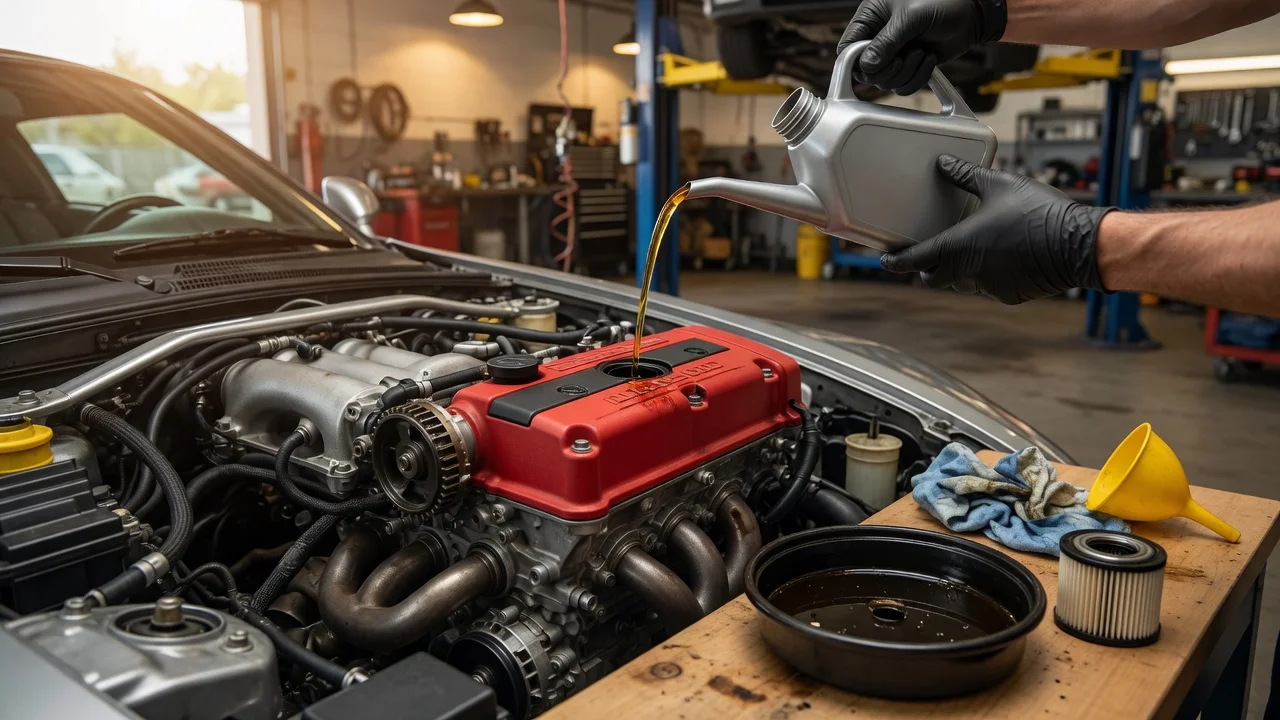
Even with a documented capacity, treat it as a guide and use the dipstick for the final check. A small amount of old oil often stays in the engine after draining, so the full listed amount may slightly overfill it. A practical approach is to add slightly less than the listed amount, run the engine briefly to fill the new filter, and then switch it off. After the oil has had time to drain back to the pan, check the dipstick with the car on level ground. Top up in small increments until the level sits within the marked range.
Use the oil grade and specification your manual recommends for your climate and market. Viscosity guidance can differ by region and was not supplied for this guide.
What This Guide Could Not Confirm
No source documents were provided, so this guide does not confirm a specific oil capacity, recommended viscosity, engine number location or region-by-region production dates. Verify these details in the owner's manual or factory service manual for your vehicle. A Honda dealer can also provide them once they have your vehicle identification number.