EVAP Monitor Not Ready: Drive Cycles, Resets, and Emissions Testing
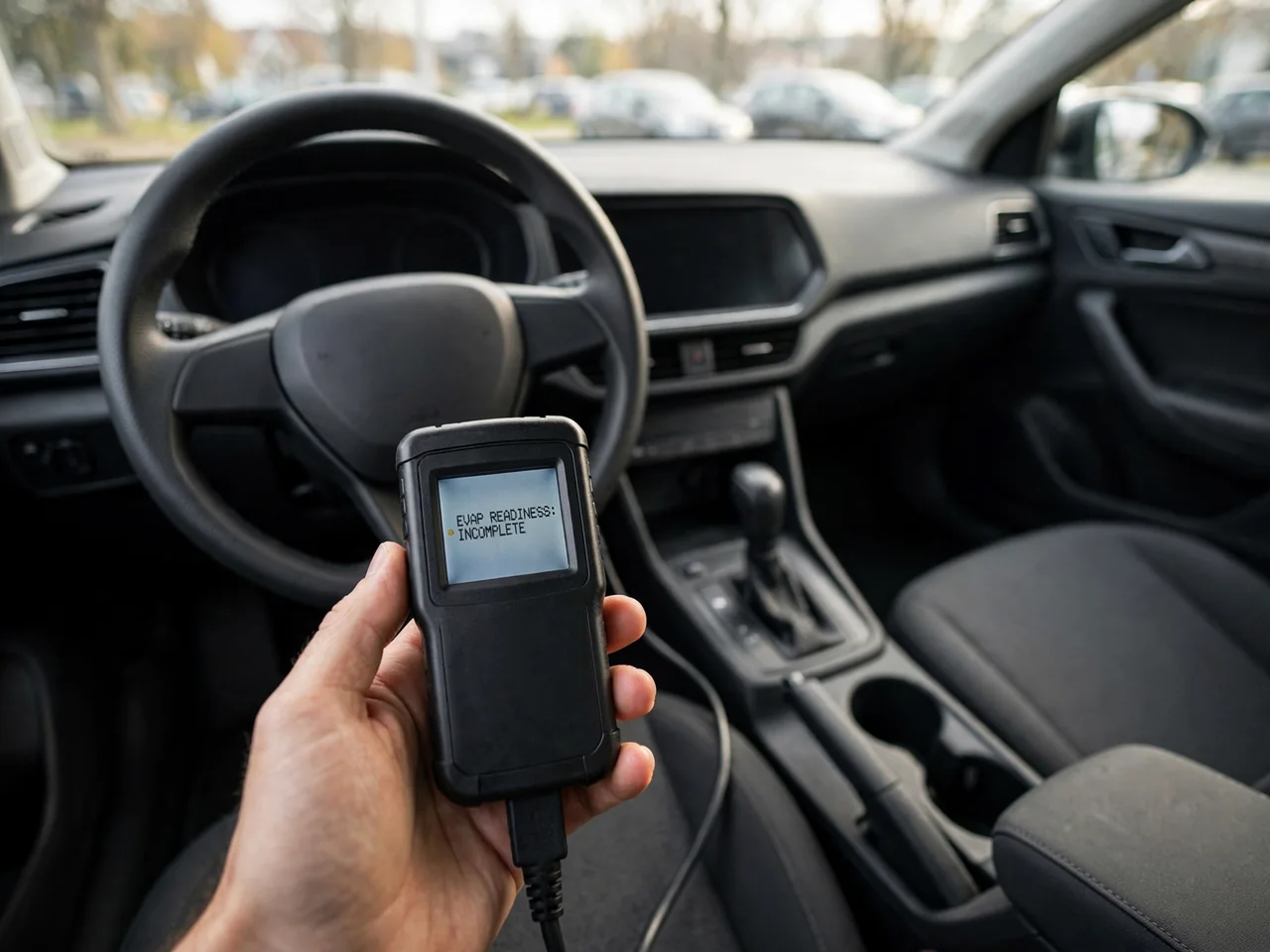
When an EVAP system not ready status appears after a repair, battery disconnect, or code clear, the evaporative emissions monitor has not finished its OBD-II readiness self-test. Incomplete does not prove a leak or a failed part. Getting the EVAP system monitor ready depends on enable criteria, drive cycle conditions, and whether pending trouble codes are blocking the test before a smog or emissions inspection.
What EVAP Monitor Incomplete and Mon Inc Mean
The EVAP system monitor is the onboard check of the evaporative emissions system, which stores and routes fuel vapors instead of letting them escape to the atmosphere. Under specified enable criteria, the control module runs an EVAP system self-test that looks at purge and leak-control operation. On a scan tool, that monitor is a readiness result, not a live parts verdict. Until the self-test finishes after a reset, EVAP system monitor incomplete or EVAP system not ready remains the displayed state.
On many scan tools, EVAP system mon inc and EVAP system monitor inc both mean Incomplete: the applicable OBD-II readiness test has not completed since readiness was reset. EVAP system inc and not ready describe that same unfinished state. Incomplete does not establish a vapor leak, identify a failed part, or confirm the evaporative emissions system is healthy. An unsupported monitor is a separate scanner reading from not ready, so check the tool's display definitions before treating Inc as a failure.
Why EVAP Readiness Stays Not Ready After a Reset
A shop visit that leaves the EVAP system not ready often traces to a reset, not a new leak. Clearing diagnostic codes, a scan-tool reset of the EVAP system monitor, or a battery disconnect can erase completed OBD-II readiness results, including after a successful repair. The monitor then stays incomplete until enable criteria are met again and the self-test finishes. Inspection readiness is lost at the same moment, and other monitors may also drop from complete even though the repair itself was sound.
Short trips, a fuel level outside the window the control module requires, unsuitable ambient temperature, or too little parked time can keep the EVAP system monitor incomplete even when the hardware is intact. Cold-soak and key-off testing needs are easy to miss in stop-and-go use. Certain diagnostic faults and pending trouble codes can inhibit the monitor until they are diagnosed rather than cleared. Before changing more parts or wiping memory again, record readiness status, warning-light behavior, and stored or pending codes so later results can be compared.
Drive Cycle Conditions That Allow the EVAP Self-Test
An EVAP system drive cycle is not a generic mileage loop. The EVAP system monitor drive cycle must follow the manufacturer procedure for that vehicle's year, model, engine, and emissions configuration. Fuel level, temperature, cold-soak time, engine operation, and battery condition may all be prerequisites; published numbers for one platform do not apply to every other. Asking how many miles to reset the EVAP system misses the point, because mileage alone cannot guarantee the monitor had a qualifying chance to finish.
Some vehicles run portions of EVAP testing after shutdown, so key-off testing and appropriate parked time matter as much as highway miles. Getting the EVAP system ready still depends on those enable criteria remaining true long enough for the self-test to complete. Mileage after a reset is only useful if the trip actually qualifies. Keep driving within traffic laws and normal safe operation. If the prescribed procedure cannot be followed safely, seek professional assistance rather than improvising a cycle that skips cold soak, fuel-level, or battery conditions.
How to Get the Monitor Ready Without Repeatedly Clearing It
Clearing or resetting the EVAP system monitor does not make it ready. A scan-tool clear, another attempt to reset the EVAP system, or a battery disconnect restarts the readiness process for EVAP and often for other monitors as well, which works against getting the EVAP system monitor ready for inspection. Fixing an EVAP system that is not ready, or an incomplete monitor, is not another wipe of memory. Leave completed monitors intact, repair diagnosed faults, then give the documented self-test a chance to run.
A practical sequence is to preserve scan results, address diagnosed faults, meet the documented prerequisites, allow the EVAP system self-test to run, and recheck readiness while parked. Safe observations include confirming a fitted fuel cap is secured as the owner's manual describes and noting recent refueling or battery work, both of which can delay completion. A completed repair still needs monitor verification. Repeated resets make troubleshooting harder because they erase the very history that shows whether the monitor ever ran.
When Persistent Incomplete Status Needs Vehicle-Specific Testing
If qualifying trips still leave the EVAP system monitor incomplete, especially with a warning light, pending trouble codes, or a recurring fault, professional diagnosis is warranted. A technician can review monitor enable criteria, relevant sensor data, and commanded system operation without treating incomplete status as a parts diagnosis. Fixing the EVAP system monitor then means finding why the self-test never ran or never finished. A stored or pending code is evidence to interpret, not proof a component has failed, and manufacturer-dependent codes need vehicle-specific confirmation.
Silverado owners seeing EVAP system monitor incomplete, and Toyota drivers with the same incomplete reading, still need the exact year, model, engine, and applicable service procedure. Neither name has a single drive cycle or a common failure that explains every unfinished monitor. Verify vehicle-specific definitions before interpreting any manufacturer-dependent diagnostic code. Do not use homemade vapor-system pressurization, line bypasses, or forced actuator procedures. Fuel odor or visible fuel leakage needs prompt professional assessment rather than continued driving aimed only at readiness.
What an Incomplete EVAP Monitor Means for Emissions Testing
Inspection eligibility when the EVAP system is not ready for emissions testing depends on the jurisdiction, model year, fuel type, and that program's inspection readiness rules, including smog programs that look at evaporative monitors specifically. One incomplete monitor is not automatically acceptable, and it is not automatically a failure either. Check the inspection program's current EVAP-specific requirements before scheduling a test. A gasoline passenger car, a different fuel type, and an older or newer model year may not share the same allowance.
Before the appointment, do a parked scan-tool check of all supported monitors and of warning-light status. Clearing codes immediately before testing can leave the EVAP system not ready and drop other monitors as well, even if the repair was sound. An extinguished warning light alone does not establish inspection eligibility, because readiness can still be incomplete. Finish the documented self-test after faults are addressed, then confirm complete status while parked so smog or emissions inspection is not scheduled on an unfinished monitor.