EVAP Leak Detection Pump: What It Does and Why It Fails
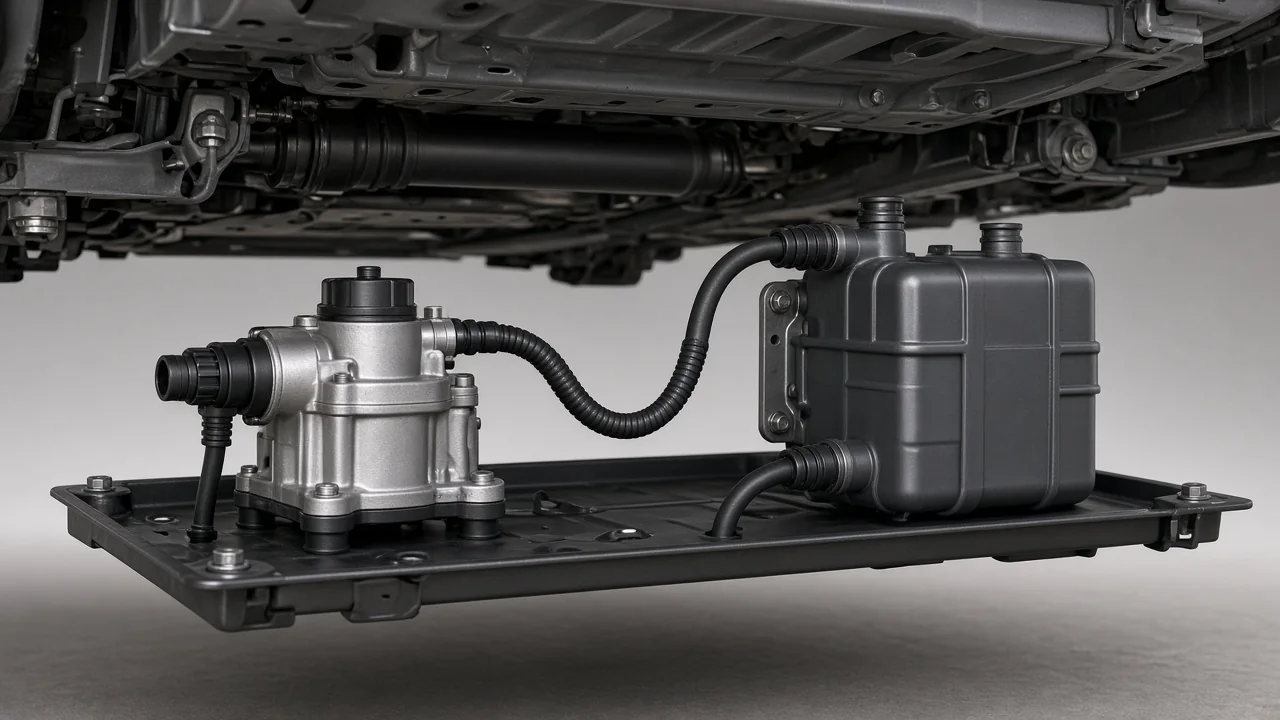
The fuel vapor leak detection pump is part of the evaporative emissions system that watches whether fuel vapor stays contained rather than escaping. When the EVAP monitor runs, that pump or a related integrity device helps check sealing around the charcoal canister, vapor lines, and valves. A check-engine light or diagnostic trouble codes can indicate an EVAP concern without proving the pump has failed.
How the Leak Detection Pump Checks Fuel Vapor Containment
The evaporative emissions system is built around fuel vapor containment. Gasoline vapors that form in the tank are stored in a charcoal canister instead of being released, then routed toward the engine under controlled conditions so they can be burned during combustion. Vapor lines, a vent valve, purge-related valves, and pressure sensing hardware work together to keep that path sealed when the system is supposed to be closed and to open it only when the vehicle commands vapor flow.
An EVAP system leak detection pump helps the vehicle decide whether that sealed vapor path is intact. How the pump operates depends on the vehicle: some designs apply a small pressure or vacuum as part of an EVAP monitor, while others rely on different pressure sensing methods. The pump supports an emissions self-test; it does not deliver liquid fuel to the engine. Layouts vary, so the canister, vapor lines, valves, and sensing components should be identified from that vehicle's service information rather than assumed as a single universal arrangement.
Understanding EVAP System Integrity Module and Monitor Terminology
Owners looking up parts or service information may see several names for leak-monitoring hardware. ESIM expands to evaporative system integrity monitor, and catalogs may list an EVAP system integrity module or an EVAP system integrity monitor for the same monitoring job. Those labels describe equipment used to watch fuel vapor containment on an EVAP system, but they are not proof of a single shared design. Treat catalog or scan-tool wording as a starting point, then match it to the vehicle before concluding what is installed.
An EVAP system integrity module can rely on passive mechanical action and switch functions to support leak monitoring rather than an electric pump. The name alone does not establish that a fuel vapor leak detection pump is present. Confirm the installed monitoring design with vehicle-specific service information before interpreting operation or ordering parts. These names belong to vapor containment monitoring, not to a single interchangeable part, and treating an integrity module as a pump, or the reverse, can send diagnosis and parts selection in the wrong direction.
What a Check-Engine Light and Other Symptoms Can Tell You
A check-engine light can be one indication of an evaporative emissions concern, including a problem involving the EVAP monitor or leak-detection hardware. The lamp does not identify a failed fuel vapor leak detection pump. Diagnostic trouble codes stored with the light still need vehicle-specific interpretation, because the same code family can reflect a leak, a valve, a sensing circuit, or an incomplete test. An EVAP monitoring fault may also appear without noticeable changes in driving behavior, so the absence of a drivability complaint does not rule the system out.
Fuel odor near the vehicle warrants attention because it can mean vapor is escaping somewhere in the evaporative emissions system, yet smell cannot isolate the pump as the cause. A loose cap, damaged line, leaking canister, or valve that is not sealing can produce a similar odor. Strong fuel odor or visible liquid fuel is a different situation: stop the vehicle safely, keep ignition sources away, and arrange professional assistance rather than continuing to drive or attempting to open vapor plumbing to investigate.
Why the Pump or Its Monitoring Circuit Can Stop Working
Where the installed design uses an electric EVAP system leak detection pump, the unit can stop working because of internal electrical or mechanical failure, such as a motor that no longer runs or a mechanism that no longer builds or holds the intended test condition. That possibility is design-dependent and is not a statement about how often it happens. Moisture, contamination, or connector corrosion can also interfere with monitoring by disrupting pressure sensing signals, pump commands, or switch feedback even when the rest of the evaporative emissions system is intact.
Damaged wiring, restricted venting, leaking lines, or a vent valve that is stuck open or closed can disrupt an EVAP monitor even when the pump itself still functions. The self-test looks at the whole vapor path, so a leak or a blocked vent can look like a monitoring failure. An EVAP leak code or an incomplete monitor therefore cannot prove that the pump needs replacement. Those results are evidence to interpret, and manufacturer-dependent codes require vehicle-specific confirmation before any part is condemned.
Safe Observations and Professional EVAP Diagnosis
Before anyone clears diagnostic information, it is useful to record how the check-engine light behaves, whether fuel odor is present, whether a recent refueling event lined up with the warning, and which diagnostic trouble codes were retrieved. That history can be lost if the memory is erased too soon. If the vehicle has a removable fuel cap, check that it is closed securely and look for obvious seal damage, following the owner's manual. A cap that is not seated can interfere with fuel vapor containment without involving the leak detection pump.
Every stored code still needs verification of its vehicle-specific meaning before interpretation, especially when definitions depend on the manufacturer. Professionals may then use circuit checks, commanded component tests, and approved EVAP leak-testing equipment to isolate whether the fault is the pump, an integrity module, a valve, wiring, or an actual leak. Improvised pressure testing, opening vapor plumbing, and work beneath an unsupported vehicle are not appropriate owner methods. Those steps can release fuel vapor, create ignition risk, or put a person under a vehicle that is not safely supported.
When Leak Detection Pump Replacement Is Justified
EVAP system leak detection pump replacement is justified after testing identifies the pump or its monitoring assembly as the faulty item, not after a code appears in isolation. Confirm the correct component using the vehicle's identification and applicable service information, because an integrity monitor, integrity module, and pump are not automatically the same part. Ordering from a generic description can install hardware the vehicle never used. Matching the installed design also prevents treating a switch-based ESIM as if it were an electric pump that simply needs to be swapped.
Access, how the assembly is packaged, and the condition of associated seals and connectors affect how large the repair becomes, even when the failed piece is identified. Those details belong in vehicle-specific service information and do not require hazardous removal steps at home. After parts are installed, repair verification can include functional testing and successful EVAP monitor completion once the vehicle's enabling conditions are met. Clearing the warning light alone does not demonstrate a successful repair. The goal is restoring normal emissions operation, including reliable fuel vapor containment monitoring.