EV Battery Recycling and Disposal: How It Works and Who Handles It
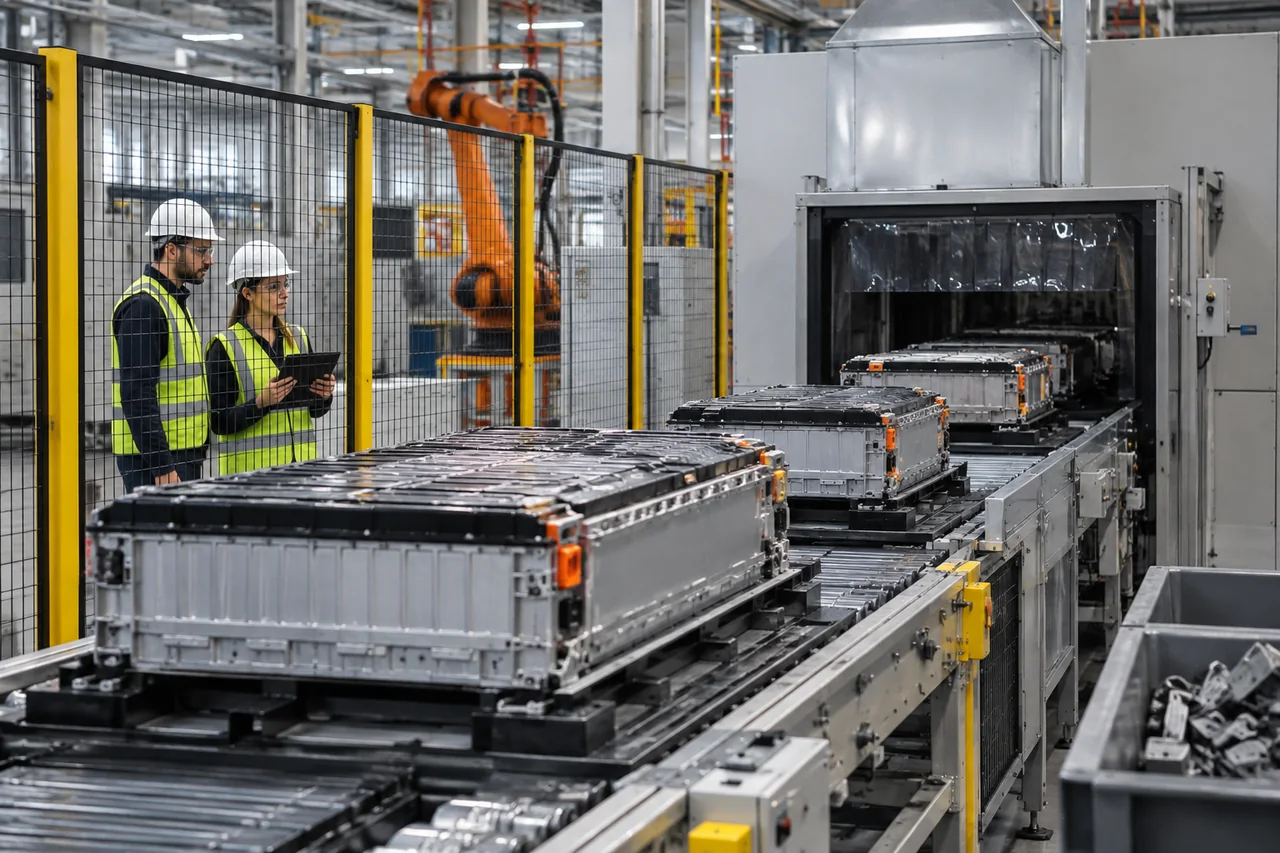
When an EV pack leaves vehicle service, owners still have structured options. EV battery disposal is not ordinary trash. Recyclers recover metals through battery material recovery, and some packs first enter second-life battery applications. Collection access, chemistry, and who handles the pack shape the path, from a local battery collection program to China EV battery recycling networks.
Can EV Battery Packs Be Recycled?
Yes, an EV battery can be recycled. EV car battery recycling is technically established for traction packs, but that does not mean every retired pack is collected or processed in the same way. Battery collection networks, commercial processing capacity, and accepted chemistries differ by region. A lithium-ion pack that still contains nickel and cobalt is not handled identically to a chemistry with less of those metals. Owners should treat recyclability as a capability of the industry, not as a guarantee that a nearby facility will take every pack.
End-of-life battery packs still contain recoverable materials, commonly including lithium, nickel, cobalt, copper, and aluminum, though the mix depends on cell chemistry and pack design. Technical recyclability is not the same as the share of packs actually collected, the metals recovered, and the fraction returned to new battery production. A pack that has reached the end of its vehicle service also does not prove that every cell is spent. Remaining capacity, uneven module condition, and safety status still matter before a recycler or reuse program decides the next step.
How Recycling Recovers Battery Materials
Professional EV battery recycling starts with intake and assessment, then controlled preparation, material separation, and refining. The goal is battery material recovery rather than informal teardown. After casings, copper, aluminum, and other bulk metals are separated, processors often produce black mass, a concentrated mixture of electrode materials that still needs further treatment. That intermediate is not a finished cathode or a drop-in lithium salt. What a plant can recover depends on pack chemistry, contamination, and how thoroughly modules were identified before processing.
Facilities then choose among hydrometallurgy, pyrometallurgy, and direct recycling, and many operations combine more than one approach. Hydrometallurgy uses chemical leaching and purification to isolate metals. Pyrometallurgy uses high-temperature treatment that can handle mixed or less-characterized feedstock, often at the cost of some lithium recovery depending on plant design. Direct recycling aims to keep more of the electrode structure intact rather than reducing it to elemental salts. Product quality targets for battery-grade output, residual contamination, and process design all change what actually returns to manufacturing. Universal recovery percentages are not meaningful across every plant and chemistry.
Where Reuse and Second-Life Applications Fit
Not every retired traction pack goes straight to recycling. After professional assessment, an end-of-life battery pack may be repaired, reused in another vehicle if policy and condition allow, placed in a second-life battery application, or sent for material recovery. Stationary energy storage is one common second-life path, using remaining capacity to buffer buildings or the grid. That use is still subject to pack condition, thermal and electrical system design, and safety requirements. A module that is electrically sound for a slower stationary duty may be unsuitable for another car.
Age, displayed driving range, or a remaining-capacity reading alone cannot establish whether reuse is appropriate. Internal imbalance, prior thermal events, connector damage, and missing battery traceability records can rule a pack out even when the dash still shows usable miles. Second-life use postpones, rather than eliminates, eventual EV battery disposal. When the stationary system is later retired, the same collection and recycling questions return. That delay can be useful, but it does not change the need for a qualified end-of-life route when the cells finally leave service.
How Owners Can Arrange EV Battery Disposal
For EV battery disposal, start with the vehicle manufacturer, an authorized service provider, or a qualified local battery collection program. Those parties can confirm whether the pack is accepted, how collection is arranged, whether fees apply, what documentation is issued, and where the battery is supposed to go next. Household trash, curbside recycling, and ordinary retail battery bins are not appropriate destinations for an EV traction pack. Those channels are sized for small consumer cells, not high-voltage modules that still store significant energy.
Removal, packaging, and transport belong with qualified providers. Owners should not open a pack, drain it, ship it as ordinary freight, or move a damaged pack themselves. A hot, smoking, hissing, or visibly damaged battery is a different situation from planned end-of-life handling. Keep people away from the vehicle or pack and seek emergency or professional assistance appropriate to the conditions, rather than attempting to stabilize or relocate it. Planned recycling of an intact retired pack and emergency response to a compromised pack are separate workflows for a reason.
EV Battery Recycling Companies and Their Roles
An EV battery recycle company may collect packs, process them, refine metals, or buy recovered materials, and those jobs are not the same. Redwood Materials and Ascend Elements are examples of businesses involved in battery recycling and material recovery in the United States. Collectors take packs from vehicles or storage sites, processors prepare feedstock, refiners convert black mass into usable metals or salts, and cell or pack manufacturers may purchase that output. Naming a recycler, even among frequently cited EV battery recycling companies, does not mean that firm will pick up a complete pack from a private owner.
Involvement in recycling does not establish that a firm accepts individual owners' complete packs or offers local pickup. Before relying on any provider, confirm service territory, accepted battery types, intake requirements, transportation arrangements, and the actual downstream process. Announced facilities and stated capacity are not the same as an operating service that will take a specific pack today. A manufacturer take-back program, an authorized dealer, or a licensed collector may be the practical first contact even when a large recycler is doing the material recovery later in the chain.
How EV Battery Recycling Works in China
China EV battery recycling is organized around collection networks that connect vehicle makers, battery manufacturers, specialist processors, and plants focused on battery material recovery. Battery traceability is used to follow packs from production through service and into recycling or reuse, which helps producers and processors identify chemistry and origin. Producer responsibility, in this setting, means manufacturers remain involved in what happens after a pack leaves the car rather than treating disposal as only the owner's problem. GEM and Brunp are examples of companies active in China's battery recycling sector, including collection-linked processing and recovery of battery materials.
That industrial scale does not create a disposal path for a U.S. owner. Chinese recycling capacity, even when it includes companies that recover nickel, cobalt, lithium, and other metals from EV packs, does not mean a local American pack will be accepted there or shipped there as a consumer service. Local acceptance rules, authorized collection arrangements, and the vehicle manufacturer's take-back channel still determine the practical route. Treat China EV battery recycling as a description of how that market organizes end-of-life battery packs, not as a substitute for confirming who will handle a specific vehicle in the owner's region.