Esco Tire Bead Breaker
Choosing and buying an Esco tire bead breaker requires more than matching a brand name to a cart listing. The useful question is whether the tool fits the tire sizes, wheel profiles, and working conditions you actually service. Bead breaking depends on controlled force, stable wheel support, and enough clearance for stiff or corroded tire beads. This guide explains what to check when comparing an Esco bead breaker, how vehicle tire specifications such as inflation pressure and sidewall stiffness affect the job, and why a well-matched manual or powered design can make tire removal safer and less damaging.
The direct answer
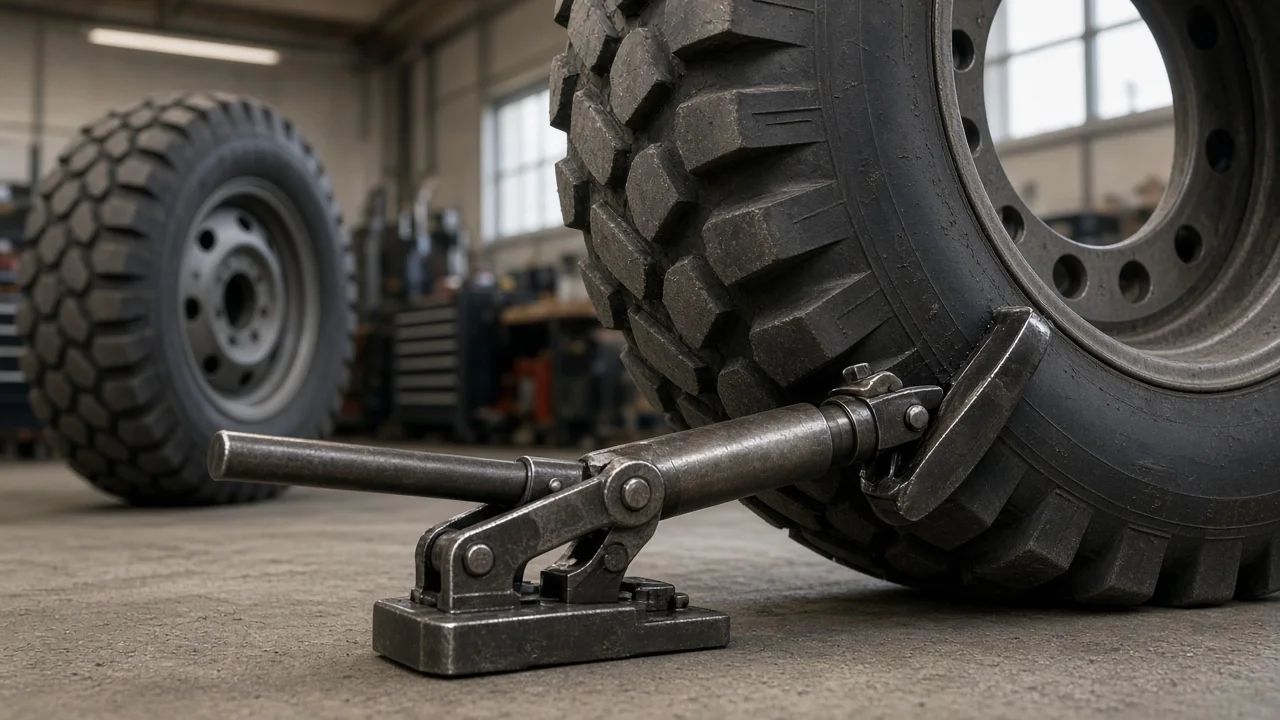
The direct answer is that an Esco tire bead breaker can be a practical choice when it matches the rim diameter range, tire width, and sidewall stiffness you work with most often. Bead breakers do not remove the tire by themselves; they separate the tire bead from the wheel flange so that mounting and demounting tools can work without tearing the bead or scraping the rim. For many passenger, light truck, and trailer tire applications, a sturdy lever or screw-driven Esco unit provides that first controlled separation with less effort than hammering a bar between the tire and wheel.
The decision changes if you service very low-profile performance tires, stiff load-rated truck tires, or large-diameter wheels. In those cases, confirm that the tool opens far enough, clears wide rim lips, and provides enough mechanical advantage. Tire size, load index, and speed rating printed on the sidewall describe the tire's intended service, but the bead breaker must physically fit the assembly. A tool that is undersized for the rim can slip or require unsafe force. Matching the working range and clamping method to the wheel assembly is therefore more important than the brand name alone.
Tire construction and inflation history affect how firmly a bead seats. Tires that have run at low pressure or sat flat can develop stiff, distorted sidewalls and corrosion between the rubber bead and the wheel flange. A bead breaker with a sharp, narrow shoe may cut into an aged tire, while a wider contact surface spreads the load and reduces local damage. This is why checking the shoe profile and whether it suits tubeless passenger, LT, or trailer assemblies is part of a sensible purchase decision, not a generic safety warning.
Vehicle placard information and the tire's listed inflation pressure, load index, and speed rating tell you the intended operating limits, but they do not predict how easily a bead will release after years in service. A quality bead breaker should hold the wheel steady while force is applied near the rim edge rather than deep in the sidewall. That placement reduces the chance of bending a wheel or pinching the tire. If you work on alloys, also look for contact pads or surfaces that avoid direct metal-on-metal pressure against the rim face.
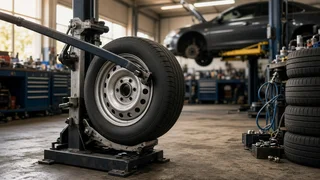
Bead breakers are usually operated as floor-mounted, bench-mounted, or portable tools, and the mounting style matters as much as the jaw opening. A stable base lets you apply steady force through the handle without chasing the wheel across the floor. Some Esco designs use a sliding bead shoe and a foot or hand lever, while others combine the breaker with a tire changer. If you plan to use it on the ground or in a service truck, consider how the tool clamps the wheel and whether it needs an air supply or anchors.
The term “Esco tire bead breaker” can appear in searches for a specific tool, but several types are offered under that name, so evaluate the working range rather than assuming one model covers every tire size. For a passenger car with conventional sidewalls, a moderate manual breaker may be enough. For a high-load tire with a stiff tread package or a wheel with a deep safety hump, a longer handle or powered assist may be required. In every case, the buyer should compare rim diameter capacity, jaw travel, and shoe shape with the assemblies most likely to roll into the shop.
After bead separation, mounting and demounting still require correct lubrication and attention to the wheel's drop-center area. A bead breaker that leaves the tire cocked on the rim can make the next step harder, especially on wide wheels or tires with a high speed rating and reinforced bead bundle. For that reason, a useful purchase is judged partly by repeatability: the tool should contact the bead at roughly the same distance around the rim and release it without requiring repeated repositioning.
Compatibility also includes the wheel diameter, rim width, and whether the tool can reach past a deep rim flange. Some bead breakers designed primarily for 15- and 16-inch steel wheels may not clear tall lips on modern alloy wheels. Before buying, compare the stated rim range with the wheels you service, and think about how the clamping system grips the barrel or face. This practical matching is more useful than simply asking whether an Esco brand tool works, because a bead breaker's value comes from its geometry, leverage, and fit to your actual tire work.
For a mixed fleet or a home garage that sees different wheel types, a tool with adjustable width and a removable shoe is often easier to adapt. If most of the work involves the same tire size and wheel profile, a simpler dedicated breaker may be faster to set up. Drivetrain compatibility does not affect bead breaking directly, but front-wheel-drive, rear-wheel-drive, and all-wheel-drive vehicles can use different wheel offsets and hub shapes, which may influence how the wheel mounts on the breaker. Keeping the wheel centered and clamped securely lets you work on either side without twisting the assembly.