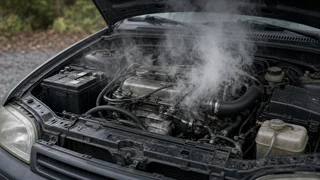
Engine Overheated and Lost Oil Pressure
When an engine overheats and the oil pressure warning appears at the same time, the two events usually share a mechanical cause rather than an electrical coincidence. Heat thins the oil, reduces its film strength, and can expose internal clearances that would otherwise stay sealed. Low oil level, heavy thermal load, or failing circulation can then combine to make a hot engine lose the hydraulic pressure that protects the bearings. The correct first step is to stop the engine and interpret the warnings together, not to continue driving while waiting for one condition to fix the other.
Direct answer
The most direct answer is that overheating lowers oil viscosity, and thin oil has more difficulty maintaining the system pressure the pump and bearing clearances are designed to use. High cylinder head and block temperatures also expand metal parts and can increase the gap around bearings, allowing more lubricant to escape. If the oil was already low, dirty, or diluted with fuel or coolant, the pressure drop becomes more pronounced because the remaining fluid offers less resistance to flow and less protection at hot surfaces.
The condition is not automatically a failed oil pump. An overheated engine may lose pressure because the pickup is uncovered during cornering or braking, because aeration makes the lubricant frothy, or because a pressure sensor is reacting to heat-soaked wiring. However, continued operation after both warnings appear can turn a recoverable coolant-system issue into bearing and camshaft damage. Treat the two lights as a signal to stop, let the engine cool, and inspect the oil level and coolant condition before restarting.