Choosing Engine Oil for a 2009 Toyota Camry
The short answer
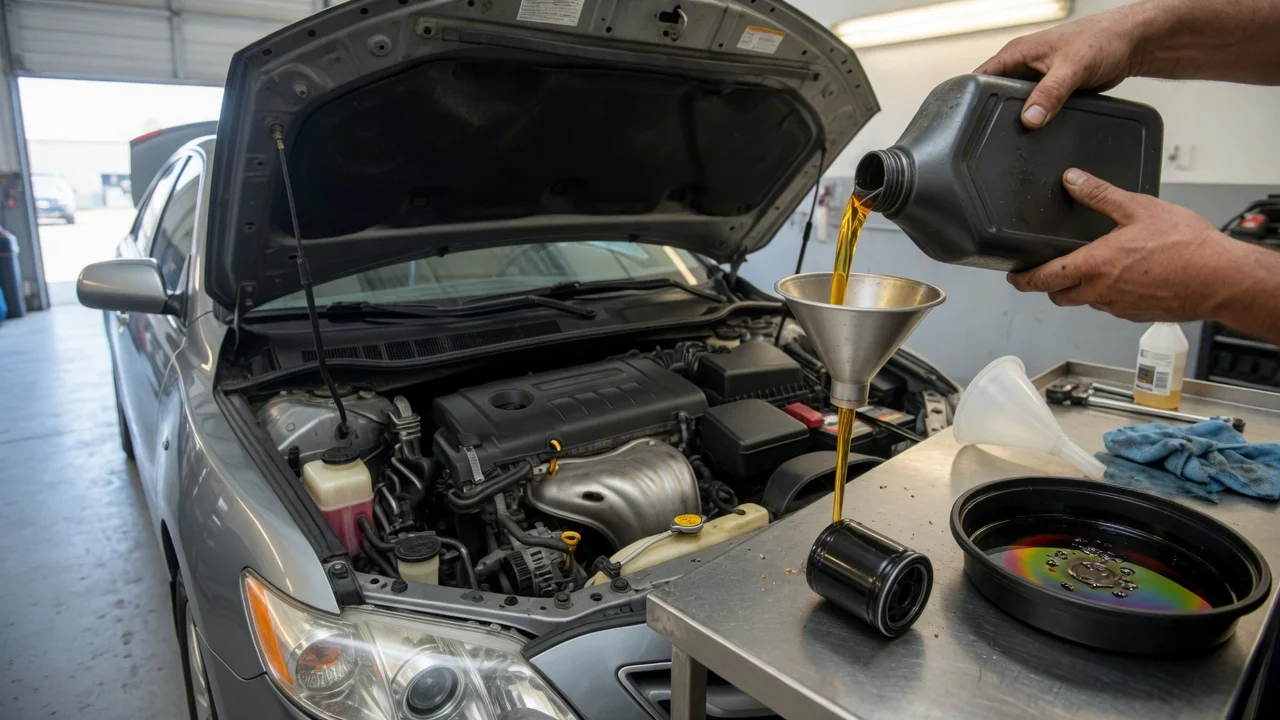
For a US-market 2009 Toyota Camry, Toyota specifies SAE 5W-20 engine oil for both the 2.4-liter four-cylinder (2AZ-FE) and the 3.5-liter V6 (2GR-FE). The owner's manual for these models allows SAE 10W-30 as a temporary substitute if 5W-20 is unavailable, with a return to 5W-20 at the next oil change. Choose an oil that meets current API and ILSAC quality standards. Current oils are designed to be backward compatible with older engines like these.
Two things can change this answer. Cars sold in other markets may list different grades. The 2009 Camry Hybrid uses a different engine variant (2AZ-FXE). For either case, check the owner's manual or the marking on the oil filler cap rather than assuming the US gasoline-model specification applies.
What the viscosity grade means
In a grade such as 5W-20, the first number with the W (for winter) describes how easily the oil flows when cold. A lower number means it flows more readily at startup. The second number describes the oil's thickness at normal operating temperature. Toyota chose 5W-20 for these engines because it flows quickly at startup and suits the engines' internal clearances. Using a much thicker grade than specified is not recommended.
Which engine does your Camry have?
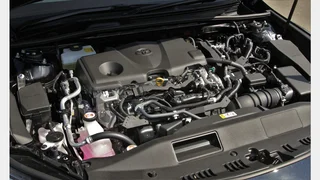
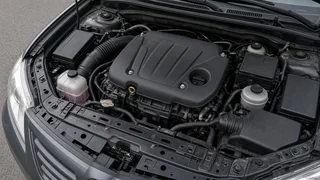
2.4-liter four-cylinder (2AZ-FE): the most common engine in the 2009 Camry. US specification is SAE 5W-20. 3.5-liter V6 (2GR-FE): offered on upper trims. US specification is SAE 5W-20. 2.4-liter hybrid (2AZ-FXE): Camry Hybrid only. Confirm the grade in the hybrid owner's manual.
The 2009 model year is the last one before an important change. From 2010, the Camry's four-cylinder became a 2.5-liter engine that specifies 0W-20 synthetic oil. That newer requirement does not apply to the 2009 engines, so be careful with oil recommendations online that do not state the model year.
Oil capacity
Oil capacity depends on the engine and whether the filter is changed, and the V6 holds noticeably more than the four-cylinder. This guide does not have verified capacity figures to quote. Use the figure in your owner's manual, or ask a parts counter using your VIN. After refilling, check the dipstick and top up to the full mark rather than relying on a quart count alone.
Conventional, synthetic blend or full synthetic
Toyota did not require synthetic oil in the 2009 Camry. Any oil base type is acceptable if it carries the correct 5W-20 grade and current API/ILSAC certification. The choice comes down to cost, driving conditions and how often you plan to change the oil. The comparison below is a general guide, not based on test results specific to this car.
Oil type | Meets 2009 Camry spec if 5W-20 and certified | Cost | Resistance to heat and breakdown | Best suited to; Conventional | Yes | Lowest | Adequate for normal service | Owners who change oil on schedule and drive in moderate conditions; Synthetic blend | Yes | Moderate | Better than conventional | A middle ground for mixed driving; Full synthetic | Yes | Highest | Generally the most stable | Short trips, extreme temperatures, towing or heavy stop-and-go traffic
Editorial recommendation: for a car driven in ordinary conditions and serviced on time, a certified conventional or blended 5W-20 meets the requirement. Full synthetic is a reasonable upgrade if you drive in very hot or cold climates, make lots of short trips, or want extra protection. Even so, do not extend the change interval beyond the manual's guidance unless you have a basis for doing so.
Change interval
The change interval is set by Toyota's maintenance schedule for your model year and driving conditions. Toyota uses a shorter interval for severe service, such as frequent short trips, dusty roads or towing. This guide does not have the 2009 schedule to quote, so follow the maintenance guide that came with the car or the one your dealer provides for your VIN.
Check the oil level on the four-cylinder
Some 2007 to 2009 Camrys with the 2AZ-FE four-cylinder consumed excessive oil. Toyota addressed this with a warranty enhancement program. Whatever oil you choose, check the dipstick regularly between changes on these cars, especially at higher mileage. Running low on oil is a bigger risk than choosing a slightly different brand or base type. Toyota's program terms and any remaining coverage are not covered here; a Toyota dealer can confirm whether a specific vehicle qualifies.
Quick checklist
Confirm the engine and market in the owner's manual or on the oil filler cap. Use SAE 5W-20 for US-market gasoline models; use 10W-30 only as a temporary substitute. Pick an oil carrying current API and ILSAC certification. Choose conventional, blend or full synthetic based on your driving conditions and budget. Use the capacity from the manual and confirm the level on the dipstick after filling. On 2.4-liter cars, check the oil level between changes.