Engine Code P2198: Meaning, Likely Causes and How to Diagnose It
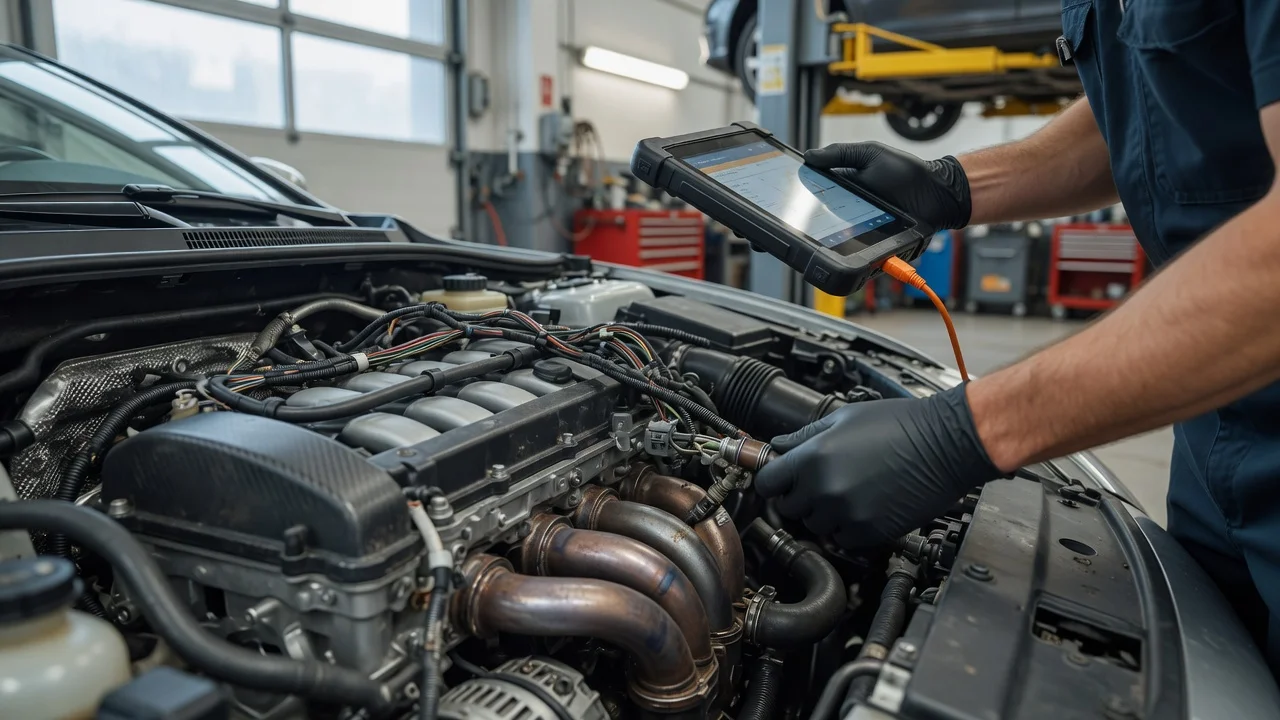
What P2198 Means
P2198 is a generic OBD-II diagnostic trouble code defined as "O2 Sensor Signal Biased/Stuck Rich, Bank 2 Sensor 1." The engine control module has decided that the upstream oxygen or air-fuel ratio sensor on the second cylinder bank is reporting a rich mixture (too much fuel relative to air) and is not responding the way the module expects as it adjusts fueling.
The code tells you what the module observed, not which part failed. The sensor may be faulty, but it may also be accurately reporting a real rich condition on that bank, or its signal may be distorted by wiring or contamination. Treat P2198 as a starting point for diagnosis rather than an instruction to replace the sensor.
Which Engines and Which Sensor Are Involved
"Bank 2" refers to the cylinder bank that does not contain cylinder 1. Only engines with two cylinder banks, such as V6, V8 and horizontally opposed (flat) engines, normally have a Bank 2. If this code appears on an inline four- or six-cylinder engine, check the manufacturer's service information, because bank labeling can differ on some designs.
"Sensor 1" is the upstream sensor, mounted ahead of the catalytic converter. This is the sensor the engine module relies on to fine-tune fuel delivery. Depending on the vehicle, it may be a conventional narrowband oxygen sensor or a wideband air-fuel ratio sensor. The two types produce different signals and are tested differently, so the correct checks depend on the make, model year and engine.
The exact enabling conditions, thresholds and test logic behind P2198 vary by manufacturer. No vehicle-specific information was supplied here, so the guidance below is general. Confirm sensor location, connector identification and test values in the service information for your specific vehicle, and check whether any technical service bulletins or software updates apply to it.
Symptoms You May Notice
Illuminated check engine light, sometimes with no obvious drivability change; Reduced fuel economy; Fuel or sulfur smell from the exhaust; Rough idle or hesitation if the rich condition is real and significant; Black smoke from the exhaust in more severe rich conditions; Additional codes stored alongside P2198
Possible Causes
Causes fall broadly into two groups: the sensor circuit is reporting rich when the mixture is not actually rich, or the Bank 2 mixture really is rich and the sensor is correctly reporting it.
Faulty or aged Bank 2 Sensor 1 sensor that no longer responds normally; Sensor contamination from coolant, oil or silicone, which can skew or slow its readings; Wiring or connector faults, such as a damaged, chafed or heat-damaged harness, or a signal circuit shorted to another voltage source; A genuinely rich condition on Bank 2, for example a leaking or sticking fuel injector on that bank; Conditions that enrich both banks, such as excessive fuel pressure, an inaccurate mass airflow reading or an evaporative purge valve stuck open, in which case Bank 1 codes often appear as well; Engine control module software issues, which some manufacturers address through updates
What to Check Next
Work from the least invasive checks toward the more involved ones. Each result narrows the list of likely causes.
Check | What it can indicate; Scan for all stored and pending codes | Misfire codes, P2196 (Bank 1 stuck rich) or rich-mixture codes such as P0172 and P0175 point toward a broader fueling or engine problem rather than a single sensor; Review freeze frame data | Shows engine speed, load, temperature and fuel trims when the code set, which helps reproduce the condition; Compare Bank 1 and Bank 2 fuel trims in live data | Strongly negative trims on Bank 2 only suggest a bank-specific rich source or sensor issue; similar trims on both banks suggest a shared cause such as fuel pressure, airflow measurement or purge flow; Watch the Bank 2 Sensor 1 signal in live data | A signal that stays rich and does not respond to throttle changes points toward the sensor or its circuit; a signal that responds but reads rich supports a real rich condition; Inspect sensor wiring and connector | Melted insulation, chafing, corrosion or loose pins can distort the signal; Check for coolant or oil consumption | Unexplained coolant loss or oil burning can contaminate the sensor and suggests a deeper engine problem; Check Bank 2 injectors and purge valve operation | A leaking injector or a purge valve stuck open can add fuel the module cannot fully compensate for
On some vehicles, technicians swap the Bank 1 and Bank 2 upstream sensors to see whether the fault follows the sensor. This only applies where the sensors are identical and interchangeable, and it requires care with hot, seized exhaust threads and with correct connector routing. Confirm compatibility in the service information first.
If you replace the sensor, use the type specified for your engine, clear the code, and confirm the repair with a drive cycle and a fresh scan. If P2198 returns quickly, the original cause was probably not the sensor itself.
When to Stop Driving or Get Professional Help
A P2198 code with the engine running normally is generally not an emergency, but it should not be ignored. A sustained rich mixture can overheat and damage the catalytic converter and can contaminate engine oil with fuel.
Stop driving and arrange diagnosis if the check engine light is flashing, which typically indicates an active misfire that can damage the catalytic converter; Stop driving if you smell raw fuel strongly, see heavy black smoke or notice signs of overheating or coolant loss; Seek professional diagnosis if the engine runs roughly, stalls or hesitates noticeably; Seek professional diagnosis if fuel trims, wiring tests or injector checks are beyond your tools or experience, or if the code returns after a sensor replacement
Bottom Line
P2198 means the upstream oxygen or air-fuel ratio sensor on Bank 2 appears stuck or biased rich. The cause could be the sensor, its wiring or a real rich condition on that bank. Checking for related codes, comparing fuel trims between banks and inspecting the sensor circuit will usually show which path to follow before any parts are replaced.