Does Regenerative Braking Use or Save Brake Pads?
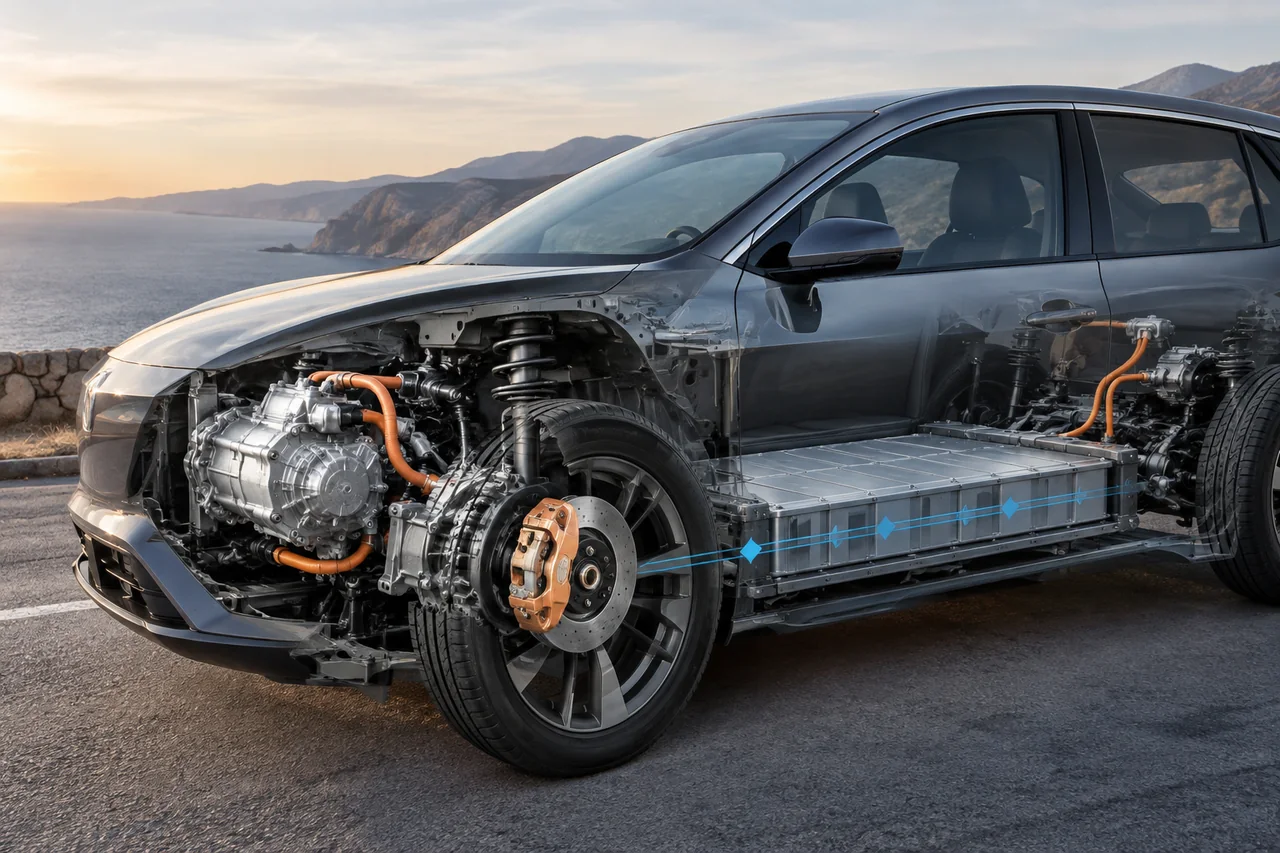
Regenerative braking slows a vehicle by using the electric motor for energy recovery rather than by pressing brake pads against brake rotors. That does not mean friction brakes never work. Blended braking can combine regeneration and pad-to-rotor force in the same stop, and battery charge level, driving style, and conditions all affect how often the physical brakes engage. Understanding that split helps with brake inspections and with questions about pad wear.
Does Regenerative Braking Use Brake Pads?
Regenerative braking itself does not use brake pads. The electric motor acts as a generator and creates the slowing force, so there is no pad-to-rotor clamping in that part of the event. Motion energy becomes electrical energy the battery can accept, which is why energy recovery can happen without friction brakes. Asking whether regenerative braking uses brakes is therefore different from asking whether the vehicle is slowing at all.
A complete stop can still involve both systems. Vehicle controls may blend regenerative braking and friction braking during the same slowdown when extra deceleration is needed or when regeneration is limited. Braking in everyday language simply means slowing or stopping. Physical brake-pad use is narrower: it happens only when the friction brakes clamp pads against rotors. Regeneration can handle much of a coast-down while the pads remain unused until the controls call for them.
When the Physical Brakes Still Engage
Friction brakes still engage when regeneration cannot deliver the deceleration the driver or the vehicle is requesting. A high battery charge level can leave little room for incoming energy, and battery temperature, vehicle speed, and traction conditions can further limit how much regeneration is available. Those limits are vehicle-specific, so the same pedal request can produce different blends of motor braking and pad force from one car to another or even from one trip to the next.
Low-speed stopping and holding the vehicle still often bring the friction brakes into play, including in some one-pedal driving setups, but not every one-pedal system finishes a stop the same way. Pressing the brake pedal also does not prove the pads are working. Pedal input can command regeneration, friction braking, or a blend of both, depending on the control strategy. The pedal is a request for deceleration, not a window into pad-to-rotor contact.
How Regenerative Braking Can Save Brake Pads
Regenerative braking can save brake pads by taking over a share of everyday slowdowns, which reduces the heat, work, and wear placed on the friction brakes. City routes with frequent speed changes often give regeneration more chances to work than long highway runs with few stops. Driving habits matter as well. Gentle lift-off deceleration uses the motor more, while sudden, hard stops still call on the pads. Regeneration availability also changes with battery state and conditions, so pad savings are not uniform.
Less pad use does not create a predictable pad lifespan, and it does not remove the need for eventual replacement. Pads still wear whenever friction braking is required for extra stopping force, parking, or situations where regeneration is limited. Odometer mileage and an energy recovery display show how far the vehicle has traveled and how much energy the motor has recaptured. Neither measurement reports remaining brake pad thickness, so those screens cannot substitute for a physical inspection of the friction brakes.
Does Tesla Regenerative Braking Use Brake Pads?
Tesla regenerative braking follows the same core principle: the motor generates the slowing force, so that regeneration itself does not depend on brake pads contacting the rotors. Whether a given Tesla then adds friction-brake assistance during a stop is a separate control question. Automatic blending, hold behavior, and limited-regeneration response can vary by model, model year, and software. The owner's manual for that vehicle is the place to confirm how those functions are described, rather than assuming every Tesla behaves identically.
Regeneration availability and the friction-brake response are therefore two different issues. A Tesla may recapture less energy when the battery is full or cold, and the vehicle may still apply the physical brakes if more deceleration is needed. Drivers should use the brake pedal whenever necessary to stop safely. Releasing the accelerator in one-pedal driving does not reveal whether pads are working; it only shows that the vehicle is slowing under the current control strategy.
Why Rotor Rust Can Develop With Limited Brake Use
Regenerative braking is not inherently bad for brakes. The motor-based slowdown does not grind pads or score rotors. The maintenance concern is indirect: when regeneration handles most deceleration, the friction brakes work less often, and moisture can linger on the rotor faces. Rain, humidity, road salt, and long parked time all encourage rotor surface rust on the exposed metal. That pattern is a side effect of limited pad-to-rotor wiping, not a sign that energy recovery damages the brake hardware.
A light visible film on a rotor after rain or overnight parking is common and does not by itself prove the brakes are unsafe. Appearance is not a condition report. Persistent grinding, vibration, pulling to one side, or a clear drop in braking performance are different matters and call for professional evaluation. Those symptoms can involve rotor corrosion, pad condition, or other friction-brake issues. Visual rust alone should not be treated as a diagnosis, and it does not justify improvised rust-clearing driving.
Brake Inspections Still Matter With Regeneration
Brake inspections still matter on vehicles that rely heavily on regenerative braking. Follow the maintenance guidance in the owner's manual for inspection timing and for brake fluid care rather than substituting a guessed interval. An inspection can check pad condition, rotor condition, caliper operation, and related friction-brake hardware even when pad wear looks modest. Reduced everyday use can hide sticking hardware, uneven deposits, or corrosion that mileage and regeneration statistics will not reveal.
During normal driving, note warning messages, recurring noises, and changes in pedal feel or stopping response. Those observations do not replace an inspection, but they are useful reasons to have the friction brakes checked. Regeneration cannot establish friction-brake health because it does not exercise every part of the hydraulic system. Impaired stopping or a brake-system warning requires prompt action consistent with the owner's manual. Saving pad wear is a benefit of energy recovery, not a substitute for brake-system care.