Does a Water Pump Leak When the Car Is Off
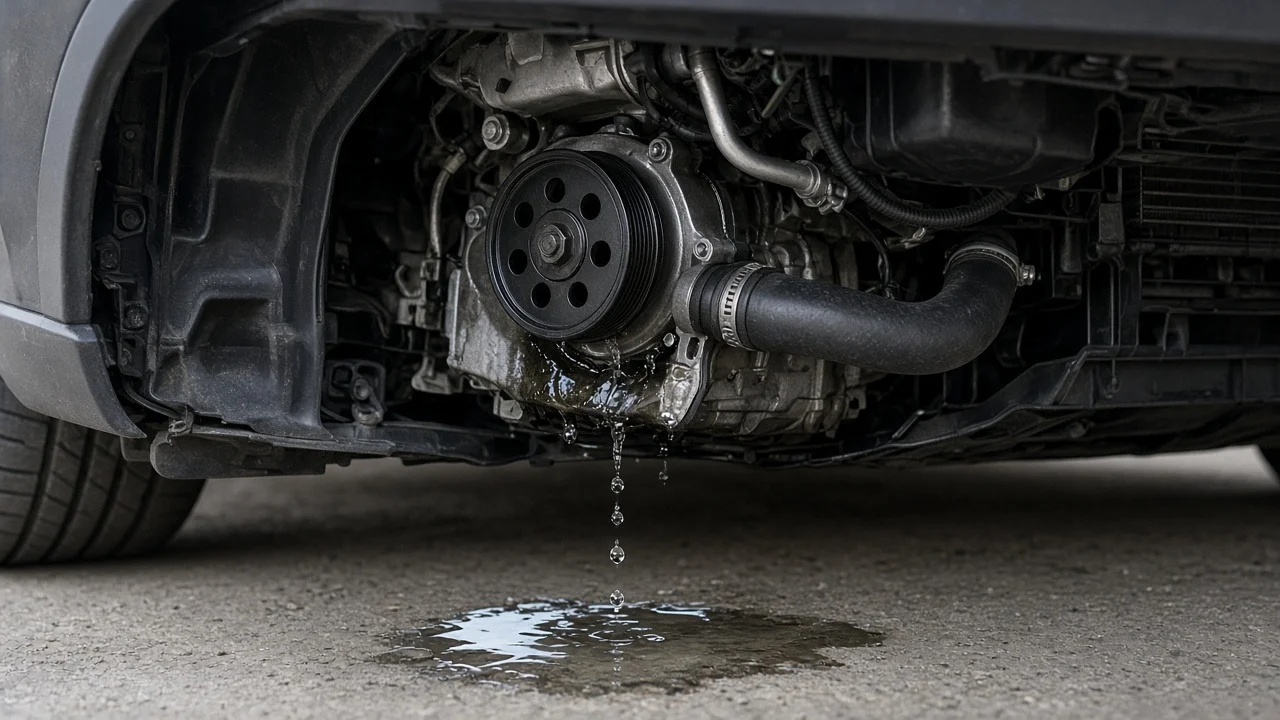
A small coolant puddle beneath a parked car often puzzles owners because the engine is cold and nothing is visibly running. Yet cooling system pressure can remain trapped after shutdown, allowing a weak water pump seal or porous casting to seep. The question “does a water pump leak when the car is off” therefore has a conditional answer: the pump does not operate, but residual pressure, thermal contraction, and a degraded seal can still release coolant. Recognizing the pattern helps distinguish a water pump drip from leaks at hoses, the radiator, or other cooling circuit connections.
Direct answer
Yes, a water pump can leak while the car is off, though the leak is usually slower than a running-engine leak. The pump impeller stops, but the cooling circuit can hold pressure after shutdown. If the shaft seal or gasket is weak, that stored pressure pushes coolant past the damaged area. Temperature change also matters. As hot metal and rubber cool, parts contract at different rates, briefly opening a path that closes once the engine is fully cold.
The leak pattern often appears as a small stain or drip under the pump area hours after parking. It may not repeat every time because pressure bleed-off, coolant level, and parking angle change the result. A pump leak when off can also be confused with condensation from the air conditioner or a slow radiator drip. Before assuming a failed pump, the cooling circuit, pressure cap, thermostat, and coolant concentration should be checked as part of a complete leak inspection.
This kind of seepage is a useful early warning. The water pump shaft seal handles both pressure and rotation. When coolant escapes only at rest, the seal may be developing a flat spot or tiny crack that worsens with heat cycling. The leak can also depend on how the engine was last driven. A brief trip may leave the system under less pressure than a long, hot pull, which affects how much fluid appears under the car.
A pressure cap that does not release excess pressure properly can push the system toward other weak points after shutdown. Air pockets from a recent coolant fill can also create pressure spikes or local hot spots that stress the pump. Checking the level in the reservoir when the engine is cold provides a more reliable indication of gradual loss. Determining whether the fluid is puddled below the pump housing or simply following a crossmember helps direct the investigation.