Does a Mini Cooper Have a Spare Tire?
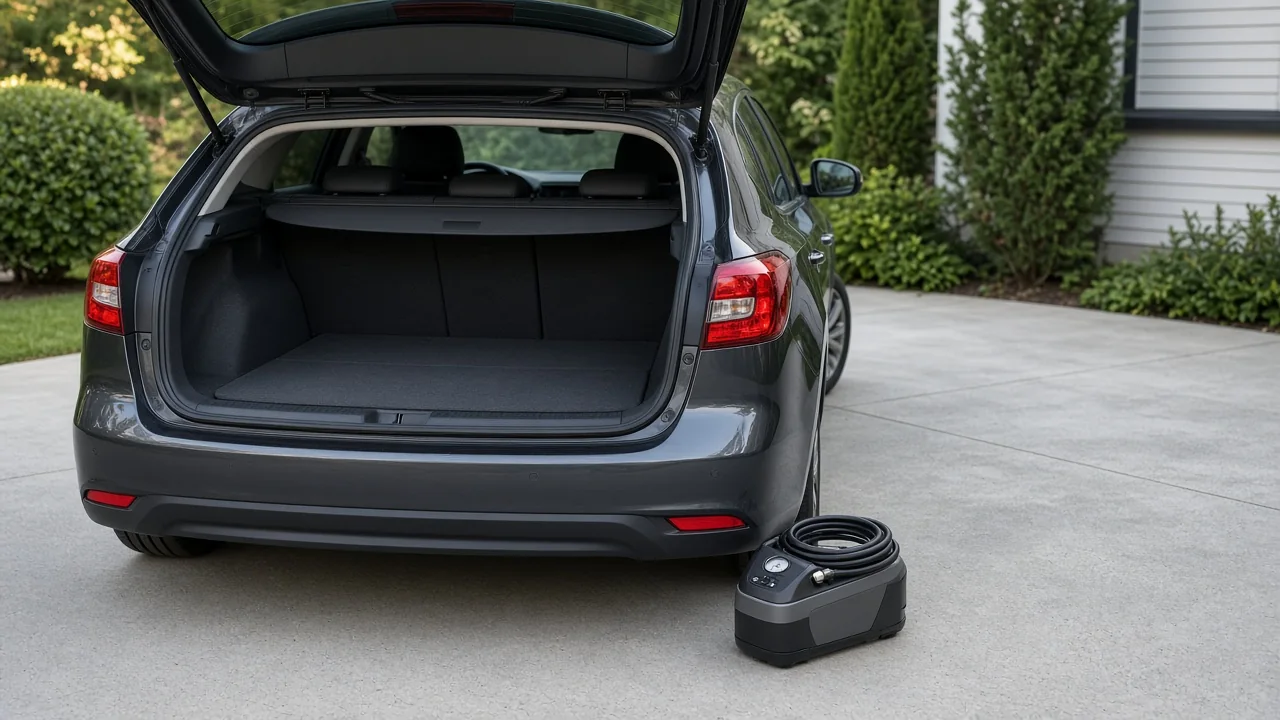
Whether a Mini Cooper has a spare tire depends on more than the badge. Cooper and Cooper S cars have been delivered with run-flat tires, a tire mobility kit, or a temporary spare according to year, body style, market, and original equipment. A Mini Cooper S spare tire is a fitment question as well as an equipment question. Confirm what your car actually carries before assuming a spare is waiting in the cargo area.
Does Your Mini Cooper Have a Spare Tire?
Does the Mini Cooper have a spare tire as a standard feature? Not across the range. Spare-tire equipment varies with model year, body style, market, and the original configuration of that car. Hatchbacks, convertibles, and longer-wheelbase variants do not share the same cargo packaging, and export markets have offered different mobility provisions. The Cooper badge by itself does not establish whether a spare wheel, a compressor kit, or run-flat tires were included. Treat each vehicle as its own equipment case.
The owner's manual and the vehicle's original equipment records are the practical way to see what Mini Cooper spare tire provisions were specified from the factory. Those documents typically distinguish a spare wheel from a tire mobility kit or from run-flat operation. A used car may already have conventional tires, missing inflator hardware, or a discarded temporary spare, so the paper specification still needs a physical check. Do Mini Coopers have a spare tire after years of ownership? Only inspection of this car can say.
Where to Check for the Spare and Tire Equipment
Before lifting cargo covers, consult the owner's manual equipment-location diagrams for that body style so you know whether Mini placed a spare tire, compressor, or sealant in a well, side bin, or under-floor tray. Inspect only accessible cargo storage on a safely parked vehicle. Typical contents include a spare wheel if one was supplied, a portable tire inflator, a sealant container, a wheel-lock key, and any jack or tools packed with those items. Leave inspections that require lifting the car or crawling underneath to a professional.
An empty storage recess does not prove that a spare tire for Mini Cooper was originally supplied, and it does not prove that a wheel will fit that cavity now. Some cars used the space for a mobility kit, a subwoofer, or nothing more than a foam tray. Wheel diameter, width, and the assembled tire's height can exceed the well even when a compact spare was catalogued for a related model. Confirm original equipment from records, then measure the actual opening rather than assuming the tray was meant for a full spare.
How to Confirm a Mini Cooper’s Run-Flat Setup
How to confirm a Mini Cooper's run-flat setup starts at the tires themselves, not at a warning light. Run-flat tires carry sidewall markings and construction language that the tire manufacturer documents; those markings establish whether the currently fitted tires are run-flats. A tire-pressure warning system reports inflation, not carcass design, and it does not prove the vehicle has a spare. Cars with pressure sensors can wear conventional tires, run-flats, or a mix after service, so the sidewall and the tire maker's literature are the evidence that matters.
Run-flat driving limits are not a universal distance or speed. They depend on the tire's own instructions, remaining inflation, load, and the nature of the damage; a slow leak is not the same as a destroyed sidewall. Follow the tire manufacturer's remaining-mobility guidance and stop if handling becomes unstable. Vehicles that have been fitted with conventional tires no longer have that limited-mobility construction, so they need a confirmed puncture-response plan such as a temporary spare, a complete tire mobility kit, or a decision to call roadside assistance instead of driving on.
What to Verify for a Mini Cooper S Spare
A Mini Cooper S spare tire cannot be chosen from the Cooper name alone. Confirm the exact model year, body style, and brake configuration first, because Cooper S brake packages, caliper designs, and wheel offsets can differ from a non-S Cooper of similar vintage. A product labeled for Mini Cooper does not by itself establish Cooper S fitment. Wheel fitment that clears one brake assembly can interfere with another, so documented brake clearance for that S specification is required before discussing whether a spare can mount.
Even after year and brakes are identified, require documented wheel and brake clearance, tire load and speed suitability, and any temporary-use restrictions that apply to a compact or space-saver spare. A spare tire marketed for a Mini Cooper S can still be the wrong diameter, load rating, or construction for that axle. Separate two questions that get mixed together: whether a spare can mount safely on the hub, and whether the vehicle has an approved place to carry it. Fitment on the car is not the same as a secure, intended stowage location.
Can You Carry an Accessory Spare Tire?
An accessory spare is only useful if a qualified supplier verifies wheel fitment against that Mini. That check includes wheel dimensions, bolt pattern, center bore, fastener thread and seat type, assembled tire diameter, and load suitability for the axle. A wheel that looks right on a Mini Cooper but misses center-bore or lug-seat geometry can sit poorly on the hub. Diameter mismatch also affects braking and stability. Do not assume a wheel that bolts on is therefore an appropriate temporary spare for that car.
Confirm the assembled spare's overall diameter and width against available cargo space instead of assuming a factory well exists. Carrying a spare tire on a Mini Cooper without a dedicated location means the wheel may have to ride in the cabin or luggage area. Any carrying arrangement needs cargo restraint that keeps the spare, inflator, and tools from becoming loose cargo in a stop or turn. An accessory kit also needs vehicle-appropriate tools and instructions. Roadside lifting and wheel removal are not universally safe; an unsafe shoulder or a damaged jacking point is a reason to wait for help.
Puncture Kits and When to Call Roadside Assistance
A tire mobility kit with a portable tire inflator and sealant can close some tread punctures within the kit's stated limits on hole size, remaining structure, and puncture location. Those kits are not a substitute for a spare in every failure. Sidewall damage, a displaced tire bead, or a bent or cracked wheel needs professional assessment rather than more sealant. If the kit instructions exclude the injury you can see, stop in a safe place. Sealant also may not restore a tire that has been driven flat long enough to damage the inner liner.
Before you rely on the kit, check completeness, sealant expiration, power requirements, and compatibility with the tire and any pressure sensor. Some inflators need a healthy 12-volt outlet and enough remaining bead seal to accept air. When handling feels unstable, when damage is obviously major, or when the roadside itself is unsafe, stop in a protected location and request roadside assistance rather than finishing a repair. A Mini Cooper spare tire is useful only if it can be mounted in a safe setting; otherwise a tow or mobile technician is the conservative choice.