Differential for Motorcycle-Engined Car
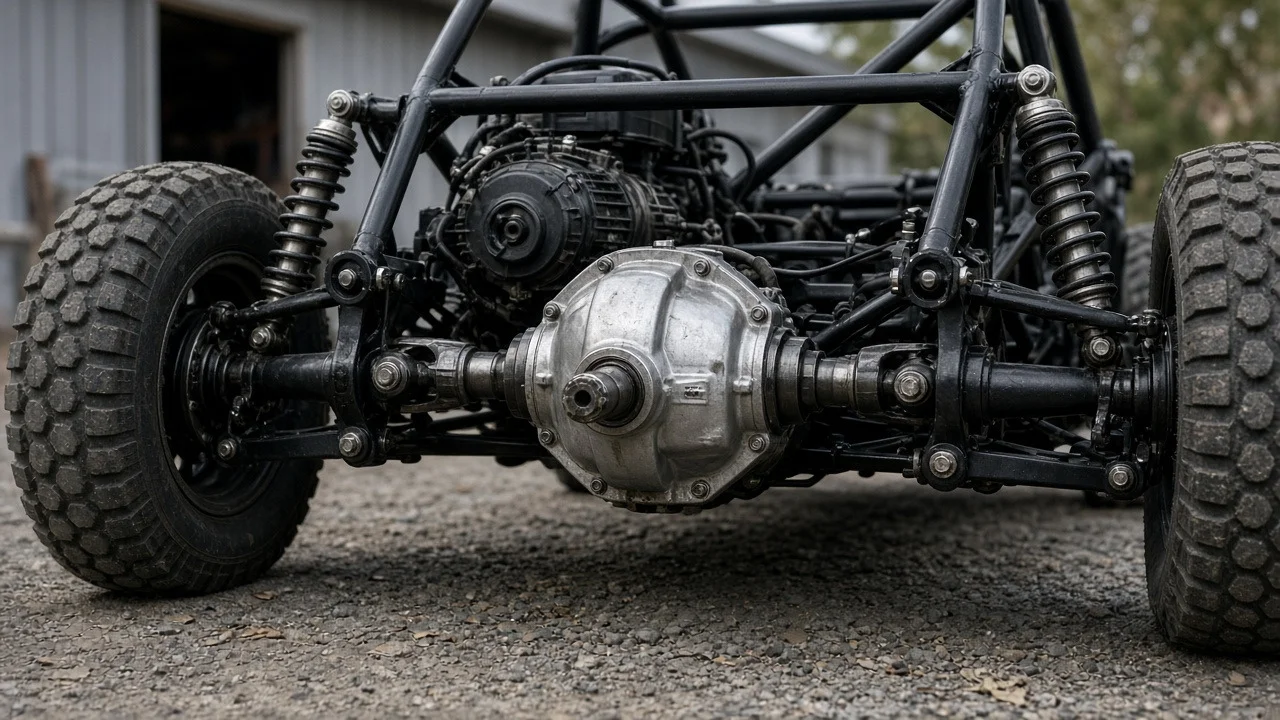
A motorcycle-powered car packages high-revving bike performance into a lightweight four-wheel chassis, but that swap changes how power reaches the road. The transmission type, output orientation, and chain or shaft drive all affect the differential choice. Understanding the motorcycle engine car differential means looking beyond a simple replacement part. It involves matching fitment, torque characteristics, and the unique packaging of a chain-driven or gear-driven final drive while preserving predictable handling and serviceable operation.
Essential answer
The direct answer is that a motorcycle-engined car usually needs a differential matched to the engine's final drive layout, not simply a standard automotive unit. Many bike engines send power through a sprocket and chain, so the differential may be integrated into a chain-driven axle, a compact gearbox, or an independent rear housing connected by a short driveshaft. Fitment depends on the donor engine's output rotation, sprocket placement, and whether the builder retains the motorcycle transmission or adapts a separate automotive gearbox.
Shift behavior also shapes the answer. Motorcycle transmissions often use sequential shifting and close ratios designed for a light bike, not a heavier car. That can change how the differential loads and unloads during acceleration or downshifts. Service history matters because a used differential from an automotive axle may require different fluid specifications than a sealed sport-bike style final drive. The correct choice preserves the engine's rev range while giving the car predictable traction from both rear wheels.