Diesel Car Engine Oil Change: What Is Different and What to Check
The short answer
Changing the oil in a diesel car follows the same basic sequence as on a petrol car: drain the old oil, replace the oil filter, refill with the correct oil, and check the level. The main difference is that the oil specification matters more. Many modern diesels, especially those fitted with a diesel particulate filter (DPF), need an oil that carries a specific manufacturer approval rather than just the right viscosity. The correct oil, quantity and change interval depend on the exact engine, model year and market, and the authoritative source is the vehicle's owner's manual or official service schedule.
Why diesel engines are treated differently
Soot: Diesel combustion produces soot, and some of it ends up suspended in the engine oil. As a result, diesel oil often turns dark soon after a change. On many diesels this is expected and is not, by itself, a reliable sign that the oil needs replacing. The oil's job includes holding that soot in suspension so it does not settle and cause wear.
Exhaust after-treatment: A diesel particulate filter traps soot from the exhaust and periodically burns it off, a process called regeneration. Ash left over from certain oil additives cannot be burned off in the same way and can gradually build up in the filter. For this reason, many DPF-equipped diesels call for low-SAPS oil. SAPS stands for sulphated ash, phosphorus and sulphur, which are the additive components limited in these formulations.
Approvals, not just viscosity: Two oils with the same viscosity grade, such as 5W-30, can carry different specifications and carmaker approvals. The approval code or specification listed in the owner's manual is what the oil container should show. Choosing an oil on viscosity alone risks using one that does not meet the engine's or the after-treatment system's requirements.
How often a diesel needs an oil change
There is no single interval that applies to all diesel cars. Depending on the manufacturer and market, a vehicle may follow a fixed schedule based on distance and time, or a variable schedule managed by an oil-life or service indicator that adjusts to how the car is driven. Many manuals also define a shorter schedule for demanding use, such as frequent short journeys, towing or dusty conditions.
Short-trip driving deserves particular attention on DPF-equipped diesels. Journeys that end before a regeneration completes can interrupt the process, and on some engines fuel used during regeneration can find its way into the oil and dilute it. Where a manufacturer addresses this, the guidance appears in the vehicle's documentation. This article cannot give a reliable interval for a specific car; check the manual or a dealer for the figure that applies to your engine and model year.
What the job involves
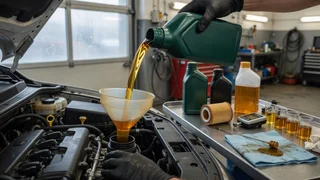
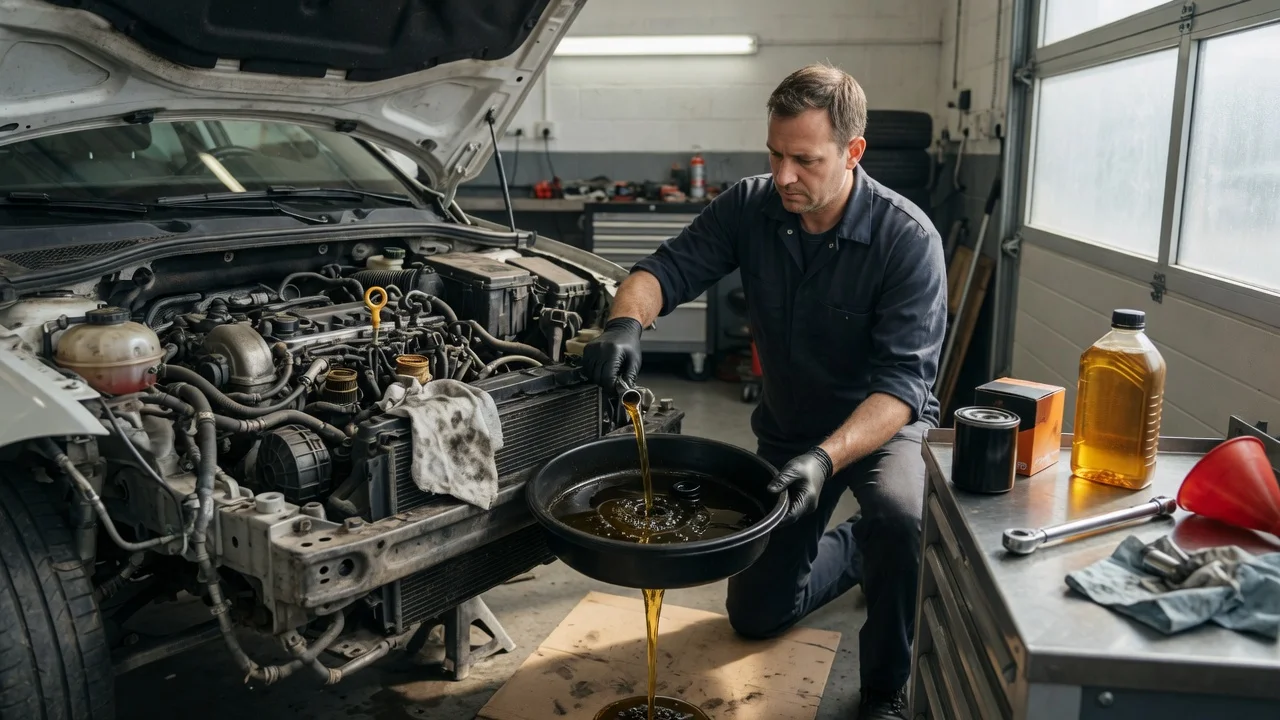
Confirm the correct oil specification, viscosity and capacity (with filter change) for your exact engine. Obtain the matching oil filter and, if the design requires it, a new drain plug washer or seal. Warm the engine briefly so the oil drains more freely, then switch it off and let it rest; hot oil can cause burns. Secure the car safely on level ground using proper stands or ramps, never a jack alone. Remove the drain plug and let the old oil drain fully into a suitable container. Replace the filter. Some diesels use a spin-on filter; others use a cartridge element inside a housing with its own seals. Refit the drain plug to the manufacturer's specified torque. Refill with the specified oil, check the dipstick or electronic level reading after the oil settles, and top up gradually to avoid overfilling. Run the engine briefly, check for leaks, then recheck the level. Reset the service indicator if the vehicle has one, following the procedure for that model.
Overfilling is worth avoiding: too much oil can be as problematic as too little, so add the final portion in small amounts and recheck. Used oil and old filters should go to a recycling or collection point in line with local rules rather than into drains or household waste.
DIY or workshop
A diesel oil change is within reach of a reasonably equipped home mechanic, but the practical difficulty varies by vehicle. Undertrays, filter location, cartridge-style filter housings and electronic level checks or service resets can make some models more involved. If the car is under warranty, keep receipts showing the oil used met the required specification and that the work followed the official schedule; exact warranty conditions differ by manufacturer and market.
Gaps in this guide
No model-specific data was available for this article, so it does not state oil capacities, change intervals, approval codes, drain plug torque values or costs for any particular vehicle. Those figures vary by engine, generation, model year and market, and should be taken from the owner's manual, official service information or a dealer.