Diagnose Honda 83-11 PCM malfunction
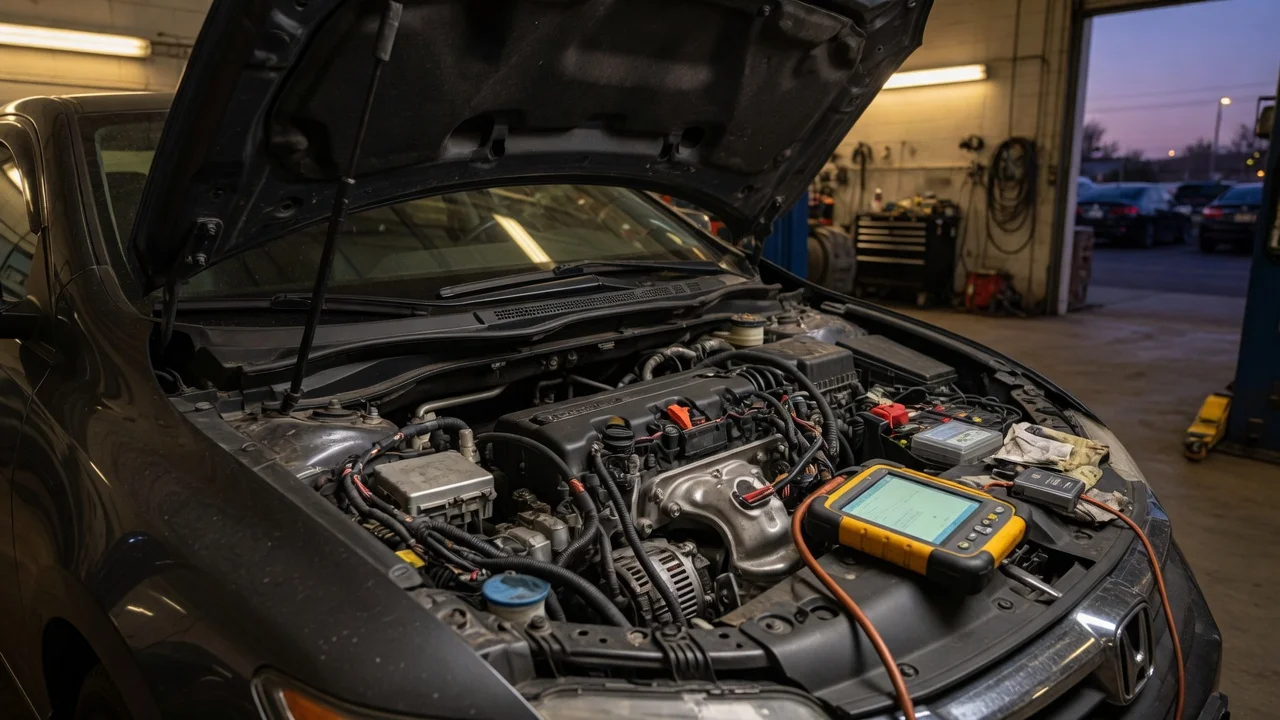
The short answer
A Honda code displayed as 83-11 and described as a PCM malfunction points to a problem detected in or around the powertrain control module (PCM), the computer that manages engine and, on many models, transmission functions. The code alone does not prove the PCM has failed. It tells you the module, or the diagnostic system, has flagged a condition that needs investigation. The next step is to confirm the code's exact definition for your vehicle and then check the basics that commonly affect control-module operation, such as power supply, grounds and connections, before considering module replacement.
An important qualification: no model-specific definition, troubleshooting tree or test values for 83-11 were available for this guide. Honda code formats and meanings vary by model year, vehicle line, system and scan tool, and the same number can mean different things on different vehicles. Treat the description "PCM malfunction" as a starting label, and confirm it against Honda service information or a scan tool that supports your specific vehicle.
Confirm what the code actually refers to
Before testing anything, establish what system and component the code belongs to. This prevents chasing an engine problem when the fault actually sits in another module, or the reverse.
Record the full code exactly as displayed, including any subcode, and note which tool or display reported it. Note the vehicle's model year, model, engine and transmission, because the code's meaning may depend on them. Check whether the code is stored, pending or currently active, if your tool shows that status. Save any freeze-frame data, which is a snapshot of operating conditions when the fault was set. Note any other codes stored at the same time, since a group of related codes can point to a shared cause.
If the scan tool you are using cannot read Honda-specific codes or shows only a generic description, the reading may be incomplete. A Honda-capable diagnostic tool or a dealer scan gives a more reliable definition.
Plausible causes and what to check next
A control module can report an internal or malfunction code for reasons that have nothing to do with a defective module. The checks below are general diagnostic practice for electronic control units. They are not a Honda-specific procedure for 83-11, so follow the service information for your vehicle where it differs.
Possible cause | What to check | What the result suggests; Weak battery or charging problem | Battery condition, terminal tightness and cleanliness, and charging system operation | A low or unstable supply can cause modules to set faults; fixing the supply may stop the code from returning; Poor ground or power feed to the PCM | Ground straps and module power circuits, using the wiring diagram for your model | A loose, corroded or damaged ground or feed can mimic a module failure; Connector or wiring damage | PCM connectors for corrosion, bent pins, moisture or loose fit, and harness damage nearby | Visible damage or moisture is a likely cause that should be repaired before judging the module; Recent repairs, jump-starting or added electronics | Whether the code appeared after battery work, jump-starting, welding or installing aftermarket accessories | A clear link in timing points toward an electrical event or installation issue rather than random failure; Software or calibration issue | Whether service bulletins or software updates apply to your vehicle | A known update may address the condition; a dealer can confirm what applies; Internal PCM fault | Whether the code returns after the checks above pass and the code is cleared | A repeat fault with good power, grounds and connections strengthens the case for a module problem, which should be confirmed professionally
After any repair, clear the code and drive under conditions similar to those recorded in the freeze-frame data. If it does not return, the fix was likely effective. If it returns immediately or repeatedly, the cause has not been resolved.
Why replacing the PCM first is risky
Replacing a PCM without first ruling out supply and wiring problems can be costly and may not fix the fault, because a new module connected to the same bad ground or damaged connector can report the same problem. Replacement modules on many Honda vehicles may also need programming or setup to work with the vehicle's immobilizer and other systems, so a module swap is generally not a simple plug-in repair. Confirm the requirements for your vehicle before buying a part.
When to stop driving or get professional help
Because the PCM controls core engine functions, a fault here can affect how the vehicle runs. Stop driving when it is safe to do so and arrange diagnosis if any of the following happen alongside the code:
The engine stalls, cuts out, hesitates badly or will not restart. The check-engine light flashes rather than staying steady, which generally signals a condition that can damage engine or emissions components. The vehicle enters a reduced-power or limp mode, or the transmission shifts erratically or stays in one gear. The temperature gauge rises abnormally or other warning lights come on at the same time. You notice burning smells, smoke or signs of water entering the area around the module.
Professional diagnosis is also the sensible route if the code returns after basic electrical checks, if you do not have access to a Honda-capable scan tool and wiring diagrams, or if the repair may involve module programming.
Information gaps to close
This guide could not verify the official Honda definition of 83-11, which models and years use it, the specific conditions that set it, or the test procedures and values Honda specifies. Those details determine the correct diagnostic path, so obtain them from Honda service information, a dealer, or a technician with access to manufacturer data before deciding on parts or major repairs.