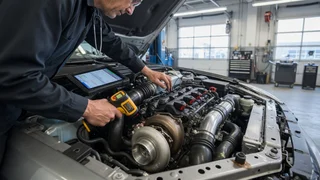
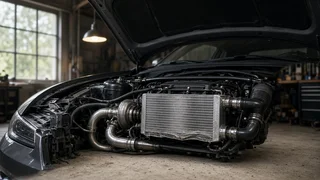
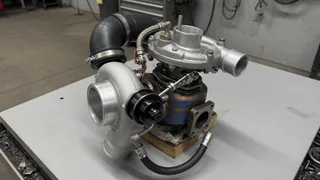
Diagnose GM 1.5L turbo engine problems
A turbocharged 1.5-liter GM engine can develop several drivability complaints that share overlapping causes. Owners may notice rough idle, power loss, excess oil consumption, coolant loss, or noise under load, and a diagnostic scan often returns manufacturer-specific codes. Because the turbocharger, direct fuel system, and crankcase ventilation all interact, a single symptom rarely proves one failed component. Instead, engine configuration, service history, and the exact symptom conditions narrow the likely fault. Diagnostic codes and inspection findings are evidence to interpret, not a parts replacement order. The goal is to separate common wear and software concerns from failures that require immediate attention.
Essential answer
GM 1.5L turbo engine problems are best understood as a family of possible concerns rather than one universal defect. Reported issues can include oil consumption, coolant leaks, turbocharger wastegate or boost control faults, fuel system pressure irregularities, and carbon accumulation on intake valves. The engine configuration matters because turbocharged direct-injection designs concentrate heat and crankcase vapors in specific areas. Service history is equally important; neglected oil changes or low-quality fuel can accelerate the very symptoms that appear mechanical. Without confirming the production variant and vehicle application, a broad internet report may not match a particular engine.
The practical answer is to treat the symptom cluster as a diagnostic starting point. A vehicle that consumes oil gradually may simply be operating within an acceptable range or may have a crankcase ventilation issue, while sudden coolant loss points to a different path. Diagnostic codes related to boost pressure, misfire, or fuel trim should be recorded with the conditions that set them. The owner should check for visible leaks, unusual smoke, and changes in noise before assuming the turbocharger or pistons are at fault. Manufacturer specifications for oil, coolant, and service intervals establish the baseline for judging whether a reading is abnormal.
Diagnosing a problem
A fault code does not prove that a sensor, actuator, or turbocharger has failed. For example, an underboost code may result from a split charge pipe, a sticking wastegate, a vacuum supply problem, or a sensor reading that does not match actual pressure. Likewise, a misfire code can follow oil entering the combustion chamber or a failing ignition coil. Begin with observable checks: look for oil residue around turbo piping and the valve cover, inspect coolant level when the engine is cold, and listen for metallic rattle during cold starts or heavy throttle. Each finding narrows the cause.
Compare the symptom to the conditions under which it appears. A rough idle that clears when warm may point to cold-start mixture or crankcase ventilation behavior, while a steady misfire under load suggests ignition or fuel delivery stress. Blue-gray exhaust smoke during acceleration after deceleration may indicate oil passing through the turbocharger seals, whereas continuous smoke at startup raises different concerns. If coolant and oil are mixing, or if the engine overheats and loses coolant quickly, continued use can cause severe damage and professional diagnosis should come before further driving. Confirm any manufacturer-dependent code against the specific vehicle application before replacing parts.