CVT Shifting, Manual Mode, and Paddle Shifters Explained
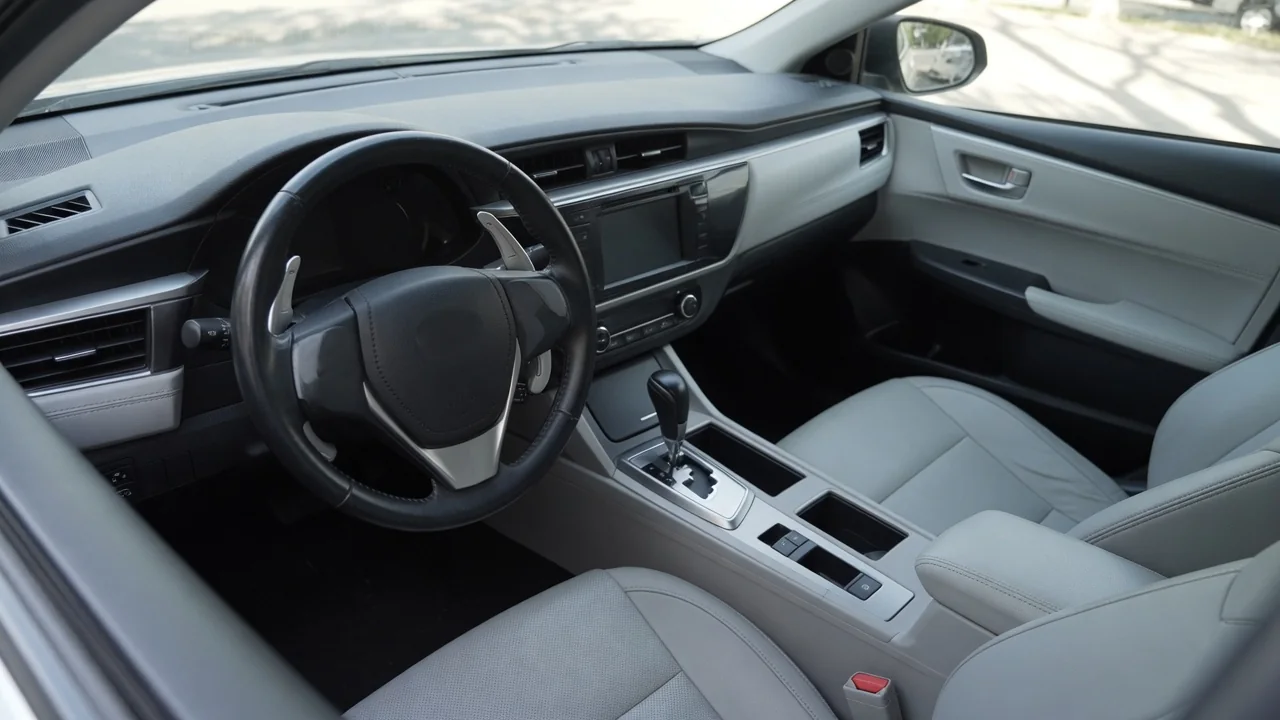
A CVT transmission shifter does more than select Drive. In a continuously variable ratio design, electronics manage belt or chain pulleys so engine speed and road speed can change independently of fixed gears. Drivers still feel CVT transmission shifting when the control strategy uses programmed ratio steps, and some vehicles add manual shift mode, sport mode, or paddle shifters. Those controls request simulated gears; they do not convert the unit into a conventional gearbox.
How a CVT Changes Ratios and Creates a Shifting Sensation
In a conventional belt- or chain-type CVT, two variable pulleys change effective diameter so the unit can hold a continuously variable ratio instead of a handful of fixed gears. As road speed rises, the control unit can keep the engine near an efficient speed, allow rpm to climb, or hold a lower ratio for stronger response. Engine speed and vehicle speed therefore do not always rise together as they do in a stepped automatic. The result is CVT transmission shifting that can feel smooth, busy, or almost gearless depending on how software schedules ratio.
Many control strategies also insert programmed ratio steps so acceleration produces a recognizable upshift sensation rather than a single rising drone. Those simulated gears are software targets, not physical gearsets, and they can appear during kickdown or in sport-oriented maps. Holding a fairly steady engine speed while the vehicle accelerates can be an intended operating characteristic, because the CVT can raise ratio while the engine stays near a chosen power band. Designs and control strategies vary widely, so these operating descriptions must be confirmed against the owner's information for the specific vehicle.
What the CVT Shifter Positions Mean
The CVT transmission shifter, or transmission selector, typically offers Park, Reverse, Neutral, and Drive as the core positions. Park locks the driveline for parking, Reverse selects rearward travel, Neutral disconnects drive so the vehicle can roll without engine propulsion, and Drive lets the electronics manage ratio for forward travel. Moving the lever is a mode request; the control unit still decides how the belt or chain actually changes ratio. Additional markings such as M, S, L, or B may appear, and their availability and exact functions depend on the vehicle.
Those extra letters are not universal. M often relates to manual shift mode, S to sport mode, L to a lower-ratio range, and B to stronger engine braking, yet the same letter can mean something else on another model. Always stop fully before selecting Park or reversing travel direction, and apply the parking brake when the vehicle will remain parked. Follow the owner's manual for interlocks, shift-lock release, and any restrictions on towing or rolling in Neutral, because the selector does not override every mechanical or electronic safeguard.
What Manual Mode Controls in a CVT
A phrase such as CVT manual transmission or manual CVT transmission usually describes a driver-selectable mode inside an automatically controlled unit, not a clutch pedal and a conventional gearbox. In that manual shift mode, plus and minus inputs from the shifter or paddles request programmed ratio steps rather than physically engaging gears. A number on the instrument cluster can identify the simulated step currently allowed. The transmission still uses continuously variable hardware; the driver is only choosing among software-defined ratio targets.
Protective logic can reject a requested step, hold a different ratio, or return the unit to automatic operation when engine speed, vehicle speed, temperature, or traction would make the request unsafe or unproductive. That is normal control behavior, not proof that the driver input failed. Anyone looking for a CVT transmission manual as operating documentation should use the owner's information for the exact model and year, because step numbering, shifter gates, and override rules are manufacturer-dependent. Confirm those details before assuming another vehicle's plus-minus pattern applies.
What Sport Mode Changes During Driving
Sport mode, when offered, typically changes how the CVT schedules ratio and which engine-speed targets it prefers. The unit may hold a lower ratio longer, allow higher rpm under light throttle, or use more distinct programmed ratio steps so acceleration feels more like a conventional automatic. Some calibrations also sharpen throttle response or alter how quickly simulated gears appear during a passing maneuver. Those behaviors are vehicle-specific; one model may only change ratio mapping, while another also changes shift feel or powertrain response.
Selecting sport mode does not necessarily open manual step selection. A driver can remain in fully automatic ratio control with a sportier map, while a separate M gate, paddle, or button may be required for manual shift mode. Confirm the active program by checking the transmission selector markings, the dashboard mode display, and the owner's manual rather than assuming that an S position equals paddle control. If the display still shows Drive without a step number, the electronics are likely still choosing ratio automatically even though the map has changed.
How CVT Paddle Shifters Request Simulated Gears
A CVT transmission with paddle shifters still uses continuously variable hardware. The paddles send paddle shift requests for simulated gears, usually plus for a higher programmed step and minus for a lower one, but the labels, steering-wheel layout, and whether both paddles exist must be confirmed on the actual vehicle. Some systems allow temporary paddle use while the selector remains in Drive, then time out back to automatic control. Others require a dedicated manual gate or button before CVT transmission paddle shifters will hold a requested step.
A paddle input is only a request. Protection logic can ignore it, choose a neighboring step, or restore automatic ratio control if the engine would overspeed, stall, or leave a useful power range. When a lower step is permitted, engine braking can help slow the vehicle on a descent by raising engine speed relative to road speed, yet the service brakes remain essential and vehicle-specific guidance still applies. Ways of leaving paddle-selected operation vary by calibration, so do not assume a universal button sequence or a standard paddle-hold duration will cancel the mode.
How to Interpret Shift Responses and Recognize Problems
An unavailable programmed step, a delayed paddle response, or an automatic return to Drive can simply mean the control unit is enforcing speed, temperature, or traction limits. That behavior does not by itself prove a failed pulley, belt, or valve body. Warning lights, repeated harsh engagement, unexpected loss of propulsion, or a new persistent noise are different: they are reasons to have the vehicle assessed by a qualified technician. Park the vehicle safely if propulsion becomes unreliable or a stop-driving warning appears, and arrange assistance rather than continuing the trip.
When a symptom appears, note the selected mode, any displayed simulated-gear number, road speed, grade, and whether the event happened during acceleration, coasting, or a paddle request. Do that after stopping; do not use a phone while driving. Symptoms alone cannot identify an internal failure, and a stored diagnostic code is evidence to interpret, not proof that a particular part has failed. Manufacturer-dependent codes also require vehicle-specific confirmation. Professional testing and scan data for that model year remain the reliable path to a diagnosis.