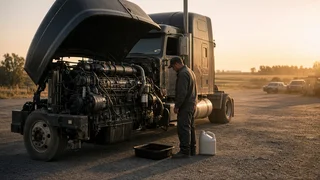
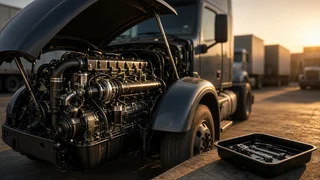
Cummins ISX rifle oil pressure
What rifle oil pressure means on a Cummins ISX
Rifle oil pressure is the lubricating-oil pressure in the engine’s main oil gallery, the long drilled passage Cummins calls the oil rifle. On a Cummins ISX, this is the primary lube-system pressure the oil-pressure sensor reports to the ECM, and it is the figure used to judge whether the engine is being oiled adequately at a given speed and oil temperature.
The subject is the 15-liter ISX family used in on-highway trucks, including later ISX15 calibrations and the closely related X15 that inherited the same rifle-fed lube layout. Exact minimum and maximum pressures, idle versus rated-speed limits, and fault-code trip points depend on engine serial number, control parts list (CPL), ECM platform (for example CM870, CM871, CM2250, or CM2350), oil temperature, and rpm. Those limits belong in the service data for that engine; they are not a single number for every ISX.
How oil reaches the rifle
The gerotor oil pump draws oil from the pan and sends it through the cooler and full-flow filter before it enters the main rifle. From the rifle, oil is distributed to the main and rod bearings, camshaft and overhead, piston-cooling nozzles, turbocharger feed, and other lube points. Because almost every critical bearing sees rifle pressure, a low rifle reading is treated as a whole-engine lubrication problem, not as a local sensor curiosity.
How the reading is judged
Oil pressure on an ISX is always interpreted with rpm and oil temperature. Cold oil is thicker, so a cold idle reading runs high and is a poor test of the lube system. The useful check is hot oil at a specified idle speed, then a second check as speed rises toward high idle or rated rpm. Pressure should increase with speed on a healthy pump and regulator. Cummins publishes the official limits in the troubleshooting and specifications for each CPL; those documents are the pass/fail standard.
Operator and service literature for many ISX and ISX15 engines describes a hot low-idle minimum in the area of 15 psi (about 103 kPa) and a typical rated-speed range around 35 to 50 psi (about 241 to 345 kPa). Treat those figures as a commonly published family range, not as a substitute for the chart that matches the serial number and calibration in front of you. Idle pressure below the published hot-idle minimum, a flat reading that does not rise with rpm, or an ECM low-oil-pressure fault with hot oil is out of the expected window.
Condition | What the rifle reading is used for; Hot low idle, specified rpm | Confirms the pump, regulator, and internal leakage at the weakest operating point; Rising rpm with hot oil | Confirms the pump can build pressure and the regulator is controlling it; Rated or high idle | Checks that gallery pressure stays in the published working band under load-speed oil flow; ECM sensor versus mechanical gauge | Separates a real lube-system fault from a sensor, harness, or ECM reporting fault
What a low rifle reading usually points to
A confirmed low rifle pressure means oil is not being supplied, is being dumped, or is leaking internally after it is pumped. On an ISX the overhead cam, injector drive, and piston-cooling nozzles all depend on that gallery, so a low reading is also a cam and piston-cooling concern, not only a crankshaft-bearing concern.
Low oil level, aeration, or the wrong viscosity for the ambient and operating temperature; Restricted oil cooler or filter, including a cooler internally plugged or a filter that has gone into bypass for the wrong reason; Worn or damaged oil pump, or a pressure-regulator or bypass valve that is stuck open or out of specification; Internal leakage past main or rod bearings, cam bushings, or other rifle-fed clearances that have opened up with wear; Leaks or restrictions in the turbo oil feed or other rifle takeoffs that unload gallery pressure; On later cooled-EGR ISX engines, coolant-contaminated oil from an EGR-cooler leak, which thins the oil and can drop pressure
Sensor value versus actual gallery pressure
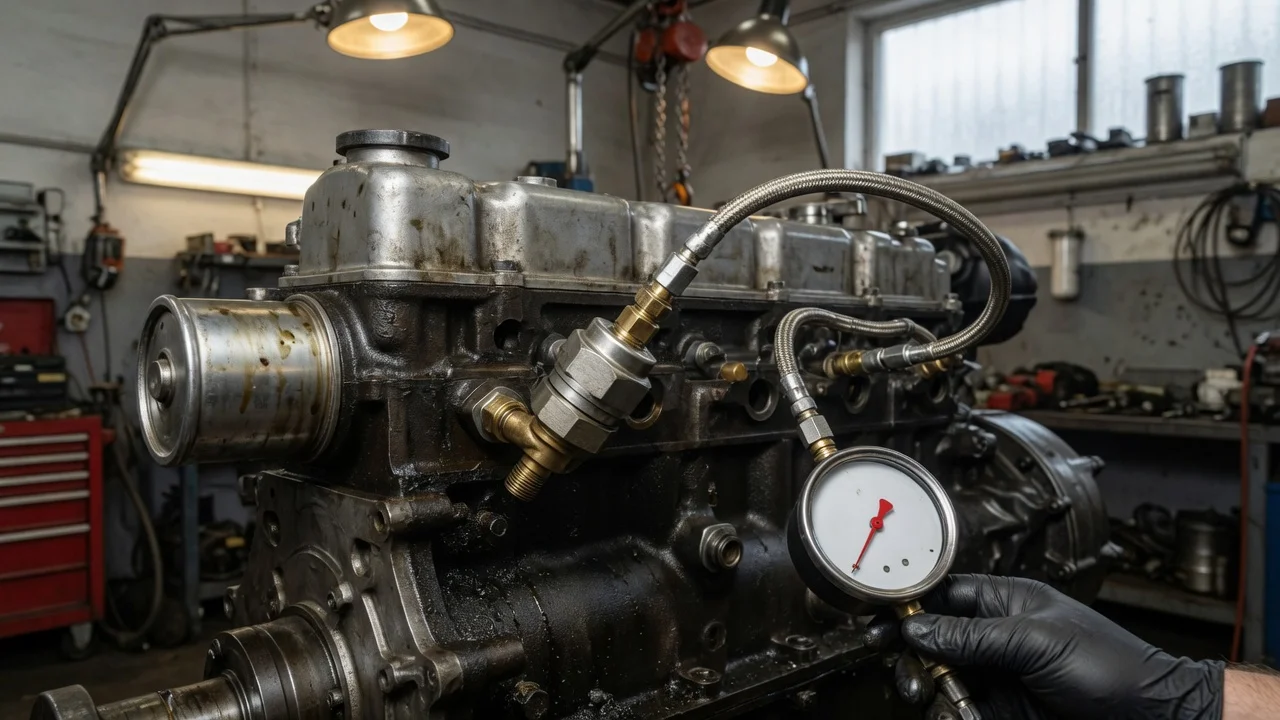
The ECM oil-pressure value is a sensor reading near the rifle, not an independent proof of gallery pressure. Before parts are replaced for a low-pressure complaint or fault code, the electronic reading should be compared with a known-good mechanical gauge on the engine’s oil-pressure port, at the same hot-idle and higher-rpm points the service procedure specifies. If the gauge is in specification and the ECM is not, the problem is the sensor, connector, wiring, or ECM input. If both are low, the lube system itself is low.
What to do next
Identify the engine by serial number, CPL, and ECM calibration, then use that engine’s oil-pressure specification at the stated oil temperature and rpm. Verify oil level and condition, then compare ECM rifle pressure with a mechanical gauge. If actual pressure is low, work from the supply side (level, filter, cooler, pump, regulator) toward internal leakage rather than replacing the sensor first. If the engine is still in service with a confirmed low hot-idle reading, treat it as a lubrication fault and do not continue to run it against a below-spec rifle pressure while waiting on parts.