Coolant Leaking into Oil: Causes and Diagnosis
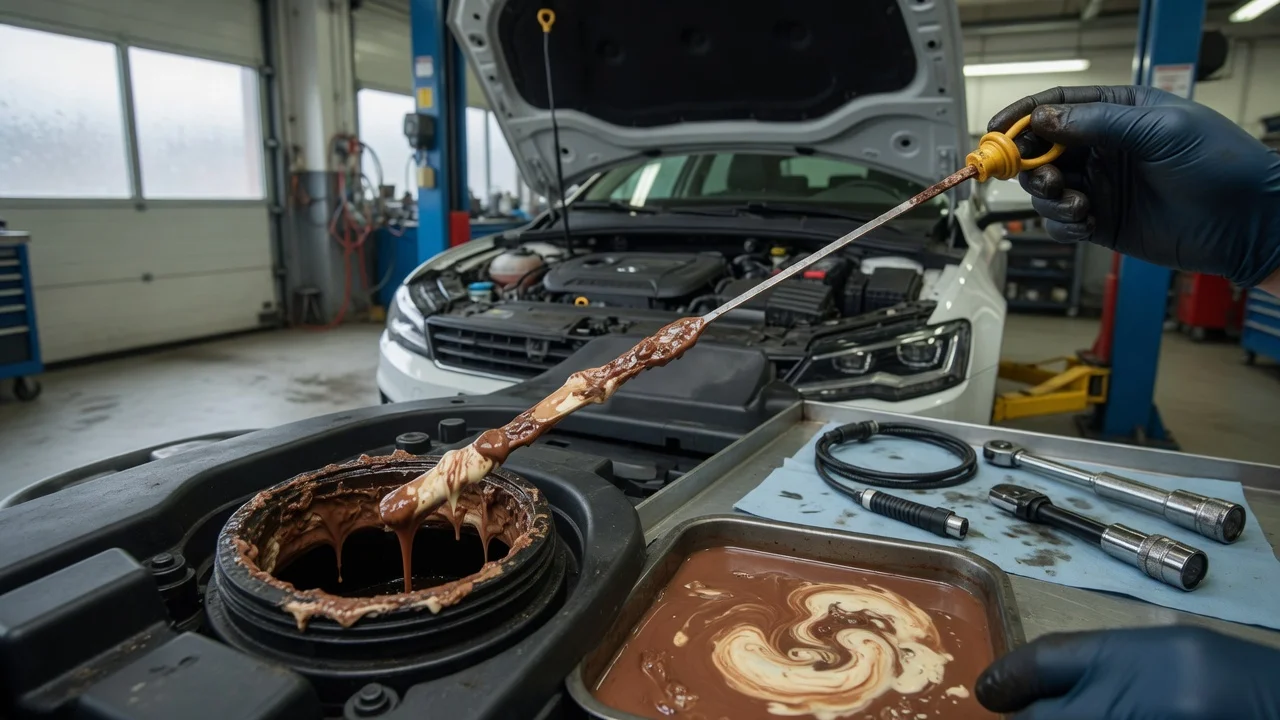
Direct answer: what coolant leaking into oil means
Coolant leaking into oil means engine coolant, also called antifreeze, has entered the engine lubrication system and mixed with the motor oil. This condition is sometimes described as an oil coolant leak. The resulting mixture is a serious contamination problem because it reduces the oil's ability to lubricate and can quickly cause bearing or other internal engine damage. The exact repair depends on the engine type and the route the coolant is taking into the oil, so the scope of the leak matters more than a single universal replacement part.
What the contamination looks like
Coolant in oil often changes the appearance of the oil beyond a simple thin or dark condition. A common visual sign is a milky, tan, brownish, or foamy substance on the oil fill cap, dipstick, or inside the valve cover. This appearance is usually described as a milkshake-like sludge. A small amount of condensation can also create a light milky residue on an oil fill cap, so the dipstick reading and coolant level provide more reliable evidence than the cap alone.
Other supporting signs include rising oil level, a noticeably sweet or unusual coolant odor in the crankcase area, white exhaust smoke, overheating, or a coolant level that keeps dropping without an external coolant leak. A low coolant reading and an overfull or contaminated oil level together point more strongly toward an internal crossover between the coolant and oil systems.
Most likely causes of coolant entering the oil
Several possible causes can create the appearance of coolant in oil. The cause depends on where the cooling system and lubrication system come close together in the particular engine.
Head gasket failure: A breach in the cylinder head gasket can allow coolant passages and oil passages to connect. This is one of the most common explanations when coolant and oil mix. Cracked cylinder head: A crack in the cylinder head casting can join a coolant passage with an oil return passage or a combustion chamber. Cracked cylinder block or liner: A crack in the block or a cylinder liner can allow coolant to reach the oil, especially after severe overheating or freezing damage. Internal cooler failure: Engines with an engine oil cooler that uses coolant may leak internally if the cooler fails. The transmission cooler does not explain this symptom, but a coolant-fed engine oil cooler can. Intake manifold concern: Some engines route coolant through the intake manifold. Depending on the engine design and gasket sealing, a failure can allow coolant into the oil area.
How to diagnose the cause instead of guessing
Diagnosis should separate observations from causes and follow a sequence that distinguishes the likely routes. One fault code alone is not proof that a particular part is bad. A code or scan result is a starting point, while pressure testing and visual inspection are used to confirm the path of the leak.
Begin by checking the oil condition and level, then check the coolant level and inspect the coolant reservoir. Unexplained coolant loss or an oil level that is too high supports the idea that coolant is entering the oil. A pressure test of the cooling system can reveal an external leak, but an internal crossover may not be visible externally. If the system holds pressure poorly and no external coolant leak is found, the coolant may be escaping inside the engine.
A cylinder compression test or a cylinder leak-down test can help identify a head gasket or combustion-chamber defect. The operating conditions matter when interpreting the results, because the gasket may leak more when the engine is cold, hot, or under load. An oil analysis can confirm coolant contamination in the oil while leaving the physical source to be located. Removing or inspecting the oil cooler, where fitted, can identify an internal cooler failure before assuming the head gasket is at fault.
The test results should be read together. A failed pressure test and milky oil support a coolant-to-oil path, but they may not show whether it is the head gasket, a crack, or an oil cooler. A leak-down test that marks one cylinder as weak may support a head gasket or cylinder crack near that cylinder. If these checks do not locate the path, further disassembly or a targeted inspection may be required.
Vehicle-dependent guidance and known gaps
Specific test pressures, torque specifications, gasket locations, and the presence of a coolant-fed engine oil cooler vary by model year, engine, and market. These values must not be treated as universal. Some vehicles may use a different cooler or none at all, and the intake manifold may or may not carry coolant depending on the engine configuration. For an accurate repair plan, the engine application should be identified before selecting a gasket, head, block, or cooler repair.
There is also a material gap in any remote diagnosis based on symptoms alone. The exact internal leak location usually requires hands-on testing and possible disassembly. The supplied information can guide the checks, but it cannot replace measuring the engine in the relevant operating conditions or inspecting the suspect internal component.
Why the engine should not be run with contaminated oil
Oil diluted by coolant cannot protect the crankshaft bearings, camshaft, and other moving parts as intended. Further operation can turn a seal or gasket repair into major internal engine damage. If coolant contamination is confirmed, avoid prolonged use until the oil and coolant systems are repaired, flushed, and refilled with the correct fluids.