Club Car Differential Problems
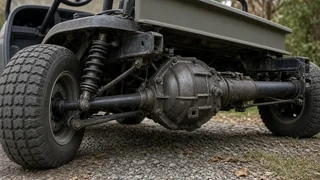
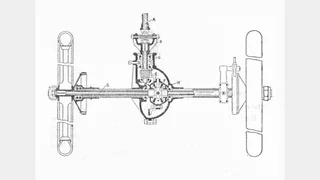
A Club Car differential routes engine torque to the drive wheels while letting them rotate at different speeds during turns. When the assembly becomes noisy, binds, leaks, or clunks, the symptoms often resemble transmission trouble, so narrowing the fault to the differential requires careful observation. The concern may involve the gearcase, axle bearings, oil level, or a damaged gear set. Because several Club Car platforms use different transaxle layouts, diagnosis should begin with the machine's transmission type and service history rather than an assumption that every whine or shudder means the differential has failed.
Essential answer
The essential answer is that Club Car differential problems typically appear as audible gear noise, fluid seepage near the axle tubes, uneven drive response, or mechanical binding in tight turns. These symptoms can point to worn carrier bearings, incorrect lubricant level, contaminated oil, or damaged ring and pinion teeth. The differential is part of a broader transaxle assembly on many models, so a repair may involve the transmission case, axle shafts, or wheel hubs rather than only the differential gearset itself.
Fitment and transmission type matter before ordering parts or planning a repair. Electric, gasoline, and utility models may use different transaxle housings even when the external symptom sounds the same. Check the vehicle's service history and fluid specification first, because low or incorrect lubricant can mimic severe mechanical wear. A whine that appears only at speed is often a bearing or gear-mesh issue, while a rhythmic clunk during turns more strongly suggests spider gear or side gear damage.
Diagnosing a problem
Start by placing the vehicle on a level surface and inspecting the gearcase for leaks or metallic particles in the drained lubricant. Rotate each rear wheel by hand with the opposite wheel held still. Roughness, clicking, or excessive free play can indicate worn axle bearings or damaged differential gears. Shift behavior also provides clues: a cart that lurches or shudders when transitioning from forward to reverse may have excessive backlash between the pinion and ring gear rather than a failed motor or controller.
Diagnostic codes should be read as a starting point, not as proof that a specific differential component has failed. Manufacturer-dependent codes can be triggered by speed sensor faults, wiring issues, or transmission range readings that accompany driveline complaints. If the cart emits a sharp metallic knock when load reverses, stop driving it until the gearcase is inspected, because continued operation can turn a loose bearing or chipped tooth into a fractured carrier. Professional diagnosis is appropriate when the noise persists after confirming fluid level, axle nut torque, and tire circumference are correct.