Choosing Steering Linkage for a Ford F-250
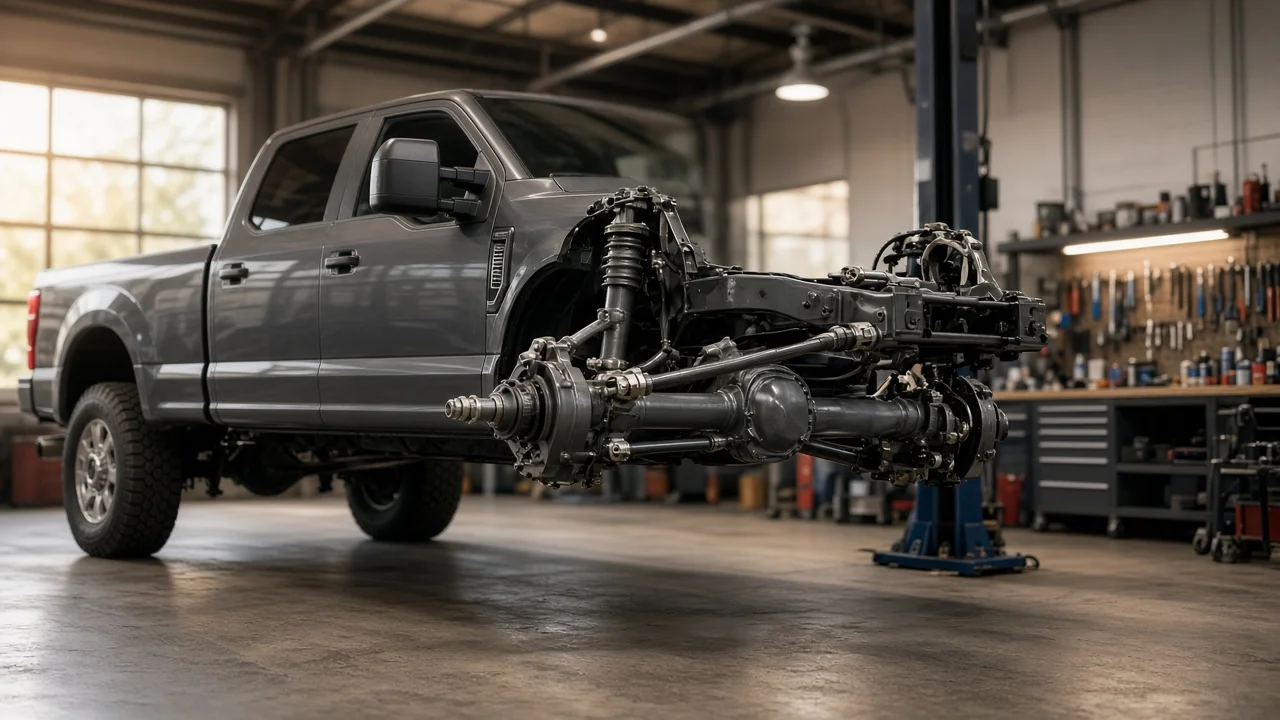
Steering linkage on a Ford F-250 handles a heavy front end, large tires and, often, a plow or a lift. When worn joints show up as wander, clunks or uneven tire wear, the replacement you choose decides how long the repair lasts. This guide explains how to match F-250 steering linkage to your truck, which features are worth paying for, and what new parts will not fix on their own.
Define the job the product must do
Start with how the truck is used. A stock F-250 that commutes and tows occasionally is usually well served by OE-equivalent linkage that restores factory geometry. Oversized tires, a leveling kit or a lift put more leverage on the tie rod, drag link and their joints, and those trucks may justify heavier components. Plowing, regular off-road driving or a front-mounted winch adds front-axle weight and shock loads that factory-style parts may not have been sized for.
Then decide how much of the system you are replacing. Swapping a single worn tie rod end costs less, but on a high-mileage truck the other joints have often worn at a similar rate, and replacing them one at a time means paying for several alignments. Write down your constraints: budget, whether you have the tools to separate tapered joints, whether you or a shop will do the work, and how soon you can get an alignment once the parts are installed.
Check compatibility
The F-250 name covers very different chassis. Older trucks, the light-duty F-250 sold briefly alongside the F-150, and the Super Duty generations use different front suspensions and steering layouts, and 2WD and 4WD versions of the same year can differ. Confirm the model year, cab and drivetrain, and use a VIN-based parts lookup rather than a listing that simply says it fits an F-250.
Several interfaces determine whether a part fits. These include the taper size and orientation of each joint stud where it enters the knuckle or pitman arm, the length of the drag link and tie rod, and the thread size and direction on the adjustment sleeves. Also check the mounting points on the knuckles, the pitman arm and the steering stabilizer bracket. A thicker aftermarket tie rod tube may not accept the factory stabilizer clamp, so check whether the kit includes a matching clamp or bracket.
If the truck has been lifted or leveled, find out what is already installed, such as a drop pitman arm or a different steering layout, because that changes which parts fit. Many aftermarket kits state the ride height or lift range they were designed for. Treat that range as a real constraint: the drag link angle affects bump steer, and a kit used outside its intended range can make steering worse rather than better.
Features that affect the choice
Joint design matters most. Greaseable joints let you purge old or contaminated grease, which extends their life on trucks exposed to water, mud or road salt, but only if you actually service them. Sealed joints need no routine attention, yet they cannot be refreshed once the internal lubricant breaks down. Look at the boot material and how the boot is retained, because a torn boot is usually where joint wear begins.
Tube diameter and wall thickness are important on trucks with large tires or off-road use, since a bent tie rod changes toe immediately. Threaded adjustment sleeves let the alignment technician set toe and center the steering wheel. Some heavy-duty kits change the geometry, for example by moving where the drag link attaches. That can add strength or clearance, but it may require specific knuckles or machining, so read the installation instructions before you buy.
Separate evidence from marketing labels. Terms like heavy duty, severe service or lifetime warranty do not describe anything measurable. Useful evidence includes a stated tube diameter and joint size, published fitment by year and drivetrain, included hardware such as castle nuts and cotter pins, and clear installation instructions. Read warranty terms for their exclusions, such as off-road use, lifted vehicles or labor costs.
Limitations and ownership costs
New linkage restores precise steering only if the rest of the front end is sound. It will not correct worn ball joints, loose wheel bearings, a worn track bar or track bar bushings, play in the steering gear, or a failing steering stabilizer. On solid-axle trucks, a violent front-end shake at speed often involves several of these components together. Check joint play with the truck on the ground while a helper rocks the steering wheel and you watch each joint for movement, and inspect the whole front end before blaming the linkage alone.
Installation adds costs beyond the parts. You may need a tie rod or pitman arm puller, new cotter pins, and penetrating oil for seized sleeves. Use proper vehicle support: rated jack stands at the correct lift points on level ground with the wheels chocked, and never work under a truck held only by a jack. Tighten each nut to the fastener specification in Ford service information or the part manufacturer's instructions, and follow those instructions for lining up castle nuts with cotter pin holes and positioning sleeve clamps.
A wheel alignment is required after replacing tie rods or the drag link, because toe and steering wheel centering change. Ongoing costs include periodic greasing for serviceable joints, boot inspections, and any fastener recheck the manufacturer recommends after the first miles.
Build a practical shortlist
Narrow the options with a short fitment check. For each candidate, confirm it is listed for your exact year, drivetrain and suspension setup, that it matches your current steering layout or that you accept the conversion work, and that its intended ride height covers your truck.
Then compare the candidates that pass on a few points. Consider greaseable or sealed joints and whether that suits your maintenance habits, along with tube diameter and adjustment method. Check the included hardware and stabilizer mounting, the installation requirements, and the warranty exclusions. Finally, compare total cost including tools and the alignment. Two or three parts that clear the fitment checks are enough; choose the one whose trade-offs match how you use the truck. If your inspection turned up other worn front-end parts, plan them into the same job.