Choose Chrysler transmission fluid

Choosing the right transmission fluid for a Chrysler vehicle is not about picking the most expensive bottle. It is about matching the fluid specification to the transmission type and the shift behavior the vehicle was designed to produce. The label on the dipstick or fill plug is a starting point, but owners should also consider service history, diagnostic codes, and the difference between licensed and generic fluids. This guide explains how to interpret those clues so the transmission receives the correct chemistry for reliable operation.
Essential answer
The essential answer is that Chrysler transmission fluid should match the specific fluid specification listed for the vehicle rather than a generic automatic transmission fluid. Many modern Chrysler transmissions require formulations such as ATF+4 or other designated fluids that support the friction characteristics of the clutches and torque converter. Using a fluid that does not meet the specification can change shift timing, create shudder, or accelerate wear, even if the bottle appears similar on the shelf.
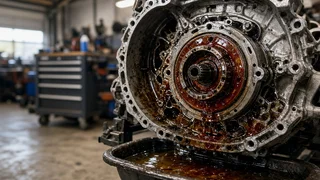
Start by confirming the transmission type and the owner's manual or fill-point marking. The fill-point identification matters because fluid requirements vary among front-wheel-drive, rear-wheel-drive, and heavy-duty applications. If the vehicle has a transmission dipstick, check the fluid condition while the transmission is at operating temperature on a level surface. Cloudy fluid, a burnt odor, or particles suspended in the fluid are observations that indicate the old fluid may have already lost its protective qualities. These observations guide the replacement choice but do not identify a failed component by themselves.
Relevant alternatives
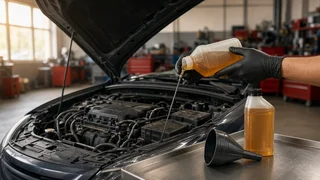
A licensed or approved fluid that names the required Chrysler specification is usually the safest direct replacement. It is formulated to preserve the expected friction behavior during gear changes and to protect seals, bushings, and solenoids. A universal fluid may list several manufacturer specifications on the label, but compatibility depends on confirming that the specific Chrysler requirement appears on the bottle. When the exact listing is present, the universal product can work in many passenger cars and light trucks; when it is absent, it is the wrong alternative for that transmission.
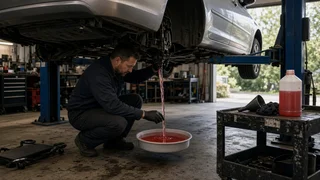
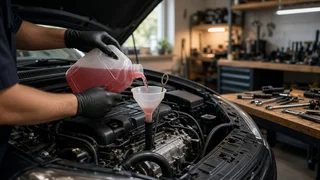
A full-service fluid change versus a simple drain-and-fill is a separate choice owners face. A drain-and-fill replaces only a portion of the fluid and is often used as a periodic refresher, while a fluid exchange may remove more of the old fluid from the torque converter and cooler circuit. If the transmission shows neglected fluid or a diagnostic code related to shift behavior, a more complete fluid exchange may be more informative. The condition of the drained fluid and the presence of sediment can reveal whether the transmission needs inspection beyond the fluid service.