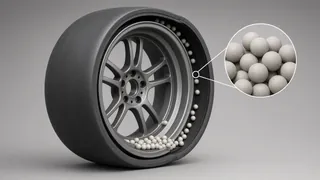
Ceramic Tire Balancing Beads
When a tire assembly vibrates at highway speed, drivers often suspect a bent wheel or worn suspension component. Ceramic bead tire balancing offers a different explanation and remedy. These small, hard beads are placed inside the tire, moving continuously as the wheel rotates to counteract uneven mass distribution. Unlike traditional clip-on or stick-on wheel weights, the system adapts as the tire wears and road conditions change. Understanding how this method interacts with tire size, inflation pressure, and drivetrain compatibility helps you decide whether it suits your vehicle.
Essential answer
Ceramic bead tire balancing is an internal, dynamic method of reducing vibration in wheel and tire assemblies. The beads are inserted through the valve stem or placed inside during mounting, then respond to centrifugal force while driving. As the tire rotates, the beads distribute themselves opposite heavy spots in the tire or wheel, shifting as necessary to maintain equilibrium. This approach is distinct from fixed wheel weights, which remain in one location and may require rebalancing as tread depth changes or after impacts.
The beads are most relevant for larger tire sizes, heavy load index applications, and vehicles where traditional balancing is difficult, such as off-road trucks or commercial trailers. However, the method is not a universal fix. Inflation pressure, speed rating, and the tire's internal construction can influence how predictably the beads migrate. A vehicle placard listing the correct tire size and pressure remains essential, and drivetrain compatibility matters because a four-wheel-drive system may expose small residual imbalances differently than a two-wheel-drive passenger car.