Car won't start after water pump replacement
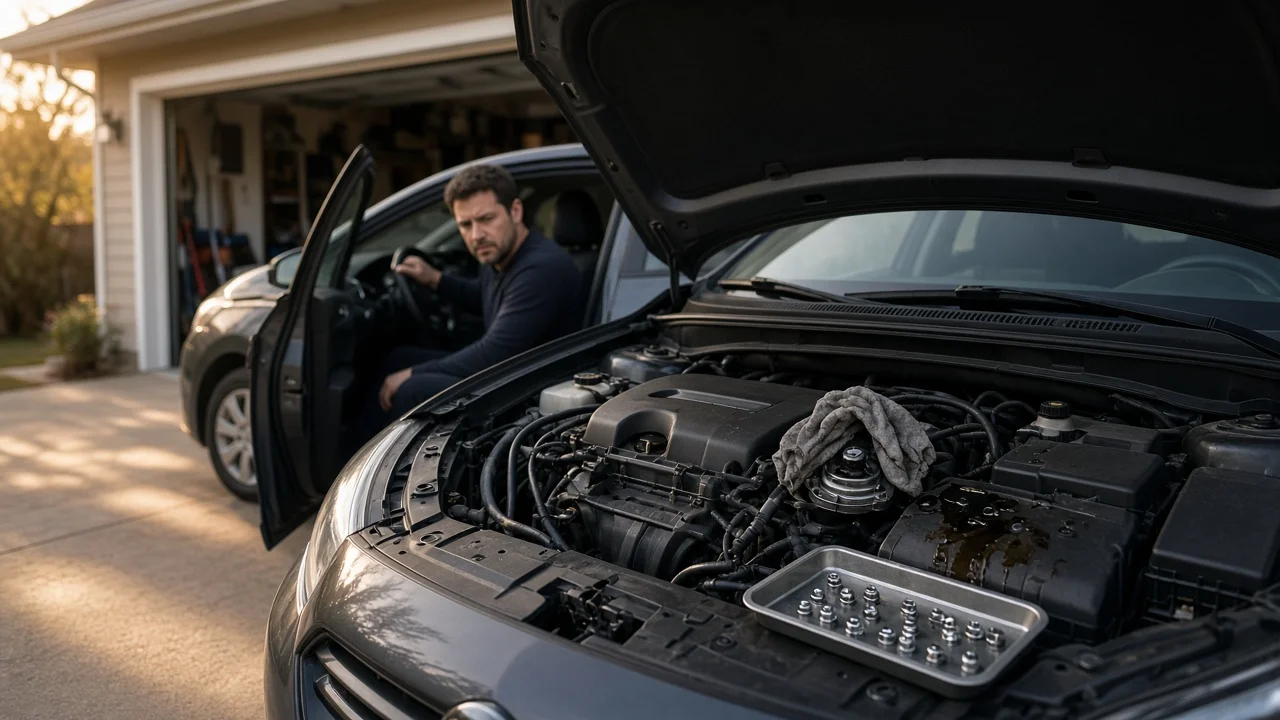
A no-start condition immediately after a water pump replacement usually points to something disturbed during the repair rather than an internal engine failure. The new pump itself rarely prevents cranking, but the work around it can affect the starter circuit, ignition timing, or sensor connections. Coolant spilled onto electrical components, a shifted wiring harness, or a disrupted ground path are common culprits. Checking the battery state of charge, cranking speed, and fuel delivery helps separate an electrical fault from a mechanical bind or a flooded engine.
Direct answer
The direct answer is that the pump change is likely connected to the no-start through collateral damage, not the pump casting. If the engine cranks normally but will not fire, focus on ignition switch behavior, fuel delivery, and crank sensor signals that may have been unplugged or wetted. If it cranks slowly or only clicks, inspect the starter circuit and battery state of charge first. An overheated engine before the repair can also leave a marginal battery or corroded terminal that fails on the next start attempt.
A mechanical bind is less common but possible if the drive belt was routed incorrectly or a tool was left against a pulley. Compare the cranking speed to its normal rhythm. Slow, labored rotation suggests excessive drag, while fast even cranking points to missing spark or fuel. Do not assume a fault code means a failed sensor; a code can simply record an unplugged connector or a voltage drop during cranking. Interpreting the evidence in order prevents replacing parts that were fine before the job.
History and development
Water pump replacement methods changed as engines moved from V-belts and separate timing chains to serpentine belts and timing-belt-driven pumps. On older pushrod designs, the pump often sat on the front cover and shared little with ignition components. On later overhead-cam engines, the pump may be driven by the timing belt, meaning removal disturbs camshaft position, crank correlation, and tensioner alignment. That historical shift explains why a seemingly simple cooling repair now carries a risk of a no-start.
The practice of replacing the pump during a timing belt service developed because labor overlap made preventive replacement economical. As a result, many no-start complaints after a pump change actually trace to cam timing being off by a tooth or a tone wheel that was not indexed. Understanding this evolution helps a technician look beyond the cooling system. It also explains why manufacturer-dependent codes and reset procedures require vehicle-specific confirmation rather than a generic scan-tool interpretation.