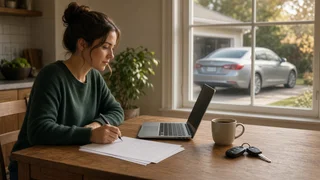
Car insurance for a road test
The short answer
In most US states, the vehicle you bring to a road test, also called a driving test or skills test, must be currently insured, registered and in safe working order. You will usually be asked to show proof of that insurance before the examiner gets in the car. The requirement attaches to the vehicle rather than to you as the test-taker. You generally do not need a policy in your own name, but the car you drive must carry valid coverage on test day.
The key qualification is that road test rules are set by each state's motor vehicle agency, not by a single national standard. Accepted forms of proof, how strictly documents are checked and the rules for certain vehicles differ from state to state. Check your own state's current road test requirements before your appointment.
What testing staff typically check
Exact checklists vary by state, but a pre-test vehicle inspection commonly covers the following:
Proof of insurance that is current on the test date and covers the vehicle being used; Current vehicle registration, which in some states must match the insured vehicle; Working safety equipment such as brake lights, turn signals, horn, seat belts and mirrors; A vehicle condition that lets the examiner sit safely in the passenger seat and reach controls if needed
If any item fails the check, the test may be cancelled or rescheduled before it starts. An expired or missing insurance card is a common reason applicants are turned away.
Whose insurance covers the test drive
In the most common case, a learner's permit holder takes the test in a family member's car. Coverage then usually comes from the vehicle owner's existing auto policy. Many insurers extend coverage to permit holders who live in the household. Some insurers ask to be notified, or require the permit holder to be listed, once a learner starts driving. Practices differ by insurer and state, so the policyholder should confirm with their insurer that a permit holder is covered when driving the vehicle.
Liability coverage is the part that pays for damage or injuries you cause to others. It is the coverage states require. Whether damage to the test vehicle itself would be paid depends on whether the policy also includes optional collision coverage.
Situations that change the answer
Borrowed car: the owner's policy must be active, and you should confirm that the policy permits other drivers to use the car. Bring the owner's proof of insurance and registration. Rental car: rental agreements often restrict who may drive and may not allow use for a road test. Some testing locations also apply extra rules to rentals. Check both the rental terms and your state's policy. Driving school vehicle: many driving schools provide an insured vehicle for the road test as part of a package. Confirm what documentation the school will supply. Newly purchased or out-of-state vehicle: temporary registration or out-of-state insurance may raise questions at the testing site. Verify acceptance in advance.
What to do before test day
Check that the insurance policy on the test vehicle is active and will not lapse before your appointment. Carry the current insurance card. Paper may be the safer choice even where electronic proof is legally accepted, since practice can vary by location. Check that the registration is current and matches the vehicle. Ask the policyholder to confirm with their insurer that a permit holder is covered. Review your state motor vehicle agency's posted road test requirements for any state-specific rules.
Limits of this guide
This overview is based on general principles that apply across most US states. No state-specific rules, insurer policies, costs or dates were available for this article. It does not confirm the requirements of any particular state or testing site, or the terms of any individual insurance policy. Your state's motor vehicle agency and your insurer are the authoritative sources for your situation.