Car Engine Dimensions: What the Measurements Mean and How to Find Them for a Specific Engine
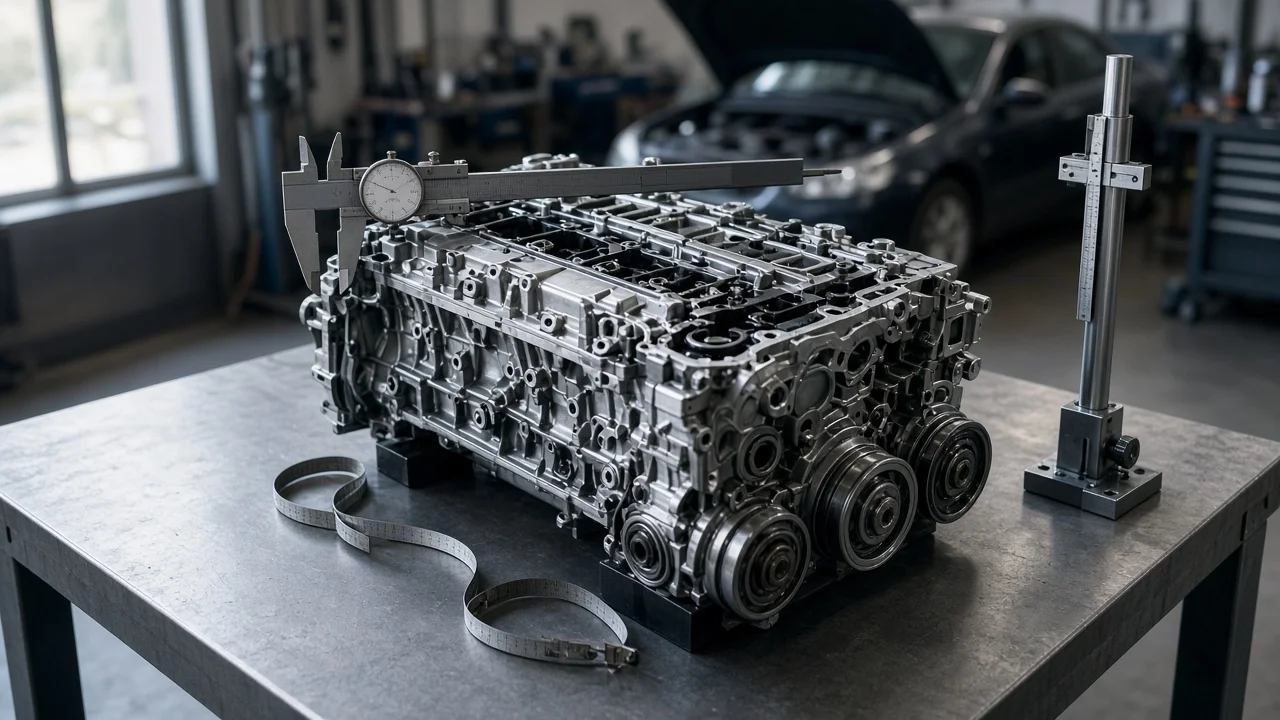
The Short Answer: There Is No Single Size for a Car Engine
No standard set of dimensions applies to all car engines. Length, width, height and weight depend on the specific engine, which is defined by its design, displacement, cylinder count and layout, and by which components are attached when it is measured. The same vehicle model can use different engines across model years, generations, trims and markets, so the model name alone is not enough to pin down engine dimensions. Reliable figures start with identifying the exact engine, usually by its engine code.
This guide does not include measurements for any particular engine, because no confirmed specifications were available for it. It explains what engine dimensions describe, why published figures often disagree, and how to locate trustworthy numbers for the engine you are researching.
Two Different Meanings of Engine Dimensions
People searching for engine dimensions usually mean one of two things, and the right source depends on which one you need.
• External dimensions: the physical length, width and height of the engine as an assembly. These matter for engine swaps, engine bay clearance, crating, shipping and lifting equipment. • Internal dimensions: measurements inside the engine, chiefly bore (the diameter of each cylinder) and stroke (the distance the piston travels). Together with cylinder count, bore and stroke determine displacement, the swept volume usually quoted in liters or cubic inches.
Manufacturers routinely publish bore, stroke and displacement in specification sheets. External dimensions are published far less consistently and often appear only in service information, engineering documentation or measurements made by builders and suppliers.
Why Published Engine Measurements Often Disagree
Two sources can list different external dimensions for what looks like the same engine, and both can be accurate. The difference usually comes from what was included in the measurement.
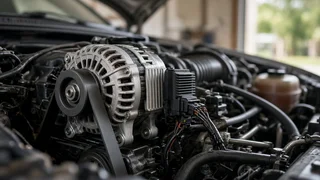
• Dressed or bare: a dressed engine carries its intake manifold, exhaust manifolds, alternator, pumps and other accessories, while a bare long block or short block does not. • Transmission attached or not: a figure for the engine and transmission together is much longer than one for the engine alone. • Orientation: transversely mounted engines, common in front-wheel-drive cars, and longitudinally mounted engines, common in rear-wheel-drive vehicles, can carry different intake, accessory and mounting hardware even within one engine family. • Variant changes: revisions across model years or between markets can alter intake design, turbocharging hardware or accessory layout. • Measurement points: some figures run to the farthest protrusion, such as a pulley or sensor, while others stop at the main castings.
Before relying on any number, confirm what configuration it describes. A figure without that context is a weak basis for a fitment decision.
How Engine Layout Affects Overall Size
As a general principle, cylinder arrangement shapes an engine's proportions. An inline engine places all cylinders in one row, so it tends to be long and narrow, and gets longer as cylinders are added. A V engine splits the cylinders into two angled banks, which usually makes it shorter but wider than an inline engine with the same cylinder count. A horizontally opposed, or flat, engine lays its cylinders out to either side, giving a low and wide package. These are tendencies, not measurements, and individual designs vary.
Displacement does not map neatly to physical size. A larger-displacement engine is not always physically larger, because bore spacing, block material, valvetrain design and attached hardware all affect the final dimensions.
Using Engine Codes to Find the Right Dimensions
An engine code is the manufacturer's identifier for a specific engine design or variant. Because one vehicle model can offer several engines, the engine code is the most dependable key for looking up dimensions and related specifications.
• Check the Vehicle Identification Number (VIN). On vehicles sold in the US, the VIN includes a character that identifies the engine. Which position holds it, and how it is decoded, varies by manufacturer, so use the manufacturer's VIN decoding information. • Look on the engine itself. Many engines carry a stamped or cast code, or a label, on the block or a cover. The location differs by manufacturer and engine family. • Consult the owner's manual or service manual. These often list the engine designation, and service manuals may include detailed specifications. • Check the emissions or vehicle information label under the hood, which on many vehicles identifies the engine family or displacement.
Once you know the engine code, look for dimensions in manufacturer service information or engineering documentation where possible. If you use figures from builders, swap specialists or parts suppliers, note whether they were measured dressed or bare and with or without the transmission.
When You Need Measurements, Not Estimates
For an engine swap or any job where clearance is tight, published figures are a starting point rather than a guarantee. Measuring the actual engine in the configuration you plan to install, along with the target engine bay, removes uncertainty from accessories, aftermarket parts or production changes. Also check mounting points, transmission compatibility, exhaust routing and hood clearance, since overall dimensions alone do not confirm fit.
Key Takeaways
• Engine dimensions are specific to each engine and variant, not to a vehicle model as a whole. • Separate external dimensions (length, width, height) from internal ones (bore, stroke, displacement). • Published external figures differ depending on whether accessories and the transmission are included. • Identify the engine code through the VIN, engine markings or vehicle documentation before looking up measurements. • For fitment work, confirm critical dimensions by measuring the actual components.