Car brands owned by Hyundai
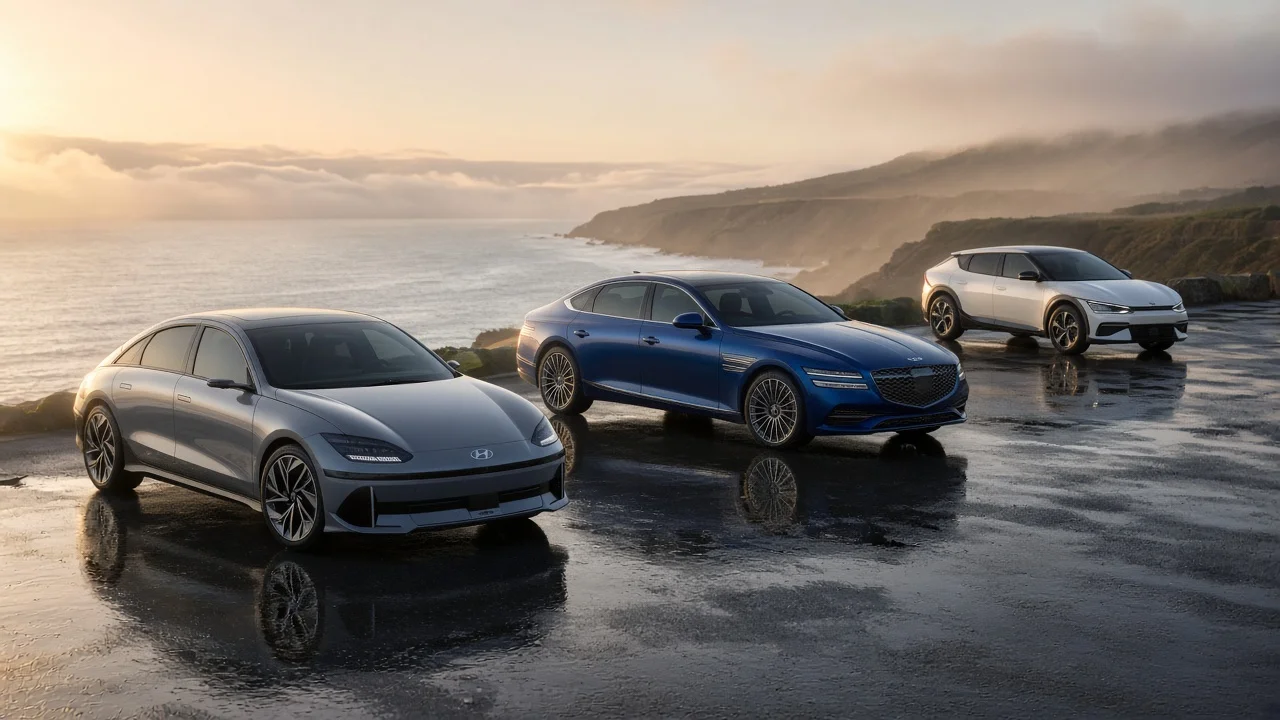
The question of which car brands Hyundai owns often mixes corporate structure with the vehicles seen on American roads. Hyundai Motor Company operates as one part of a larger Korean conglomerate, but its automotive portfolio is not a long list of familiar nameplates. Understanding the difference between a parent group, a subsidiary, and a simple alliance helps clarify why the answer includes both a mainstream value brand and a luxury division rather than several competing marques.
Essential answer
In direct terms, the Hyundai Motor Group owns the Hyundai and Genesis brands, and it also holds a substantial stake in Kia. Kia is commonly described as an affiliate within the group rather than a wholly owned single entity, but the two companies share platforms, engineering resources, and components extensively. For a shopper comparing vehicles, this means several sedans and SUVs sold under different badges may share underlying architecture even though their styling and tuning differ.
The scope becomes clearer when separating Hyundai Motor Company from the broader Hyundai conglomerate, which includes unrelated industrial, construction, and financial businesses. Not every product carrying the Hyundai name is an automobile. Within the automotive division, Genesis operates as the dedicated premium marque, while the core Hyundai label covers mainstream market segments. Luxury nameplates sometimes appeared as trim levels or separate models before Genesis became a distinct brand.
How it works
Corporate ownership works through a tiered structure rather than direct control of many competing labels. The group invests in specialized subsidiaries that handle steel, logistics, and parts supply, but those firms are suppliers, not consumer-facing automotive marques. When a buyer researches powertrain options or equipment levels on a Kia and a Hyundai, the similarity in model names and body configurations often traces back to this coordinated platform strategy.
There is a practical effect for ownership and service. Because the group coordinates research and development, technologies such as hybrid systems, driver-assistance features, and modular electric-vehicle platforms can appear across Hyundai, Kia, and Genesis products. Regional availability and model year updates still vary. A feature shown in one market segment does not automatically mean every vehicle from the group offers it, and each brand maintains separate dealership networks and warranty administration.
Strengths, limitations and suitability
The main strength of this structure is scale. Sharing development costs allows the group to offer a broad range of body configurations and powertrain options, from small combustion models to larger electric vehicles. Buyers often benefit from a consistent approach to infotainment, safety equipment, and material quality across several price points. The compromise is that models from different badges can feel related, which may reduce the sense of distinct brand identity.
Suitability depends on whether the buyer values variety or clear separation between brands. Someone comparing a Hyundai and a Kia may find similar strengths in cabin layout and driver controls, while a Genesis model aims higher in refinement and performance. The overlap is practical for households that want a common service experience but different vehicle sizes. It is less appealing to shoppers who expect each marque to pursue an entirely independent design direction.
Procedure
When verifying which company actually builds a vehicle, the ownership structure matters less than the manufacturer information on the window sticker or door jamb label. A particular model may be assembled in a plant shared by several group products, but the brand name reflects the sales channel, warranty terms, and final tuning. Shoppers should confirm regional availability because not every body configuration sold elsewhere is offered in the US market.
There is no single uniform rule for how ownership translates into badge engineering. Some platforms produce vehicles that are visually and mechanically close, while others diverge significantly in ride quality and powertrain calibration. Rather than assuming two vehicles are identical because they come from one corporate family, compare the specific equipment level and test drive each candidate on the roads where it will be used.
Diagnosing a problem
A common confusion arises when a shopper sees a nameplate or technology in another market and assumes a direct equivalent must be sold under the Hyundai umbrella in the United States. Brand ownership is not the same as distribution. Some group products exist only in specific regions, and a familiar platform may carry a different name depending on the country. Check the current US lineup rather than relying on an overseas model name.
If a vehicle from the group does not appear in American dealerships, the reason is usually a product-planning decision, not a hidden ownership dispute. The solution is to identify the closest available equivalent by comparing body configuration and powertrain options. Manufacturer-dependent details such as trim names and standard equipment change with each model year, so current catalog information is more useful than a general statement about corporate affiliation.