Car audio amplifier voltage drop
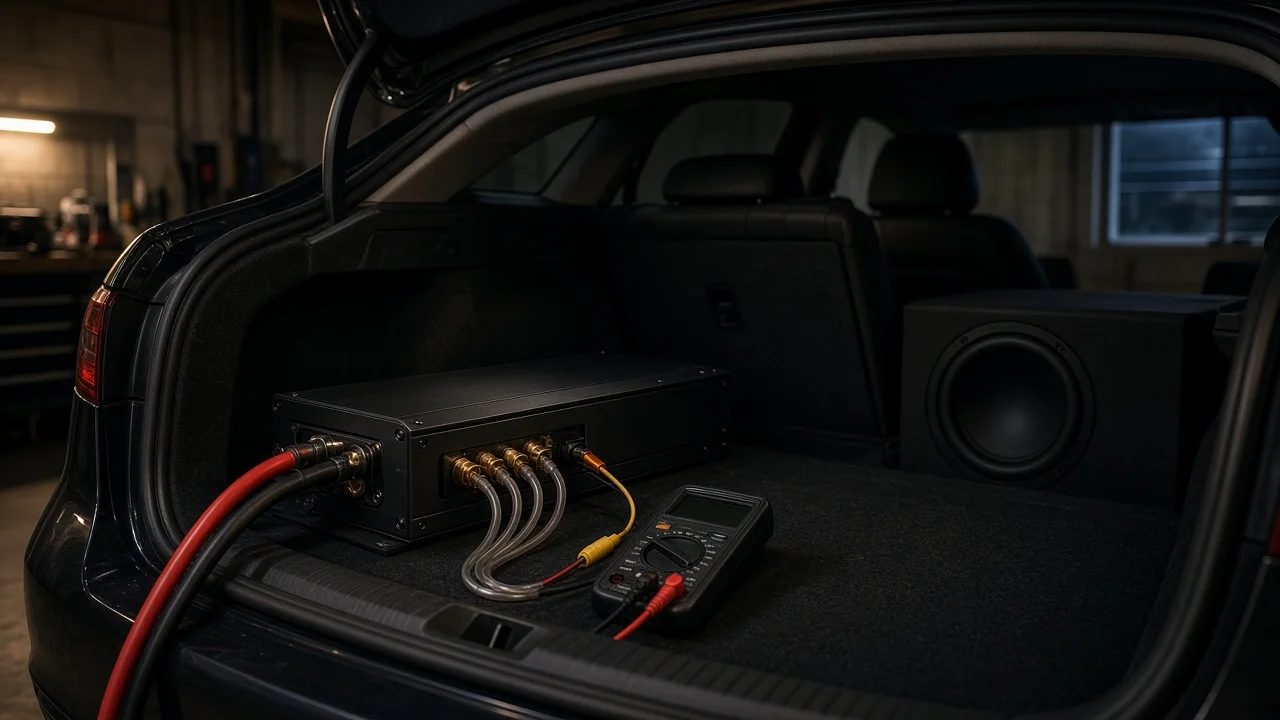
When an amplifier in a car audio system cannot hold its operating voltage, output becomes unstable long before the music simply gets quieter. Car audio amplifier voltage drop is the difference between the voltage available at the vehicle battery or electrical source and the lower voltage measured at the amplifier terminals under load. Head unit output, speaker wiring resistance, ground return quality, alternator capacity, and vehicle integration all influence how much voltage is lost. In an informational sense, the issue is not one failure but a diagnosis of where energy is being converted into heat before it can support clean power delivery.
Essential answer
The essential answer is that voltage drop at a car audio amplifier means the supply voltage falls below the level needed for stable operation when the amplifier draws current, and the root cause can be on either the positive feed side or the ground return side of the circuit. In many systems the problem only appears during bass transients, when current demand rises quickly and resistance in connectors, fuse holders, chassis grounds, or undersized power cabling becomes significant. The amplifier may still play at modest levels, but its dynamic headroom and clean output are reduced as the rail voltage sags under load.
A voltage reading taken with the system at idle or with the amplifier muted often looks normal even when a serious drop exists under music or test tones. That makes measurement at the amplifier terminals during realistic load the key to confirming the condition. If the supply voltage stays close to the battery voltage at low output but falls substantially when the amplifier is driven, the drop is being produced by circuit resistance and current, not by a weak battery alone. Interpreting the measurement in that context separates normal charging-system variation from an audio circuit problem.