Can you use a car amplifier for home audio
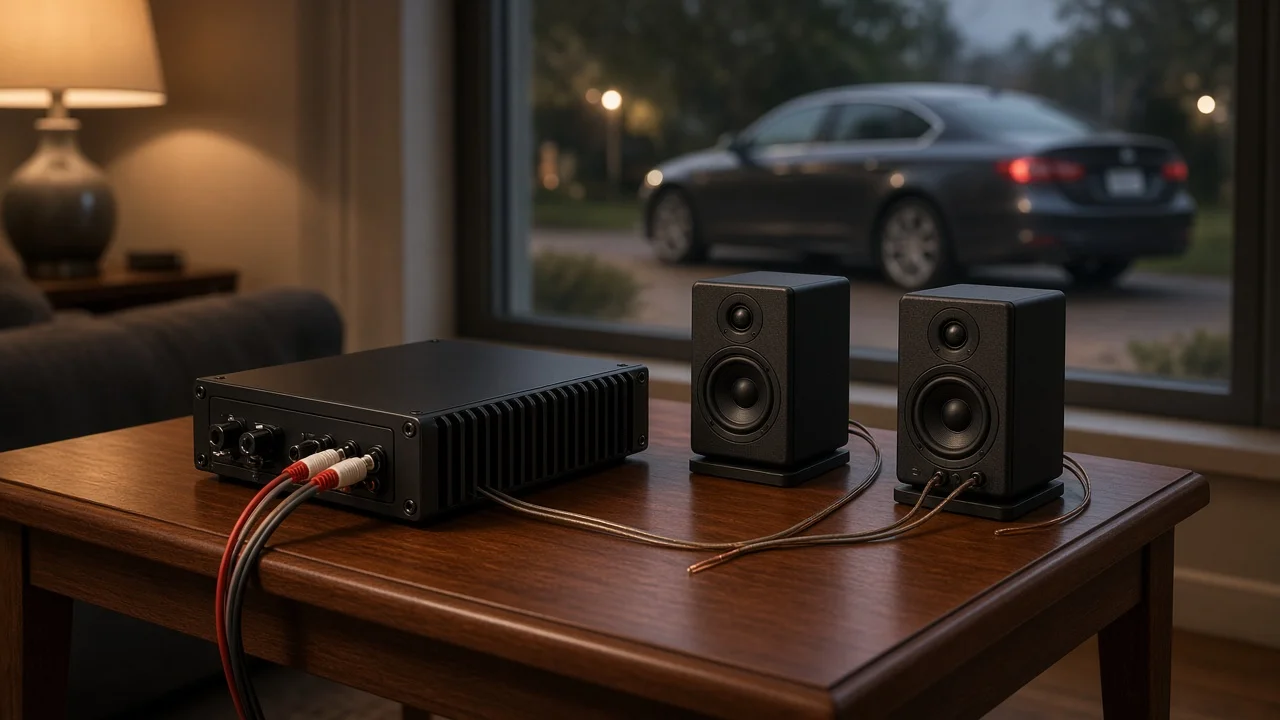
A car amplifier can work for home audio, but it is not a plug-and-play swap. The main obstacle is power: an amplifier designed for a vehicle expects roughly 12 volts of direct current at high amperage, while a wall outlet supplies 120 volts of alternating current. A suitable power supply solves that mismatch, letting you experiment with equipment you already own. Understanding the wiring, signal input, and speaker impedance involved keeps the project practical and avoids the impression that a car audio amplifier is a direct replacement for a home receiver.
Essential answer
Yes, a car amplifier can be used for home audio when you provide a stable 12-volt direct current source capable of delivering enough current for the amplifier's draw. The amplifier does not know whether it is mounted in a trunk or placed on a shelf; it simply amplifies a low-level audio source signal. In a vehicle, the head unit supplies that signal and the electrical system delivers power. At home, you must replicate both functions before the amplifier will produce usable output for passive speakers.
The conversion is more involved than connecting speaker wire and turning a key. Many automotive amplifiers use high-current terminals that expect a thick positive cable to the battery and a chassis ground. A regulated power supply for a car audio amplifier becomes the bench-top equivalent of that vehicle electrical source. Because the amplifier's protection circuitry can shut down when voltage sags under load, the power supply must maintain its output during demanding bass passages rather than merely showing a suitable no-load voltage.