Can You Clean Engine and Cabin Air Filters? K&N Filter Care Explained
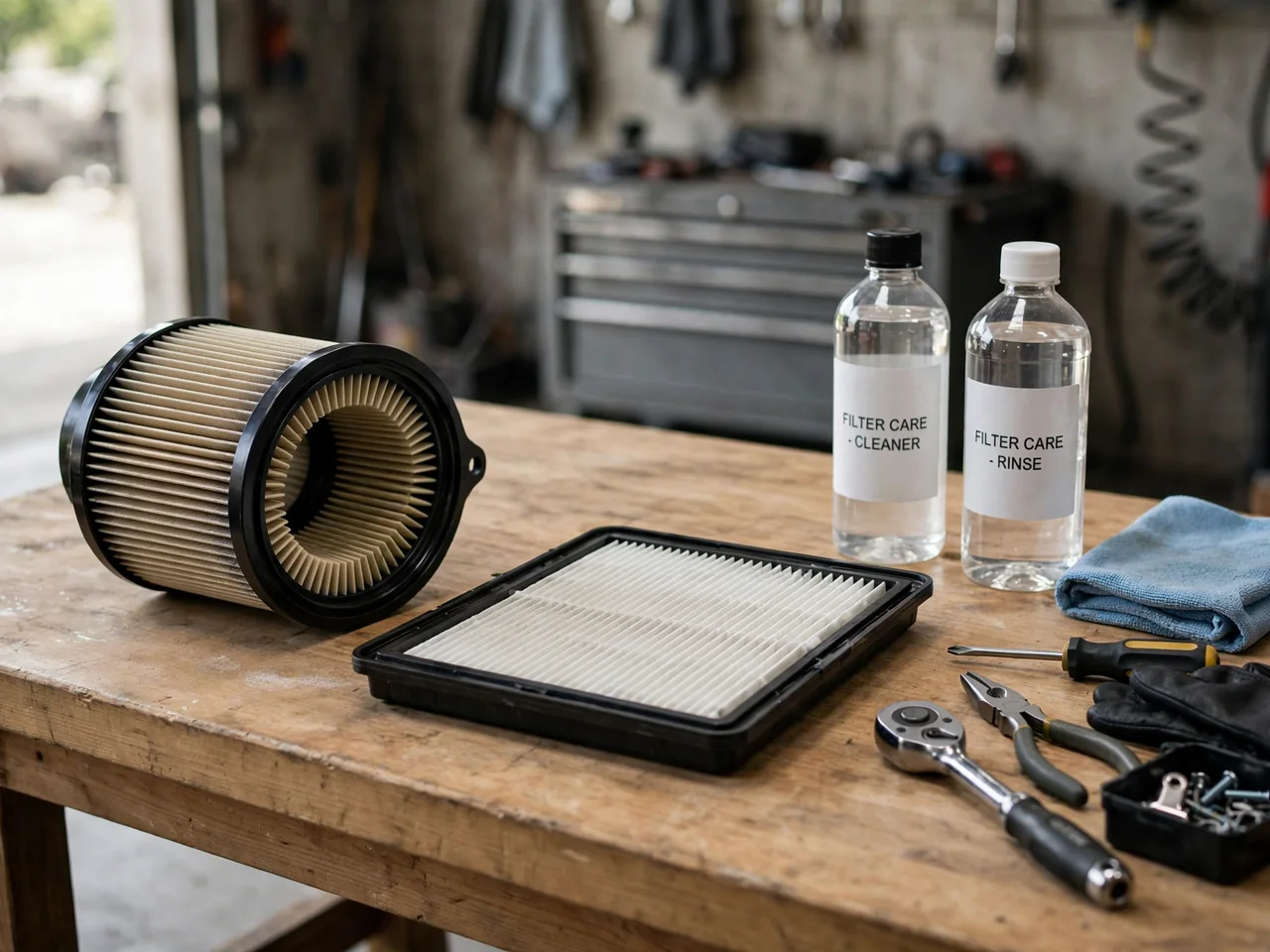
Whether you can clean a car air filter depends on the media, not on how dirty it looks. Engine intake filters keep debris out of the engine, while cabin filters treat air entering the passenger compartment. Some K&N filters use reusable washable media cleaned with a matching kit; ordinary disposable paper filters should be replaced. Confirm the part number and care instructions before any cleaning.
Identify the Filter and Confirm Whether It Is Washable
Air filter cleaning in a car starts with knowing which filter you have and what it does. The engine intake filter sits in the filter housing and keeps airborne dust, leaves, and grit out of the engine. The cabin filter treats air the HVAC system sends into the passenger compartment. Before using any liquid or cabin air filter cleaner, match the part number and media type to the manufacturer's care instructions. Cleaning a car air filter without that confirmation can ruin disposable paper media never meant to be washed.
Pleats, color, and a rigid frame do not prove a washable air filter. Reusable filter media is identified by the part listing and the published care method, not by how sturdy the element looks. Disposable paper filters are typically replaced, not washed. Washable dry media is cleaned and then air dried without oil. Oiled cotton filter designs that are specified as reusable are cleaned, fully dried, and then re-oiled only when the care instructions require oil. Mixing those three care paths is a common reason car air filter cleaning fails.
Decide Whether a Cabin Air Filter Can Be Cleaned
Most factory-style cabin filters use disposable paper or similar single-use media and should be replaced according to condition and the vehicle's maintenance guidance. Cleaning a cabin air filter of that type by tapping it out only removes loose surface debris. It does not restore filtration performance, and it does not renew an odor-adsorbing layer if the element includes one. Washing, scrubbing, or blowing compressed air through a disposable cabin filter can tear the media, collapse pleats, or open paths around the seal, so air bypasses the filter instead of passing through it.
A cabin air filter cleaner belongs only on a filter that the maker identifies as washable and for which that product is approved. K and N cabin air filter cleaning is one such path when the installed element is a reusable K&N cabin filter and the directions match that part. Products sold to clean HVAC ducts, evaporators, or odor sources inside the case are not substitutes for filter care. Using the wrong chemistry on cabin media can leave residue, damage the element, or send cleaner into the passenger airflow path.
Choose the Correct K&N Cabin Filter Cleaning Products
Before you clean a K&N cabin air filter, confirm the installed part is a reusable K&N cabin element and read its current care directions. K&N cabin air filter cleaning is not the same as servicing an oiled engine filter. The K&N cabin air filter cleaner is the wash chemistry specified for that media, and a cabin filter refresher is a separate follow-on product used only as the instructions require. Check the K&N cabin air filter cleaner kit listing for stated application and contents rather than assuming any K&N kit fits a cabin filter.
K&N cabin filter care does not call for engine air filter oil, and a cabin filter refresher should not be treated as oil. Oiled cotton filter service belongs on engine filters whose instructions require re-oiling after a full dry. Putting intake oil on cabin media can contaminate the HVAC path. A K and N cabin air filter cleaner, or a K&N cabin air filter cleaning kit, should be verified against current directions so chemistry, refresher, and sequence match that cabin element rather than an engine kit.
Clean and Dry a Reusable K&N Cabin Filter
Cleaning a K&N cabin air filter starts with the vehicle parked, the ignition off, and the HVAC switched off. Follow the vehicle instructions to open the cabin filter housing, and note the installed airflow direction so the element goes back the same way. Apply the approved cleaner, allow the stated dwell, and rinse gently as the product directions describe. Quantities, rinse direction, and soak time come from those directions, not from a generic routine. High-pressure spray or aggressive scrubbing can distort reusable filter media or damage the seal that keeps unfiltered air out of the cabin.
After rinsing, use the prescribed air drying stage and apply cabin filter refresher only in the order the instructions give. Forced heat, a heater, or a high-pressure blower is not a substitute for still air drying and can warp the frame or media. Inspect the media and seal for tears, crushed pleats, or a distorted gasket before reuse. Remove accessible loose debris from the filter housing without pushing it into the ductwork. Reinstall the clean K&N cabin air filter in the recorded orientation, then close and secure the housing as the vehicle procedure specifies.
Clean a Reusable Engine Filter and Re-Oil Only When Required
Cleaning an air filter on a car is appropriate only when the intake element is explicitly labeled reusable and washable. A disposable paper filter in the engine housing should not be washed, oiled, or soaked; replacement is the intended service. For a washable air filter, use the approved cleaner and the gentle rinse specified for that part, then allow complete drying before any oil step. Residual water trapped in pleats can carry cleaner or dirt into the intake once the engine runs, so air drying must finish before the filter returns to the housing.
If the media requires oil, apply only the specified oil and follow that product's application guidance. Excess oil on an oiled cotton filter can migrate into the intake tract and contaminate sensors or other components downstream of the filter housing. Washable dry engine filters receive no oil after cleaning. Seat the dry filter in the correct airflow direction, confirm the seal is not pinched, and secure the housing before the engine is started. Incomplete seating after cleaning an air filter in the car lets unfiltered air bypass the media.
Recognize When Replacement or Further Inspection Is Needed
Torn media, a damaged seal, a warped frame, or contamination that approved cleaning cannot remove are reasons to replace the filter rather than return it to service. Visual cleanliness after car air filter cleaning does not confirm filtration efficiency, and it does not prove a reusable filter remains serviceable. Fine dust can remain embedded in the media, and a flattened seal can leak even when the pleats look clean. If the element is a disposable paper filter already due for replacement, washing it does not extend its life or restore original restriction and capture characteristics.
Persistent cabin odors or weak airflow after you clean a cabin air filter often point beyond the element. Leaves in the cowl, a wet evaporator, or growth in the HVAC case can produce the same complaints. Inspect the broader system rather than repeating cabin air filter cleaning. For an inaccessible housing, suspected contamination past the filter, or engine symptoms that remain after a correctly installed intake filter, seek professional inspection. Cleaning is not a reliable way to restore original airflow or filtration, and it is not a substitute for replacement when the media is spent.