Can You Charge a Lithium Battery with an Alternator?
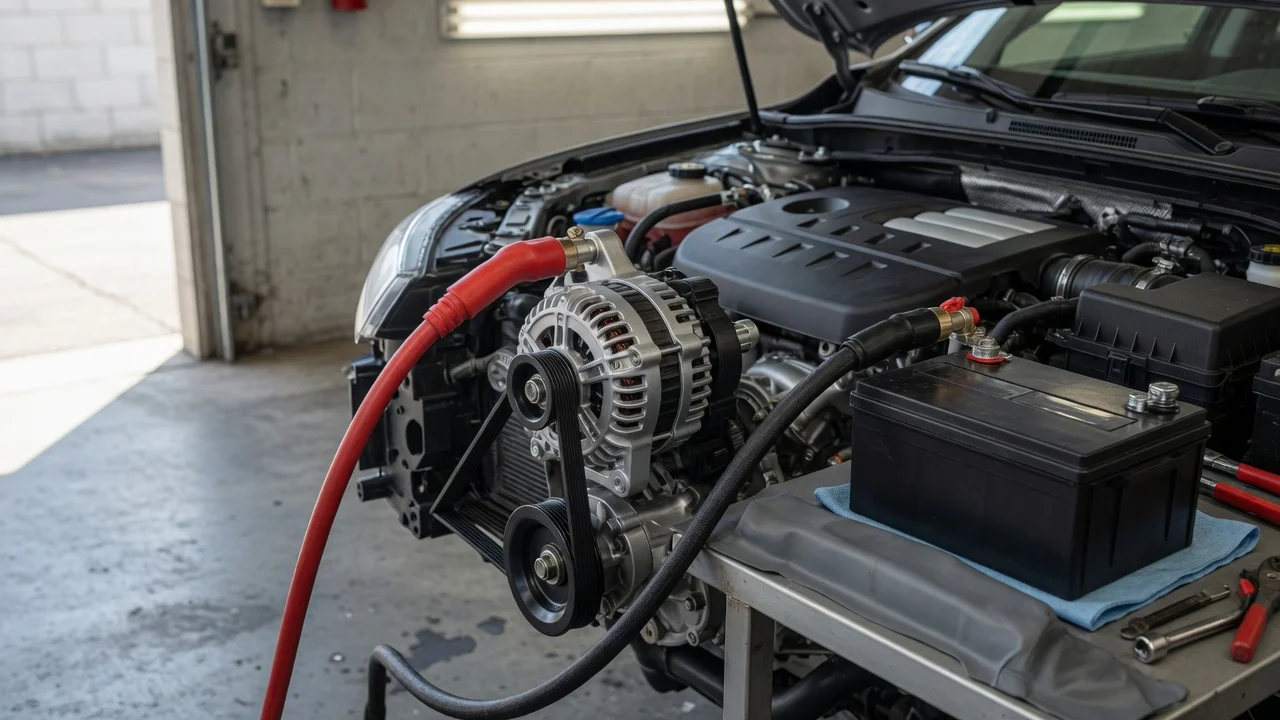
The short answer
Yes, a vehicle's alternator can charge a lithium battery. Whether it can do so safely and completely when wired directly is a separate question. That depends on three things: which lithium chemistry the battery uses, how the vehicle's alternator and voltage regulator behave, and whether the battery is the vehicle's starting battery or a separate auxiliary (house) battery.
In many setups, especially auxiliary batteries in campers, overland vehicles and RVs, the usual recommendation is to place a DC-to-DC charger between the alternator and the lithium battery rather than connecting them directly. Some lithium batteries are marketed as drop-in replacements for lead-acid starting batteries and are designed to work with a conventional charging system. Even then, the battery maker's guidance on compatibility applies.
What "lithium battery" means here
Most 12-volt lithium batteries sold for vehicle use are lithium iron phosphate (LiFePO4, often shortened to LFP). This chemistry is different from the lithium-ion cells in phones and laptops, and from the large traction battery in an electric or hybrid vehicle. This article covers 12-volt lithium batteries charged from a combustion engine's alternator. It does not cover the high-voltage battery in an EV or hybrid, which is charged by the vehicle's own dedicated systems.
A battery management system (BMS) is the built-in electronics that monitor a lithium battery's cells. It can disconnect the battery to protect it from overcharging, over-discharging, excessive current or charging at unsafe temperatures. The BMS is central to how a lithium battery interacts with an alternator.
Why a direct connection is often qualified
Charging voltage mismatch: Alternator regulators are typically set for lead-acid batteries. The voltage they deliver may not fully charge a LiFePO4 battery, or may not suit its recommended charging profile. The exact figures vary by vehicle and battery and should be checked against both manufacturers' specifications. Alternator load and heat: Lithium batteries can accept charge current much more readily than lead-acid batteries. A deeply discharged lithium battery may draw near the alternator's maximum output for an extended period. Many alternators are not designed for sustained full output and can overheat, particularly at low engine speeds or idle. BMS disconnection: If the BMS suddenly cuts off charging while the alternator is supplying current, the abrupt loss of load can cause a voltage spike. Depending on the system, that spike may stress the alternator or other vehicle electronics. Smart or variable-voltage alternators: Many newer vehicles use alternators whose output voltage changes with driving conditions, sometimes dropping low enough that an auxiliary battery receives little or no charge. Whether this applies depends on the specific make, model and model year. Temperature limits: LiFePO4 batteries generally should not be charged below freezing unless they have built-in heating or low-temperature charge protection. An alternator alone does not account for this.
How a DC-to-DC charger addresses these issues
A DC-to-DC charger takes power from the vehicle's electrical system and converts it into a charging profile matched to the lithium battery. It also caps the current drawn from the alternator at the charger's rated output. That limit reduces the risk of overheating the alternator, isolates the auxiliary battery from the starting system, and can compensate for smart alternators that lower their output voltage. Many units let the user select a lithium-specific charging profile.
Starting battery versus auxiliary battery
Replacing a vehicle's lead-acid starting battery with a lithium unit is a different case from adding a lithium house battery. A starting battery is usually kept near full charge and is rarely deeply discharged, so the high, sustained current draw is less of a concern. However, compatibility with the vehicle's charging system, battery monitoring sensors and cold-weather starting must be confirmed for the specific vehicle. Some manufacturers specify only certain battery types. An auxiliary lithium battery that is regularly drawn down is the scenario where a DC-to-DC charger is most commonly advised.
What to check before connecting one
The battery manufacturer's stated charging voltage, maximum charge current and whether it approves direct alternator charging. The alternator's rated output and whether the vehicle uses a smart or variable-voltage alternator, as documented for its make, model and model year. The vehicle manufacturer's guidance on approved battery types, especially if the lithium battery will replace the starting battery. The BMS's protection features, including low-temperature charge cutoff. Whether a DC-to-DC charger rated for the battery's capacity and the vehicle's system voltage is a better fit for the installation.
Limits of this guidance
No specific vehicle, alternator or battery specifications were provided for this article, so it gives no voltage, current or temperature figures. Those values vary by product and vehicle and should come from the relevant manufacturer documentation. If the documentation is unclear, a qualified auto electrician can confirm whether a direct connection is acceptable or whether a DC-to-DC charger is needed.