Can-Am Spyder Hand Controls: What to Check Before You Buy

The Short Answer
A Can-Am Spyder's service brakes are operated by a single foot pedal on the right side, not by a hand lever as on most motorcycles. If you need to brake by hand, for example because of a leg or foot limitation, you are looking at an aftermarket adaptive hand control conversion rather than a factory option. Whether a given kit suits your Spyder depends mainly on the model family, model year and transmission type. Because the conversion connects to a safety-critical braking system, plan on professional installation and check warranty, licensing and insurance implications before you buy.
If you were looking for the standard handlebar controls instead, such as shifting, reverse, cruise control or heated grips, the layout and available features also vary by model, year and trim. The sections below cover both meanings.
Two Meanings of "Hand Controls" on a Spyder
People searching this term usually want one of two things. The first is the factory handlebar layout: what each switch and lever does and how it differs from a motorcycle. The second is adaptive equipment that moves a foot-operated function, almost always the brake, up to the handlebar. The second is the more consequential purchase, so most of this guide focuses on it.
How the Stock Controls Are Laid Out
A Spyder is a three-wheeled roadster with two wheels in front and one in back. Its braking is integrated: pressing the foot pedal applies the brakes at all three wheels, and electronic systems such as anti-lock braking (ABS) and Can-Am's Vehicle Stability System (VSS) manage how that braking force is applied. There is normally no hand brake lever for the service brakes. Depending on the model year, the parking brake may be a hand-operated lever or an electronically controlled feature.
Transmission type determines what your left hand does. Semi-automatic versions have no clutch lever; the rider shifts up and down with handlebar controls, and the clutch is managed electronically. Manual-transmission versions, offered on some earlier models, use a conventional hand clutch lever and a foot shifter. Reverse is engaged through a dedicated control whose design depends on the model and year.
Beyond that, switchgear depends on the model family and trim. Touring-oriented models generally carry more handlebar functions, such as cruise control, audio and display navigation, than sport-oriented or base trims. Check the specific model year and trim you own or plan to buy rather than assuming another Spyder's layout applies.
Why Riders Look for Adaptive Hand Brake Controls
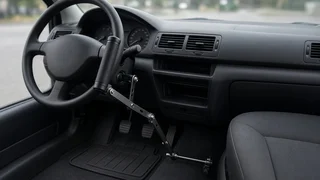
Because a Spyder does not need to be balanced at a stop, it appeals to riders who cannot manage a two-wheeled motorcycle, including some riders with lower-limb disabilities. The foot-only brake pedal can then become the main obstacle. An adaptive hand brake conversion lets the rider apply the brakes from the handlebar so that riding no longer depends on right-leg strength or control.
Conversion approaches differ. Some kits add a handlebar lever that actuates the existing brake pedal or its linkage mechanically, typically by cable. Others work on the hydraulic side of the system. Some keep the foot pedal fully functional alongside the hand lever, which matters if more than one person rides the vehicle. Ask any seller to explain clearly which approach their kit uses and how it interacts with the factory brake system.
Compatibility: What Has to Match
Adaptive controls are built around specific brake pedal, master cylinder and handlebar designs, and these changed over the Spyder's production run. Confirm fit for your exact vehicle rather than for "a Spyder" in general.
What to confirm | Why it matters; Model family (for example RT, F3, RS or ST) | Pedal location, frame layout and handlebar shape differ between families. Model year | Brake components, controls and electronics were revised across generations, so a kit for one year range may not fit another. Transmission (semi-automatic or manual) | A manual model's clutch lever occupies the left grip, which limits where a brake lever can go. Trim and installed accessories | Heated grips, handlebar risers, wind deflectors or aftermarket switches can conflict with lever and cable routing. Parking brake type | A hand-operated parking brake lever or an electronic system affects the space and wiring around the controls. Retention of foot pedal function | Determines whether a rider without an impairment can still use the vehicle normally.
Can-Am Ryker is a separate model line, not a Spyder. Do not assume controls or accessories cross over between the two.
Questions to Ask the Seller
Which Spyder model families and model years has this kit been designed for, and how is fit confirmed for my VIN or exact model? Does it work mechanically on the pedal or linkage, or does it modify the hydraulic system? Can the foot pedal still be used after installation? How does it behave with ABS and the stability system, and are any warnings or fault codes expected? Which hand and which grip position does it require, and can lever reach be adjusted? What is included, and what installation and adjustment are required? What warranty covers the kit itself, and what is the return policy if it does not fit?
Installation, Warranty, Licensing and Insurance
Brakes are the one system where a home installation mistake can have the most serious consequences. Have the conversion installed or at least inspected by a technician familiar with Spyders, and test braking thoroughly in a safe, closed area before riding on public roads.
Modifying the braking system may affect coverage under the vehicle's factory or extended warranty. Ask a Can-Am dealer how the specific modification would be treated before installation, and keep documentation of the parts and work performed.
Licensing rules for three-wheeled vehicles and for adaptive equipment vary by state. Some states may require a medical evaluation, a road test on the adapted vehicle or a restriction noted on the license. Check with your state's motor vehicle agency. Also tell your insurer about the modification so a claim is not complicated later.
Other Handlebar Upgrades
Some shoppers simply want more comfortable or capable controls. Common categories include heated grips, handlebar risers or pullback bars that change reach, throttle locks or aftermarket cruise assists on models without factory cruise, and grip covers or larger grips for riders with limited hand strength. The same compatibility logic applies: match the part to the model family, year and trim. Remember that bar changes can affect cable, hose and wiring length, as well as clearance for any adaptive lever you add later.
Choosing Your Next Step
Write down your Spyder's exact model family, model year, trim and transmission type. Decide what you actually need: a hand-operated brake, retained foot pedal use, adjustable reach or simply comfort upgrades. Shortlist kits that explicitly list your model and year, and get the seller's answers to the questions above in writing. Talk to a dealer or qualified technician about installation and warranty impact. Confirm state licensing requirements and notify your insurer before riding on public roads.