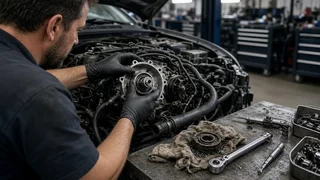
Can a Car Run Without or With a Bad Water Pump

A water pump is the heartbeat of the cooling circuit, moving coolant between the engine, radiator, and heater core so combustion heat does not stay trapped around the cylinders. When that impeller stops turning, leaks, or loses efficiency, the dashboard temperature gauge usually tells the story first. The practical question is not only whether a car can technically run without a water pump, but how far and under what conditions it might survive with one that is failing. Understanding the difference between a brief, low-load event and normal driving helps a driver interpret the warning signs before engine damage turns a serviceable cooling repair into a major overhaul.
Essential answer
A car should not be run without a functioning water pump. The pump forces warm coolant from the engine to the radiator, where airflow removes heat, and then returns the cooled liquid to the block and cylinder head. If that flow stops, the coolant near the combustion chambers quickly absorbs heat that cannot be transferred away. The temperature gauge may still look normal for a short time because the sending unit sits in a different part of the cooling circuit, but hot spots around the head gasket and exhaust valves can already be forming.
Running with a bad water pump is possible only for a very short, low-load maneuver, and even then the risk rises steeply. A bearing that is noisy or a seal that is seeping often gets worse without warning. Loss of coolant from a leaking shaft seal reduces system pressure and invites air pockets, which make the remaining coolant less effective. If the pump seizes or the impeller breaks, overheating follows almost immediately under load. The safer interpretation of the question is that a vehicle may briefly move off a road or into a service bay, but it is not reliable or safe for normal operation.