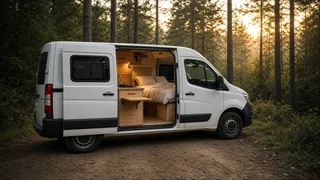
Camper van conversion in Wales

Choosing a camper van conversion in Wales means evaluating how a base vehicle’s body configuration, seating layout, cargo access, wheelbase, powertrain options, and market specification will work after the build. Narrow rural roads, wet weather, and coastal campsites put different demands on a conversion than motorway touring. The right starting van shapes usable interior space, driving comfort, and long-term ownership costs. This guide explains what to check before committing to a conversion, so you can compare candidates with confidence and avoid paying for a layout that fights the way you actually travel.
The direct answer
The most suitable camper van conversion in Wales is usually a medium or long wheelbase panel van with enough interior height to stand or move comfortably, a layout that preserves a fixed bed or convertible seating, and a powertrain suited to frequent hill starts and damp conditions. The direct answer depends on whether you prioritize daily driving, remote off-grid camping, or family travel. A shorter wheelbase is easier in towns and on single-track lanes, while a longer body gives more room for a kitchen, storage, and sleeping space.
Market specification matters because vans sold for commercial use often have different seating layouts, rear door styles, and cargo access than passenger versions. Look for a body configuration with wide side and rear openings, because loading furniture, water tanks, and insulation becomes far easier. Check the seating layout before buying: conversions that retain factory seats may limit sleeping length, while removing them changes seatbelt counts and registration expectations. Matching wheelbase and cargo access to your planned interior prevents expensive reworking after purchase.