California Vehicle Safety Systems Inspection and Certificates
The short answer
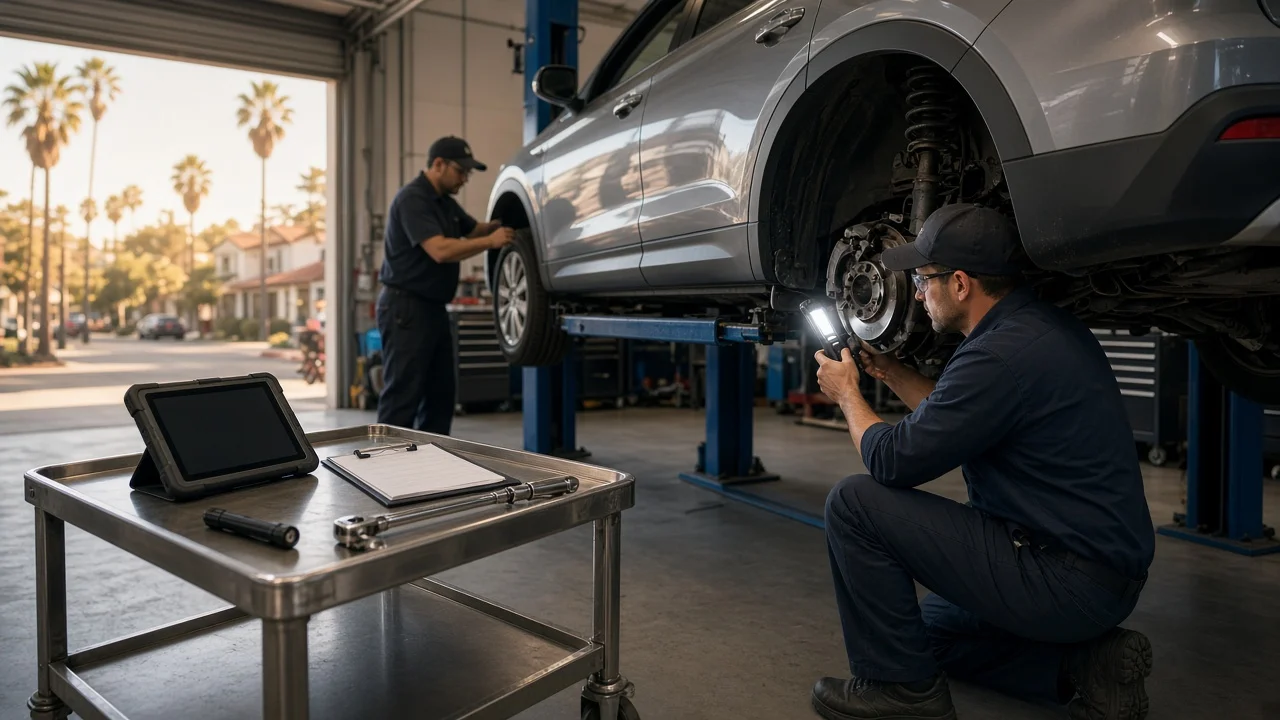
In California, a Vehicle Safety Systems Inspection (VSSI) is a state-regulated inspection of a vehicle's safety equipment, chiefly its braking and lighting systems. It is performed by a station and technician licensed for that work under the Bureau of Automotive Repair (BAR). When the vehicle passes, the station issues a VSSI certificate. The certificate is the proof that the Department of Motor Vehicles (DMV), or in some cases a court or law enforcement agency, accepts as evidence that the required safety systems were inspected and found compliant.
The most important qualification is that this is not a routine annual inspection. California does not require periodic safety inspections for ordinary registered passenger vehicles. A VSSI certificate is normally needed only when a specific situation calls for it.
How VSSI relates to the older brake and lamp inspection
Many drivers know the older term "brake and lamp inspection" and the official brake and lamp certificates issued by licensed adjusting stations. VSSI is the program BAR established to take over that role. In practice, a reader searching for a California brake and lamp certificate today will usually be pointed to a VSSI station and a VSSI certificate instead.
Evidence gap: the material available for this article does not confirm the exact transition dates, any changes to the list of items inspected, the inspection fees, or how certificates are now issued and transmitted, whether on paper or electronically. Confirm these details with BAR or DMV before relying on them.
When a certificate is typically required
Requirements depend on the vehicle's history and the instructions DMV or a court gives you. These situations commonly lead to a safety systems inspection request:
Registering a vehicle with a salvage history, for example a previously totaled vehicle being returned to the road as a revived salvage vehicle; Registering certain specially constructed or significantly modified vehicles; Clearing an equipment-related citation (a "fix-it ticket") that involves brakes or lights, when the court or agency asks for an official certificate as proof of correction; Any other case where DMV specifically lists a brake, lamp or safety systems certificate among the documents it needs
Whether your situation requires a certificate is decided by the agency handling your case. If your paperwork from DMV or the court does not mention one, ask that agency before paying for an inspection.
How it differs from other California vehicle checks
Three separate procedures are often confused. Each serves a different purpose, and passing one does not satisfy the others.
Check | What it covers | Who performs it; Vehicle Safety Systems Inspection (VSSI) | Safety equipment, chiefly brakes and lighting | A BAR-licensed VSSI station and technician; Smog Check | Emissions systems and emissions-related components | A BAR-licensed Smog Check station; VIN verification | Confirms the vehicle identification number and vehicle identity, commonly for out-of-state or unusual registrations | DMV staff or other authorized verifiers
A salvage or specially constructed vehicle may need more than one of these before DMV will complete registration. Treat each as its own requirement.
Practical next steps
Read your DMV or court paperwork and confirm that it asks for a safety systems, brake or lamp certificate; Use a station that is currently licensed by BAR for safety systems inspections, since a certificate from an unlicensed shop will not be accepted; Before booking, ask the station what the inspection covers, what it costs, and how the certificate will be issued; If the vehicle fails, get the specific items in writing, have them repaired, and arrange a reinspection; Keep a copy of the certificate with your registration documents until DMV or the court confirms it has been accepted
What this article cannot confirm
No confirmed figures were available for inspection prices, certificate validity periods, program start dates or the full inspection checklist. These details are set by BAR and DMV and can change. Treat the official guidance from those agencies, and the instructions attached to your own case, as the final word.