Cadillac Escalade oil pressure
What Escalade oil pressure is telling you
Oil pressure on a Cadillac Escalade is the force the oil pump builds so lubricant reaches bearings, camshafts, lifters, and other moving parts. There is no single correct reading for every Escalade. The expected range depends on model year, engine, oil temperature, viscosity, and engine speed. Cold oil reads higher; hot idle is the lowest normal condition. A sudden drop on the gauge, a low-oil-pressure warning, or a message in the driver information center is treated as an immediate stop-and-check event until level and actual pressure are confirmed, because sustained low pressure can damage the engine. Exact factory minimums and test rpm points are listed in the owner’s manual and in service information for that vehicle identification number; those figures are not interchangeable across generations.
Scope: year, engine, and market
Gasoline Escalades have used several V8 families, most recently a 6.2-liter V8 on current and recent model years. Some later model years also offer a 3.0-liter diesel and, on V-Series trims, a supercharged 6.2-liter V8. Earlier generations used 5.7-liter, 5.3-liter, 6.0-liter, and naturally aspirated 6.2-liter engines. Diesel and supercharged engines use different oil grades, pump hardware, and pressure specifications than the standard gasoline V8. Trim level does not usually change the oil-pressure spec by itself; the powertrain does. Claims about a “normal” psi figure apply only to the engine and year they were written for.
Gauge, warning light, and actual pressure
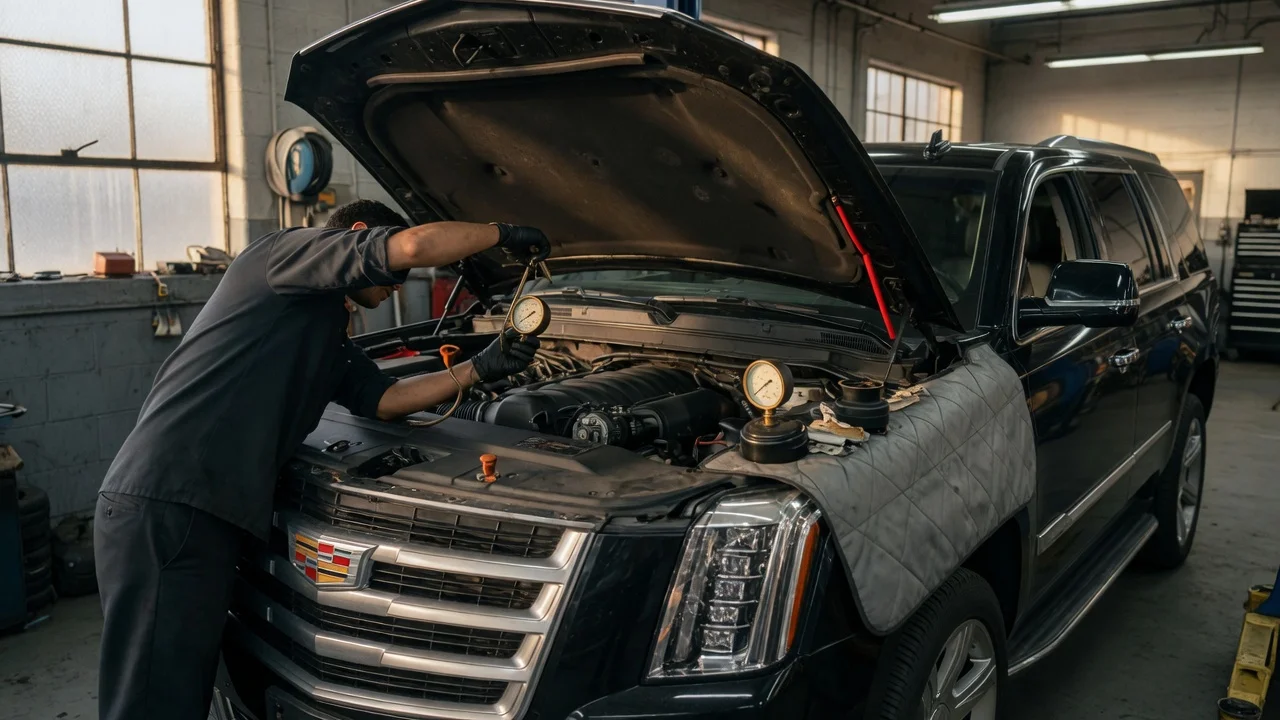
What the cluster shows is not always a calibrated laboratory measurement. Some Escalade years use a variable oil-pressure sender that drives a gauge or a digital readout. Others rely mainly on a low-pressure switch that turns a warning lamp or message on once pressure falls below a set threshold. Either system can fail: a sender, switch, wiring fault, or instrument-cluster issue can show low pressure when the engine is still adequately oiled, or fail to warn when pressure is truly low. The only way to separate a false warning from a real lubrication problem is to check the oil level, then confirm pressure with a mechanical gauge at the engine’s oil-pressure port using the idle and higher-rpm points in that engine’s service information.
What counts as a problem
A reading that falls as the engine warms, then holds steady at hot idle and rises with rpm, is the usual pattern. A problem is indicated when pressure collapses at idle after warmup, fails to rise with engine speed, fluctuates wildly, or triggers a warning with knock, tick, or loss of oil on the dipstick. Low oil level is the most common real cause. Other supported mechanical causes include the wrong viscosity for that engine and climate, a restricted pickup screen, a worn or failing pump, internal leaks (including issues tied to displacement-on-demand or dynamic fuel management lifters on some gasoline V8s), and, after service, an unprimed or incorrect filter. High indicated pressure is less often a pump failure; thick cold oil, a stuck pressure-relief valve, or a faulty sender are typical explanations. Whether a given Escalade uses Active Fuel Management, Dynamic Fuel Management, or neither is year- and engine-specific and changes how oil-pressure faults show up as valvetrain noise.
Check oil level on a level surface after the engine has been off long enough for oil to drain back; add only the grade printed on the filler cap and in the manual for that engine. If the warning is on, or the gauge is at or near zero while the engine is running, shut the engine off. Do not continue driving to “see if it clears.”; Confirm actual pressure with a mechanical gauge before replacing the pump. Sender and switch failures are a frequent source of low-pressure indications on these trucks. Match oil viscosity and specification (including the dexos grade required for that year and engine) after any top-off or oil change. Gasoline 6.2-liter EcoTec3 engines in recent Escalades commonly specify a 0W-20 dexos1 oil; older 6.2-liter engines and diesel or supercharged variants use different grades. Have a technician inspect for leaks, pickup restriction, and valvetrain noise if verified pressure is below the service minimum at the specified rpm and temperature.
What to do next
Use the owner’s manual oil-pressure or warning-light section for that model year as the first specification source, then the engine-specific service pressure chart if a shop is verifying the pump. If the light is on or the gauge has dropped while driving, stop, check the level, and arrange a tow if the level is critically low or the warning remains with oil on the stick. If the engine is quiet, the level is correct, and a mechanical gauge shows pressure in spec, the next action is electrical diagnosis of the sender, switch, and cluster rather than an oil-pump replacement. Factory minimum pressure at a stated test rpm is not published in this article because it varies by engine code and year; treat any quoted “normal psi” from an unrelated Escalade or a different GM truck as unverified for your vehicle.