C1B00 64 steering angle sensor
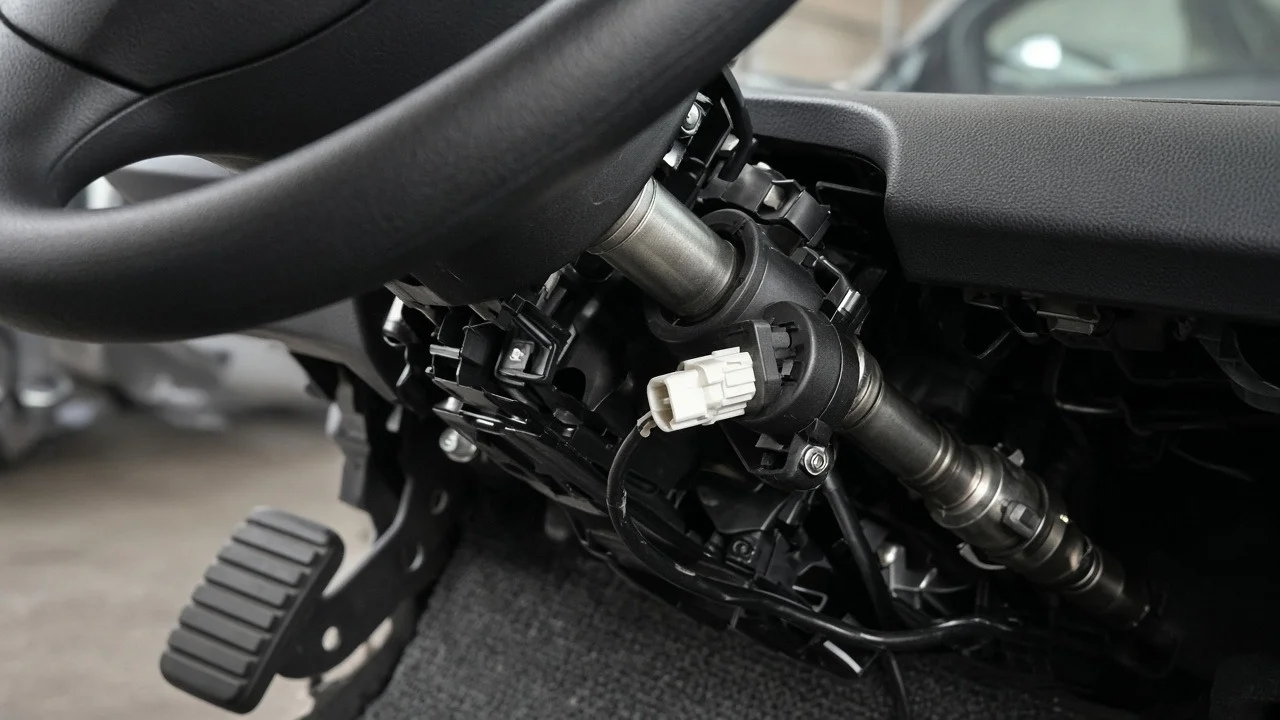
A C1B00 64 steering angle sensor code can appear when a stability or steering module receives a signal that falls outside an expected range or fails a plausibility check. The “64” suffix typically points toward a signal integrity concern rather than a simple open circuit. For many drivers, the first symptom is an illuminated stability warning, reduced power steering assist, or a message that traction systems need service. Understanding what the sensor measures, how the module uses its output, and why chassis geometry matters helps narrow the fault without assuming the sensor itself has failed.
Essential answer
The C1B00 64 steering angle sensor code identifies a fault related to the steering angle signal used by modules such as the ABS, stability control, and electric power steering. In broad terms, C1B00 points to the steering angle sensor circuit or its learned reference, while the “64” sub-code often indicates a signal plausibility or internal check issue. Because code definitions vary by manufacturer and platform, the same alphanumeric sequence may carry a different diagnostic path on different vehicles. The code is a starting point for interpreting the observed behavior, not confirmation that the physical sensor has failed.
A steering angle sensor reports steering wheel position and rate of rotation so the stability system can compare the driver’s intended direction with actual yaw and wheel-speed behavior. When the signal is missing, erratic, or inconsistent with other chassis inputs, the module may set a fault and temporarily disable functions that rely on that data. Causes can include a disturbed zero-point calibration after wheel alignment, wiring or connector concerns at the column, mechanical play between the steering shaft and sensor, or a sensor that needs relearning. The practical next step is to check the live steering angle reading, confirm the installed alignment and straight-ahead reference, and inspect the sensor circuit before replacing parts.