Cómo funciona el turbo intercooler
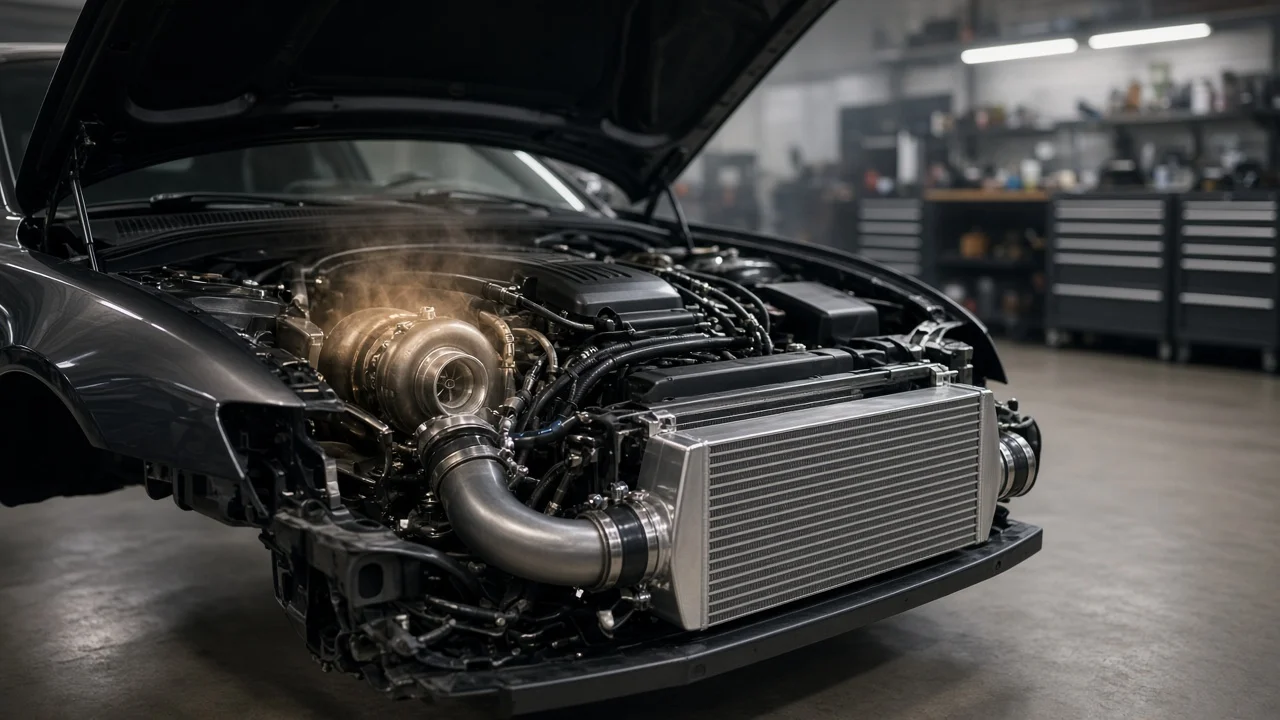
A turbo intercooler addresses a simple problem: compressing intake air also heats it, and hot air is less dense and more detonation-prone. In gasoline and diesel applications, the intercooler sits between the compressor outlet and the intake manifold to remove that heat before combustion. Understanding cómo funciona un turbo intercooler means following the charge-air path, recognizing why cooler air matters for boost pressure, and appreciating how a heat exchanger improves consistency without adding fuel.
Essential answer
A turbo intercooler is a charge-air cooler mounted after the turbocharger’s compressor side. As intake air is squeezed, its temperature rises sharply. The intercooler passes that hot, pressurized air through a network of fins or tubes exposed to ambient airflow, lowering charge-air temperature before the air enters the engine. Cooler air contains more oxygen molecules per unit of volume, so the engine can burn fuel more effectively at a given boost pressure.
The distinction between gasoline and diesel intercooling is mostly about operating conditions, not basic function. A diesel turbo often runs at sustained high boost and moves a large volume of air, making charge-air temperature control especially important for thermal load and emissions. The query cómo funciona el turbo intercooler diesel points to the same core idea: a heat exchanger reduces compressor outlet temperature. Exact sizing, placement, and hose connection details vary by vehicle and require manufacturer confirmation.













