Brake Pads Price: Parts Cost Guide
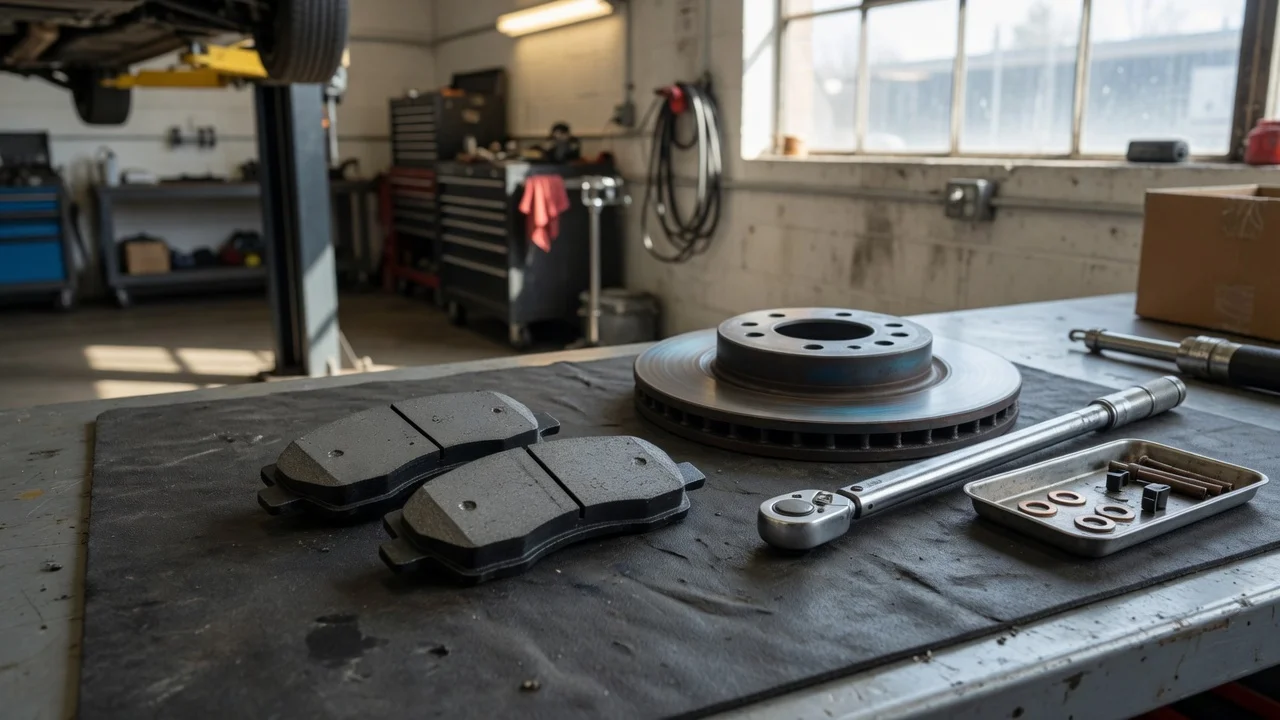
What brake pads cost
Brake pad price is not a single figure. The parts bill depends on which axle you are replacing, the pad material, the vehicle, and whether you are buying pads alone or a kit that includes hardware. Rear pads are often priced differently from front pads on the same car. This guide does not quote dollar amounts; those change by market, brand, and model year, so treat any number you hear as a quote for a specific vehicle, not a universal price.
What changes the parts price
Front pads usually cost more than rear pads when the front brakes do more of the stopping work, which is common on many passenger vehicles. That is not always true: some trucks, performance cars, and vehicles with parking-brake shoes or electronic parking brakes use a different rear pad or caliper design that can raise the rear parts cost. Confirm which axle and which pad shape the catalog lists for your year, make, model, trim, and powertrain.
Pad material also moves the price. Organic or ceramic pads are often sold for quieter daily driving. Semi-metallic pads are a common higher-friction option and can cost more or less depending on brand and vehicle. Performance or low-dust compounds sit at the top of many catalogs. The label on the box is not a substitute for checking that the pad is listed for your exact application.
Vehicle: larger, heavier, or performance models often use bigger pads or unique shapes. Axle: front and rear pads are usually different parts with different prices. Hardware: shims, clips, and abutment hardware may be sold separately or in a kit. Wear sensors: some cars need pad wear sensors; others do not. Brand and quality tier: economy, OEM-equivalent, and premium lines are priced differently. Quantity: pads are typically sold as an axle set (both wheels on one axle), not as a single pad.
Rear pads versus front pads
If you are shopping only for rear pads, match the part to the rear axle. Rear pads are often smaller and cheaper than the fronts on the same vehicle, but electronic parking brakes, integrated parking-brake mechanisms, or unique rear calipers can reverse that. Do not assume a front-pad price applies to the rear, and do not mix left/right or front/rear sets. Replace pads as a pair on the same axle so both sides wear and stop evenly.
Pads only, or pads plus related parts
A pad-only price is the lowest parts line item. Shops and catalogs often recommend rotors, hardware, and brake fluid when pads are worn, because a glazed or below-spec rotor can make new pads noise, pulse, or wear fast. Those extras are separate costs. Ask for a line-item quote that separates pads, hardware, sensors, rotors, and labor so you can compare like with like.
How to get a useful quote
Give the seller the model year, market, trim, engine or motor, and whether you need front, rear, or both. Ask whether the price is for an axle set, whether hardware and wear sensors are included, and whether the pads are listed as compatible with your exact vehicle. If two quotes differ widely, check those inclusions first. Unresolved differences in trim, brake package, or electronic parking brake should be treated as a different part until a catalog or dealer confirms a match.
Choosing a next step
If you already know the axle and have a compatible part number, compare pad-only prices across quality tiers and decide whether you also need rotors and hardware. If you do not have a part number, start with a vehicle-specific catalog or a shop inspection rather than a generic pad. If the car pulls, vibrates, or the brake warning light is on, have the system checked before buying pads; those symptoms can point to rotors, calipers, fluid, or sensors rather than pads alone. Specific street prices, stock, and labor rates are not included here and must come from a current quote for your vehicle.