BMW N55 turbo-to-intercooler pipe
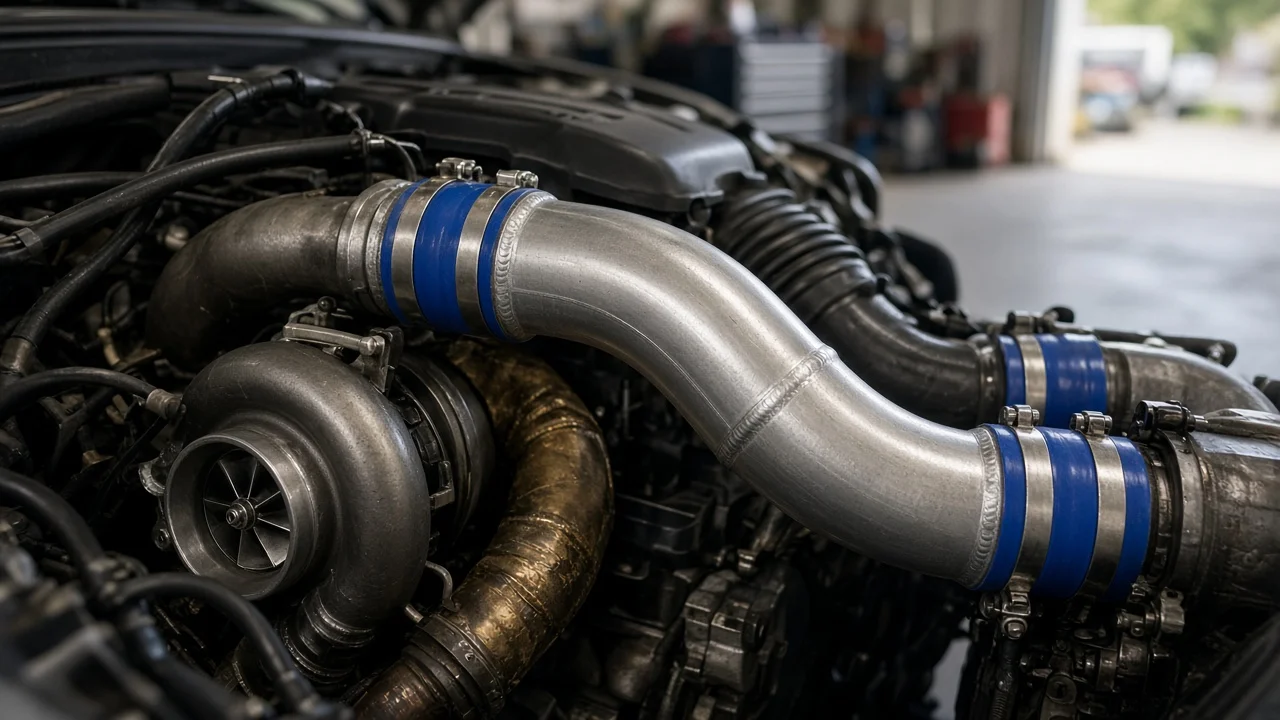
A cracked or loose BMW N55 turbo-to-intercooler pipe disrupts the pressurized air path between the turbocharger and the intake plenum, often producing a pronounced whoosh, reduced power, or a charge-air fault code. Because this pipe spans the connection from the turbo outlet toward the intercooler and then to the throttle body, model year, trim level, and market specification can change the routing and coupler shape. The following guidance explains what this component does, why it fails, and which replacement considerations matter when comparing options for your vehicle.
The direct answer
The immediate task when addressing an N55 turbo-to-intercooler pipe is to confirm whether the failure is the pipe itself, its sealing O-ring, or a loose clamp. A split seam, softened plastic near the turbo outlet, or oil film around a coupler usually points to the charge pipe assembly rather than the intercooler core. Because the N55 engine was used across several model generations and body styles, a replacement must match the car’s production configuration to fit the mounting tabs and sensor bung correctly.
In most cases, the practical next step is to remove the failed pipe for inspection and compare it against the replacement part before ordering. Check the port for the manifold absolute pressure sensor, the retaining clip style, and the route along the fan shroud or radiator support. Components marketed as upgrade pipes may offer more durable materials, but fitment still depends on the original turbo outlet diameter and intercooler inlet orientation for your specific powertrain configuration.













