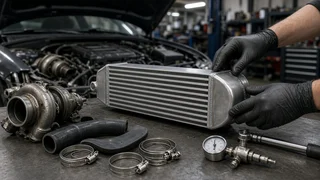
BMW E36 Turbo Intercooler
Choosing the right E36 turbo intercooler for a boosted BMW requires balancing the available space behind the bumper with the need to control charge-air temperature. A front-mount heat exchanger lowers intake heat after the compressor outlet, which supports consistent boost pressure on the street and track. The practical goal is a core and end-tank package that fits cleanly, uses secure hose connections, and does not create excessive pressure loss. Without confirmed fitment data, use your own measurements and supported general principles to judge each candidate rather than relying on universal claims.
The direct answer
The right E36 turbo intercooler is the largest front-mount core your specific bumper, radiator support, and piping route can accept without cutting structure or blocking airflow to the cooling stack. A bar-and-plate or tube-and-fin core should reduce post-compressor heat while keeping pressure loss modest for your turbo size and boost level. For a street car, prioritize clean fitment, adequate airflow through the core, and durable end tanks over simply filling every inch of the grille opening. A core that is too thick can soak heat and restrict flow to the radiator, so geometry matters as much as advertised size.
Condition changes apply when the car runs high boost, track sessions, or a large turbo. In those uses, a thicker core with well-designed cast end tanks and smooth transition inlets can support lower charge-air temperature during repeated pulls. However, no universal size works for every setup. Measure the available area behind the kidney grilles and bumper cover, then check clearance for couplers and clamps before purchase. Let the combination of your compressor outlet size, anticipated boost, and available depth guide the selection instead of choosing by brand or maximum dimensions alone.