BMW E28 Wheel Offset
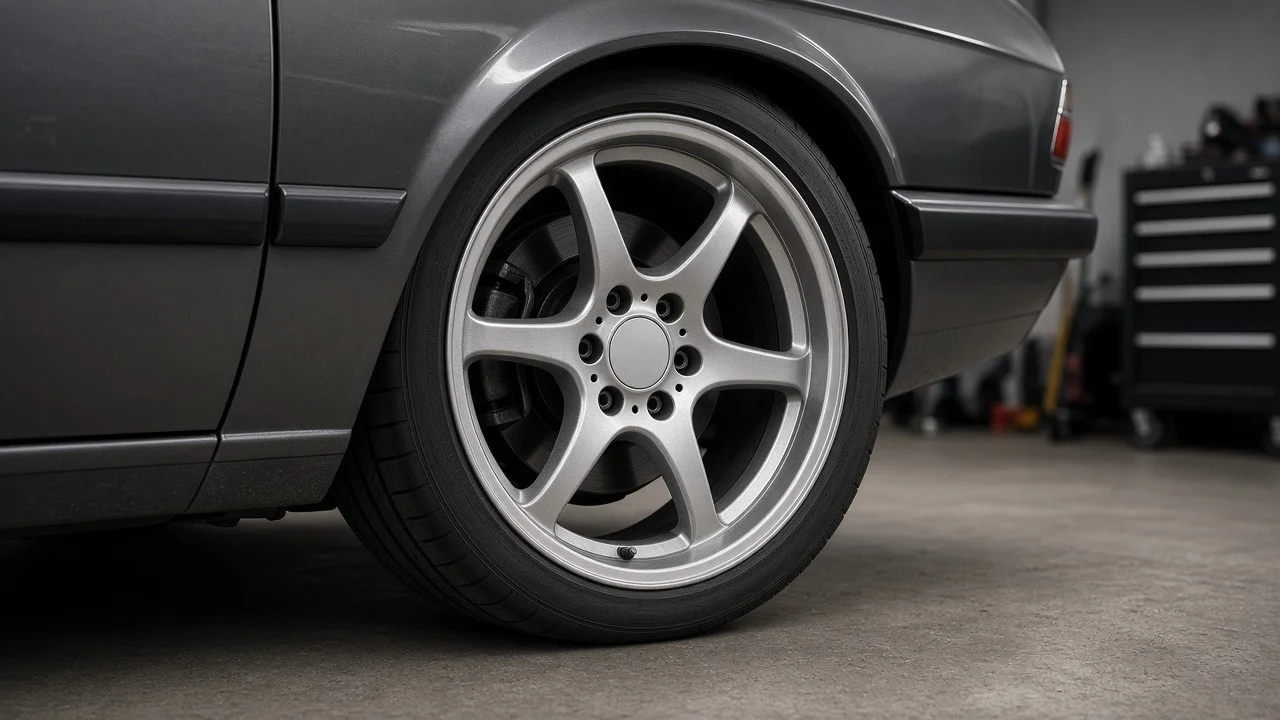
Wheel offset on a BMW E28 determines where the tire and rim sit within the wheel arch, which affects steering feel, suspension geometry, and clearance at the fender and strut. Understanding this measurement helps owners evaluate whether a replacement wheel will fit without rubbing, stressing bearings, or changing track width. The relationship among rim width, offset, bolt pattern, and tire compatibility is especially important on a classic chassis with limited factory clearance, so even a small change can alter how the car drives and wears its suspension components.
Essential answer
Wheel offset is the distance between a wheel's mounting face, where it contacts the hub, and the centerline of the rim width. Positive offset, common on the E28, places the mounting face toward the outside of the wheel and pulls the tire inward. Negative or lower offset pushes the tire outward and can cause fender or arch contact if the rim width also increases. Because the E28 uses a five-lug bolt pattern and a hub-centric fit, offset cannot be judged alone; rim diameter, width, and tire dimensions all affect where the tire shoulder actually ends up relative to the body and suspension.
For an E28 owner, the practical starting point is to treat claimed 'correct' offsets as a range rather than a single number. A wheel that clears a stock suspension may still rub when lowering springs or wider tires are added. Before committing to a used or aftermarket set, compare the current wheel position with the proposed setup at both full steering lock and suspension compression. That visual check, combined with known offset and width, gives a realistic sense of brake, strut, and fender clearance without relying on unsupported fitment claims.