BMW Coolant Guide: Approved Types, Genuine vs Compatible, and Mixing Cautions
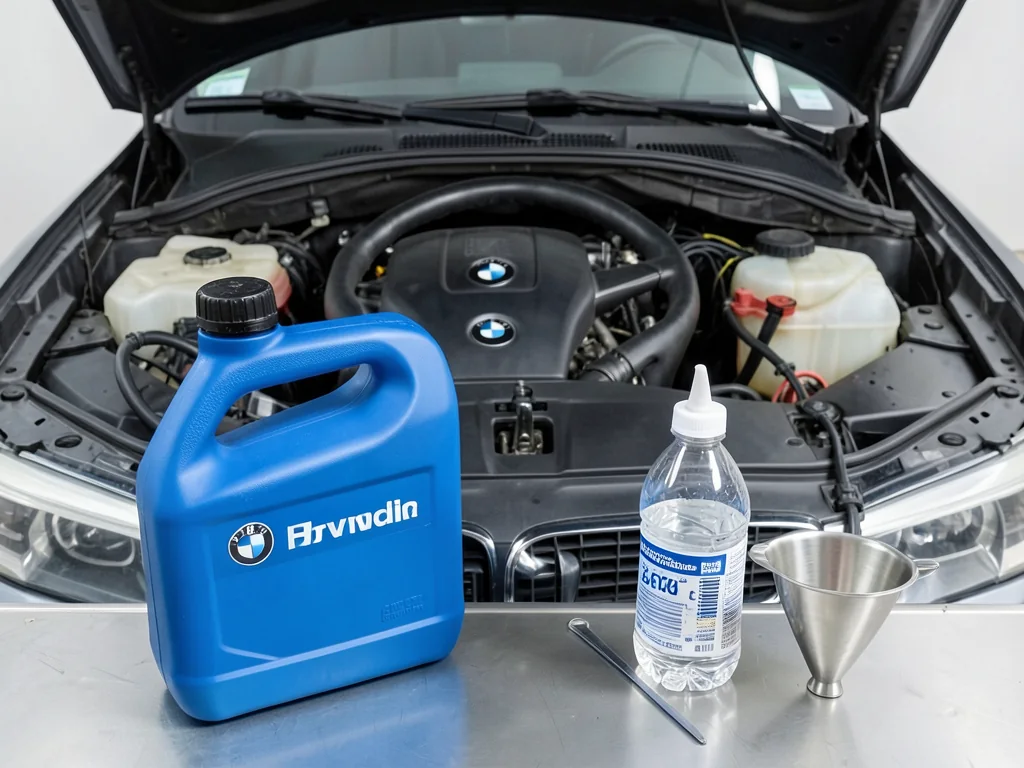
Choosing the right BMW coolant is less about the shade in the bottle and more about matching a specific formulation to your engine. Knowing what BMW approval means, how genuine and compatible aftermarket products differ, how to handle concentrate and premix, and why mixing types causes trouble helps you top up or buy fluid with confidence instead of guesswork.
What "BMW Coolant" Actually Refers To
When people talk about BMW coolant, they usually mean a fluid built to a particular BMW specification and mixed at a particular dilution, not a product of a certain color. Each manufacturer adds its own dye, and the same hue can appear on very different chemistries. Inside the engine, coolant does two jobs at once: it carries heat from the cylinder head and block to the radiator, and its corrosion inhibitors protect aluminum and mixed-metal components from pitting and scale.
BMW has revised its coolant specification over the years, so the correct product for an older engine may not be the one intended for a newer engine family. The reliable references are the owner's manual and the label on or near the expansion tank, which name the required fluid. Choosing and handling the coolant is a separate matter from diagnosing cooling system faults, and the first step before any purchase is confirming what your specific vehicle calls for.
What BMW-Approved Coolant Means and How to Verify It
An approved coolant carries a BMW release or specification reference, meaning the manufacturer has evaluated that formulation against the materials and operating conditions in its engines. Those materials include aluminum castings, plastic tank and hose fittings, seals, and gaskets, all of which must tolerate the fluid for years. To find your requirement, check the owner's manual, the expansion tank cap or nearby label, and BMW's published fluid release information.
On the bottle itself, look for an explicit BMW specification or release reference printed on the label, not a vague line about suitability for European vehicles. Words like universal or all makes describe a marketing position rather than BMW approval, and they say nothing about whether the inhibitor package suits your engine. Approvals are tied to specifications, and a newer engine may need a different one than an older model, so a product cleared for one generation is not automatically correct for another.
Genuine BMW Coolant Versus Compatible Aftermarket Options
Genuine BMW coolant is the concentrate or premix sold through BMW parts channels under the BMW label, formulated to the current factory specification. Its main appeal is certainty: there is no label to interpret, and service records show exactly which fluid went into the car, which some owners value for warranty discussions and resale documentation. A compatible aftermarket coolant can be equally appropriate when its label explicitly lists the same BMW specification your vehicle requires, not a similar or older one.
Owners often choose compatible products because a local parts store has them on the shelf when a dealer parts counter is closed or far away. That is reasonable as long as the specification match is clearly printed rather than implied by color or brand reputation. Neither route is universally better; the verified match is what matters. Buy from reputable retailers and avoid unlabeled, decanted, or repackaged fluid, because coolant identity cannot be confirmed by looking at it.
Concentrate Versus Premix and Correct Dilution
Coolant is sold either as antifreeze concentrate, which must be diluted before use, or as premixed coolant that is ready to pour. The label states which one you have, usually near the product name or in the directions. The distinction matters: topping up with undiluted concentrate shifts the mix, while watering down a premix weakens it. For dilution, distilled or demineralized water is the standard choice, because tap water can carry minerals that consume corrosion inhibitors and leave scale in passages.
The ratio of concentrate to water sets both freeze protection and the margin against boil-over, so the owner's manual recommendation for your climate is the figure to follow. It is tempting to assume a stronger mix protects better, but that does not hold. Past a certain point, extra concentrate adds no useful freeze protection and reduces the fluid's ability to carry heat, since water is the more effective heat-transfer medium. Over-concentration can therefore leave an engine running warmer, not safer.
Mixing Cautions: Why Coolant Types Should Not Be Combined
Coolant chemistries are built around different inhibitor packages, and combining them can undermine both. Some combinations reduce corrosion protection, while others can form gels or deposits that settle in narrow radiator tubes, heater cores, and small engine passages. Avoid topping up with an unknown or different-specification coolant, even temporarily, unless the owner's manual explicitly allows it. Matching color is not evidence of compatible chemistry, because dye is not standardized across brands and identical colors can hide incompatible formulas.
If an unknown coolant has already gone in, note the date and approximate amount in the service records, then have a professional flush the system and refill it with the correct type. In a genuine roadside emergency, a small top-up with plain distilled water is a common short-term measure, since it adds no conflicting chemistry. It does dilute freeze and corrosion protection, though, so have the concentration checked and corrected promptly rather than leaving the weakened mix in place.
Safe Checks: Coolant Level, Condition, and Warning Signs
Check coolant level only when the engine is cold, reading the fluid against the markings on the expansion tank or the level indicator where fitted. Never open the cap while the system is hot, because pressurized coolant can spray out and cause serious burns. While looking, note the fluid's appearance. Cloudiness, an oily film, a rusty or muddy color, visible sediment, or a sweet smell around the engine bay can all point to contamination, degradation, or a leak worth investigating.
A level that drops gradually between checks, a low coolant warning, or a change in how quickly the heater warms the cabin are useful observations to record with dates and mileage. They are not conclusions about the cause, which could range from a minor external seep to problems that need proper diagnosis. Home inspection has clear limits: you can see level and appearance, but pressure retention, pH or inhibitor condition, and the true source of a leak require appropriate testing equipment.
When to Have a Professional Handle the Coolant
Replacing coolant on many modern BMW engines is more involved than draining and refilling. Air must be purged from the system, and some models use electric water pumps or electronically controlled valves that need specific bleeding steps, often started with diagnostic equipment. Trapped air can cause hot spots and misleading temperature readings, so the job suits a shop with the correct tools. Professional testing is also warranted when the level keeps falling, the temperature warning appears, or coolant looks mixed with oil.
Keep a record of which coolant specification was used, whether it was genuine or a labeled compatible product, and when the work was done. That history makes future top-ups straightforward and keeps anyone from unknowingly adding a different type. If the car has changed hands, ask for prior invoices, since an unrecorded coolant history is a good reason to have the fluid tested. Service intervals vary by model and year, so the owner's manual or a BMW service advisor is the source for your schedule.