50/50 Premixed vs. Concentrate Coolant and Why Distilled Water Matters
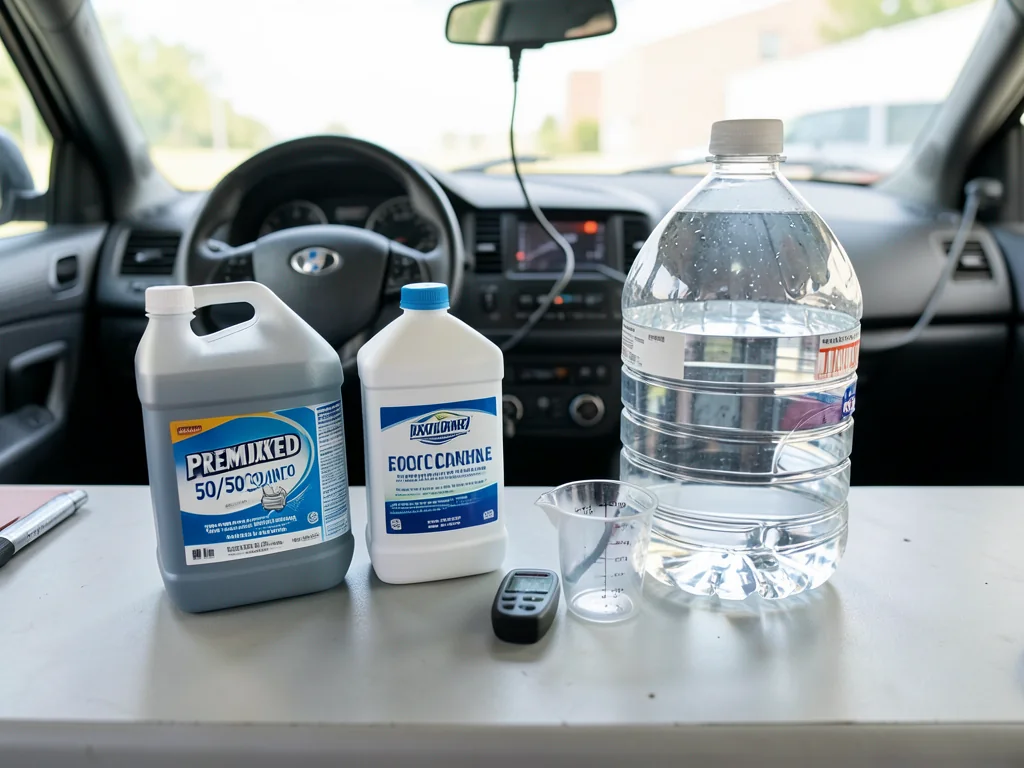
Coolant comes two ways: as full-strength concentrate or as premix that already has water in it. Picking the wrong one, or mixing it carelessly, can weaken freeze protection, heat transfer, and corrosion control. It helps to know what each jug contains, why 50/50 is the usual target, and why coolant and distilled water belong together instead of tap water. With that in hand, the cooling system can stay healthy for years.
Concentrate vs. Premixed Coolant: What Is Actually in the Jug
Concentrate is full-strength antifreeze. It is usually ethylene glycol, sometimes propylene glycol, plus an inhibitor package, and it is meant to be diluted before it goes into the engine. Premixed coolant, often labeled 50/50 or prediluted, has already been blended with purified water and goes in as-is. The label tells you which one you have. Look for words like concentrate or full strength on one kind, and ready to use, prediluted, or 50/50 on the other.
Within the same product line, both versions share the same base glycol and corrosion inhibitors. The only difference is whether the water was added at the factory. Concentrate makes more finished coolant per jug and lets you choose the ratio, while premix removes measuring mistakes and the need to buy distilled water. Using one as if it were the other causes trouble. Concentrate poured in as premix leaves the system too rich, and premix diluted again leaves it too weak.
Why 50/50 Is the Standard Ratio and What Changing It Does
A 50/50 antifreeze ratio is the common standard because it handles three jobs at once. Glycol pushes freeze protection well below that of plain water. Working with the pressure held by the radiator cap, it also raises the boiling point to resist boil-over. At that strength, the corrosion inhibitors stay concentrated enough to protect metals, gaskets, and water pump seals. Some owner's manuals call for a richer mix, such as 60/40, in extreme cold, so the ratio your manufacturer specifies comes first.
More antifreeze is not automatically better. Water carries heat more effectively than glycol, so straight or overly rich concentrate can make the engine run hotter. Past a certain point, extra glycol even reduces freeze protection. Too much water causes the opposite problems: the freezing point rises, the boiling point falls, and the inhibitors get too diluted to work. You cannot judge the ratio by eye, so use a coolant tester or, better, a refractometer to confirm protection after mixing or topping off.
Why Coolant Is Mixed With Distilled Water, Not Tap Water
Tap water is safe to drink, but it is not pure. Depending on the source, it carries dissolved calcium, magnesium, chlorides, and sometimes iron. As that water heats and cools again and again inside an engine, the minerals drop out as scale and deposits. This happens especially in the narrow tubes of the radiator and heater core. Mineral scale insulates metal surfaces and narrows passages, so the system slowly loses its ability to shed heat. A weakening cabin heater is often an early clue.
Chlorides and other ions also speed up corrosion. They make coolant more aggressive toward metals, so the inhibitor package works harder and wears out sooner than intended. Distilled water has had those minerals removed, so it adds nothing but water. Deionized water is a common acceptable substitute. Softened water is not, because softening swaps hardness minerals for sodium instead of removing them. One emergency top-off with tap water will not ruin an engine, but repeated use adds up and should be corrected later.
Can Distilled Water Be Used As Coolant on Its Own?
Plain distilled water cannot serve as coolant in a road car. It has no freeze protection and turns solid at 32°F. Water expands as it freezes, so it can crack an engine block, split a radiator, or burst a heater core. It also boils at a lower temperature than a proper antifreeze mix. Even with the pressure cap doing its job, the engine is more likely to boil over when towing, climbing grades, idling in traffic, or running in summer heat.
Corrosion is the quieter problem. Distilled water has no inhibitors, so iron, aluminum, the water pump, and gasket surfaces are left unprotected and wear faster. You may have heard that some racing series require water only. That rule exists because spilled glycol makes a track slippery, and race cars run short, controlled sessions with frequent inspections. It is not a model for daily driving. If water was the only thing available to get home, restore the correct antifreeze ratio as soon as practical.
Adding Distilled Water to the Radiator or Reservoir: When It Is Correct
Most modern vehicles are designed for routine checks at the translucent overflow tank or coolant reservoir, not at the radiator. The reservoir has minimum and maximum marks, and the owner's manual shows which check point applies to your car. Adding only distilled water makes sense when the reservoir level has dropped slightly in a system you know is at the correct ratio. Over time, some of the water can escape as vapor, so a small water top-off brings the mix back into balance instead of diluting it.
Water alone is the wrong answer when the loss is noticeable or keeps happening. That pattern means coolant itself is escaping, including glycol and inhibitors, and each water-only refill weakens the mix. If the system keeps needing fluid, have it checked for a coolant leak at the hoses, water pump, radiator, or heater core. Never open the radiator cap or a pressurized reservoir on a hot engine; wait until it is fully cool. After any water-only top-off, check the protection level with a tester and correct it with premix or concentrate.
Using Distilled Water for a Coolant Flush
Distilled water is used for the rinse in a coolant flush because it carries out old coolant and loose debris without leaving new minerals behind in the block and heater core. The basic idea is simple. You drain the old fluid, refill with distilled water, and run the engine so the water circulates. Then you let everything cool completely and drain again, repeating until the water comes out clear. A single drain and fill replaces only part of the fluid, which is why several rinses are common.
Some water always stays trapped in the block and heater core, and it dilutes the final fill. For that reason, many technicians use concentrate for the final fill and check the result with a refractometer instead of assuming premix will land at 50/50. Used coolant is toxic and tastes sweet to pets and wildlife. Collect all of it and take it to a recycling or hazardous-waste facility. Many engines also need a specific air-bleeding procedure afterward, so follow the manufacturer's steps or use a shop.
Choosing Between Premix and Concentrate for Your Vehicle
The coolant's chemistry matters more than whether it is premix or concentrate. IAT, OAT, HOAT, and manufacturer-specific formulas use different inhibitor systems. The owner's manual lists the correct coolant type, and the reservoir cap often does too. Color is not a reliable guide because dyes vary by brand. Mixing different chemistries, or topping off with a fluid you can't identify, can weaken protection. If you are not sure what is in the system now, a full flush and refill with the correct product is safer than guessing.
Once the coolant type is settled, the choice comes down to the job. Premix suits routine top-offs, small jobs, and owners who want no chance of a mixing error. Concentrate makes more sense for full flushes and refills, and for adjusting the ratio in a severe climate when the manual allows it. It also lowers the cost of finished coolant if you already have distilled water. Either way, keep a jug of the correct premix in the garage or trunk so a tap-water top-off is never your only option.