Bluetooth amplifier for vintage car audio
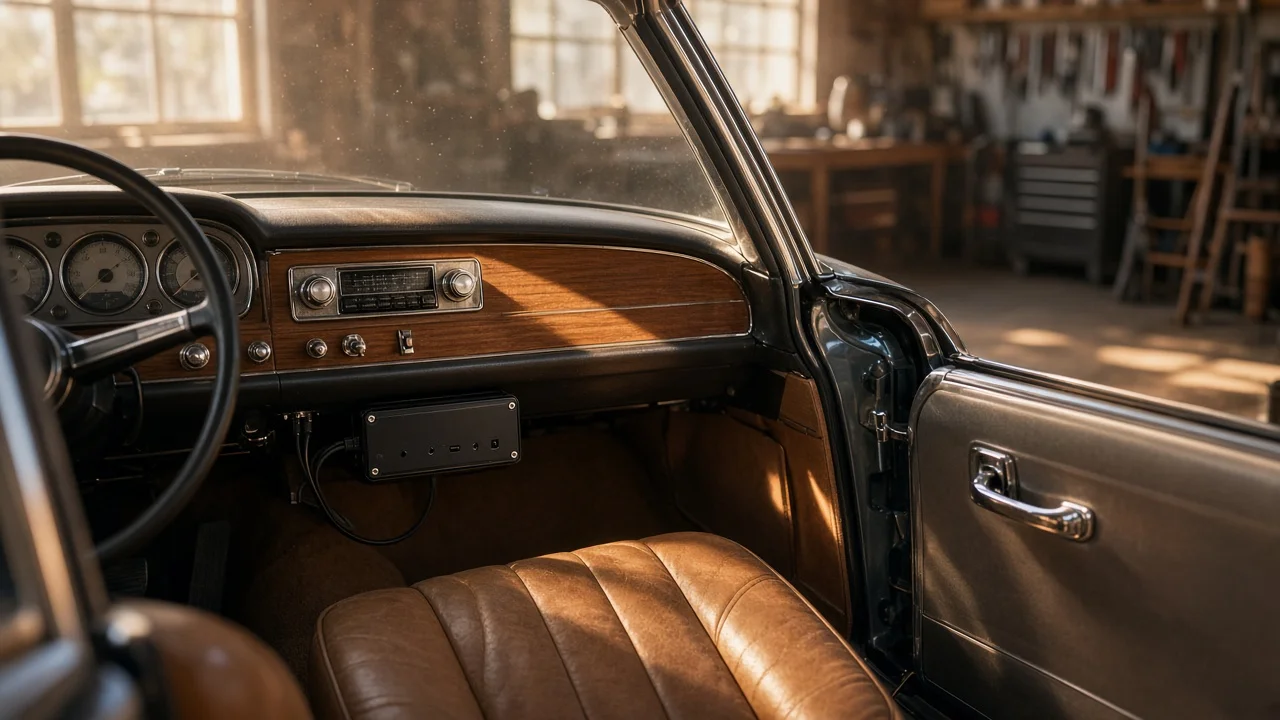
A Bluetooth amplifier is the most practical bridge between a classic dashboard and modern wireless audio. For a vintage car owner, the goal is usually to keep the original radio face and cabin look while gaining reliable streaming from a phone. The right unit adds connection settings and device pairing without cutting the dash or replacing the factory head unit. Choosing well depends on signal routing, power needs, speaker condition, and how the amplifier fits the existing electrical system. This guide explains what to check before buying so the upgrade works with the car’s age-related characteristics.
The direct answer
A compact hidden Bluetooth amplifier is the direct way to add wireless streaming to vintage car audio without removing the original radio. The amplifier can receive the phone signal and drive the existing speakers, while the factory head unit remains in place for appearance. This works best when the car has a conventional 12-volt negative-ground electrical system and speakers that can accept moderate amplifier power. The condition of the wiring and the available mounting space behind or under the dash materially affect which unit is suitable.
Before buying, check the vehicle integration path carefully. Some installations feed the amplifier directly to the speakers, while others use an interface adapter to connect through the original radio wiring. Device pairing should be straightforward, but software compatibility with the phone matters if the amplifier uses an app for crossover or level control. Steering wheel interface functions are usually not preserved in a vintage car unless a separate adapter is added, so plan to control volume and track selection mainly from the phone or a small remote.